QueryTracker Blog

Helping Authors Find Literary Agents
Showing posts with label blogging. Show all posts

Tuesday, June 14, 2016

Plagarism and the Indie Author

Recently I read a disturbing article about an author who’d discovered that someone had plagiarized her book, causing such substantial physical and financial distress that she eventually pursued the offender in court.

Plagiarism is not a new concept (in fact, you can revisit Carolyn's article here) but it seems to be finding a new group of easy targets: self-published books on Amazon.

If a thief tries to steal a traditionally published book, you can bet that the legal team employed by the Big House will descend like bees on a honey-stealing bear.

But self-published authors don’t necessarily have that back-up plan. And Amazon is full of self-published books, ripe for the plucking.

This isn’t an article meant to deter writers from choosing self-publishing. Many writers seeking agent representation still opt to self-publish other work not deemed generally query-able: short stories, anthologies, or poetry books...

...and, yes, novels, usually those that failed to find their footing with agents or editors. Those books aren’t automatic failures—they are just projects that didn’t get picked up. That’s not necessarily a condemnation on quality. That's why many authors pursue publication for those novels on their own.

In fact, putting forth a great self-published book can be a stepping stone to finding a dream agent because it provides an opportunity to start building an audience. An established audience is a huge enticement for an agent.

So self-publishing, when done well, isn’t the kiss of death. But it does open up an author to the plague that is plagiarism.

The vast majority of self-published novels on Amazon is romance fiction. Needless to say, those books are often the most plagiarized. (That doesn’t mean that everyone else is safe, though.) The market for romance fiction is massively huge, making it easy for a copy-cat to find a niche and sell well without being discovered. And that’s the problem—those copies have to be detected, discovered, and decried in order for Amazon to take them down.

While Amazon will take down individual offending books, so far they do not have a policy in place that will take down an author’s entire list if any of their titles are plagiarized. It’s up to authors to protect themselves when putting their products out for sale.

Here are a few things an author can do to reduce the chance your work will be plagiarized.

  • Enable your Digital Rights Management (DRM). Kindle publishers should activate this safe guard , which limits the devices upon which the book can be viewed. By doing so, you limit the ability for a person to lift your book, drop it into a word processor, and use it as their own. (There is a downside to enabling DRM, as many readers like to read between multiple devices, so do your research before making the decision that is right for your situation.)

  • Register your work with the US Copyright office. It gives you legal protection and the ability to seek damages. It doesn’t keep your work from getting stolen, but it really helps deliver the payback by giving you a case in court. (I'll be discussing Copyright Registration in an upcoming post, so stay tuned.)

  • Use websites to find your lines online. There are a few sites that scan the internet for you, such as Copyscape and Plagiarism.org using the “check for plagiarism” button. What else can you do? Author Ally E. Machate recommends using Smart Google Search to be the watchdog. Simple enter in a few random lines from your text and, if a new page pops up with those words (or very similar), you get an alert.

  • Protect your blog! May authors use their blogs to provide fresh, enticing content to keep their readers on the hook between books. Post copyright notices on your web pages and disable the right click copy function to prevent easy lifting. Use Java code as discussed in this article or look at this Java-free method tutorial. The addition of such coding helps to deter a plagiarist from lifting your blog and copy-pasting it to their own document. You can also go so far as to register your blog with the US Copyright office.

  • Watermark your images on your blog and the pages of your review copies. Adding a transparent copyright notice catty-cornered across the pages of your PDF review copies will also make it harder for pirates to throw your book up on the torrentz.

Keep this very important thing in mind: there is no way to prevent your book from getting plagiarized. Deterrence and vigilance is key.  Authors must do all that they can to post copyright notices and to make it harder for work to be swiped. Monitor the internet periodically for evidence that someone is passing your work off as their own. Obtain copyright registration so that, if you find it, you can fight it and claim your damages.

Authors put in immeasurable amounts of time and effort into creating their work. The same should go into protecting it. It’s YOUR book. Do all you can to keep it that way.


Ash Krafton is a speculative fiction writer who, despite having a Time Turner under her couch and three different sonic screwdrivers in her purse, still encounters difficulty with time management. She's the author of the urban fantasy trilogy The Books of the Demimonde as well as WORDS THAT BIND. She also writes for YA and NA audiences under the pen name AJ Krafton. THE HEARTBEAT THIEF, her Victorian dark fantasy inspired by Poe’s “The Masque of the Red Death”, is now available.

Tuesday, May 10, 2016

QT Open Mic: Today's Writers, Today's Topics

There is an important aspect of the writing business that is often easy to overlook.

Keeping relevant.

Writing is an intensely personal venture and many people get swept up in their personal art. We live in our stories. We eat, breath, dream our books and their inescapable grasps. After months (perhaps years!) of laboring at our novels, we emerge from the writing haze, ready to get that book out there. Only, some of us find that the publishing world changed quite a bit while we were busy dreaming.

That happens to QT bloggers, too. :)

Some of us are out of the query trenches and fast-advancing toward the front lines.  A few of us are madly managing back lists and marketing endeavors. But all of us want to continue to provide insightful, relevant posts to help you get to where you want to be with your writing, your book, and your career.

Over the years, we’ve discussed numerous topics related to writing, editing, agents, and the journey toward publication. However, maybe there’s something we haven’t covered (or haven’t covered in a while) that you’re curious to know more about. So today the QueryTracker Blog Team is taking your questions!

Need some writing advice?  Dying to ask someone that question nobody seems to be able to answer?
                    

If you have any question you want answered--even if it's something subjective that solicits an opinion--throw it at us. We'll research and compile our answers for future posts. Our blog team has an amazing range of both personal experience and professional expertise and we're here to share it all with you.
 
Please ask your questions or suggest your topics in the comments section below. (If you would like to suggest something but wish to do so on the down-low, just contact Ash through her website www.ashkrafton.com using the subject line "QT Open Mic". She'll make sure your thoughts are shared with the team.) 
 
We love our blog readers and are thrilled to have all of you with us. Our subscribership keeps growing and we are grateful for your support.

Monday, July 1, 2013

Giveaways & Lessons from YA Author Elana Johnson

Update: Winners for the giveaways are posted in the 7/12/13 Publishing Pulse.

Eight hundred posts ago, on December 28, 2008, the QueryTracker Blog became a team effort for five aspiring writers.  Since then, a lot has changed, both in the makeup of the QTB and in the careers of those aspiring writers. Not everyone in the original team is still writing or seeking publication, but everyone has learned from their time in the trenches. We thought it was time for a series of posts sharing where everyone started, where they are now, and what they learned along the way.

To kick things off, we asked Elana Johnson, author of the YA Possession series (Simon Pulse) to tell us about her writing and publishing journey beginning with her time with the QTB (12/2008 – 7/2010) and bringing us up to date on where she is now!

Elana has graciously agreed to do a couple of giveaways as part of her interview. There are two different prizes, which will go to two different people. 

First, one of her books. If you are new to her Possession series, she will send you the first book, Possession  If you are already a fan, she will send you the latest in the series, Abandon (published June 2013). If you are in the US, you will receive a hard copy of the book; if you are outside of the US, a digital copy.

Second, Elana is a query-letter expert! She teaches classes across the country and online on how to write a killer query, and she is going to critique one lucky winner's query.

Please see entry instructions at the end of this post.

Where I Started and How QT Helped Me

I spent so much time with QueryTracker, researching agents, critiquing query letters, obsessing and celebrating in the forums, and reading and writing for the QT Blog. I still refer people to QT every chance I get.

When I started writing for the QT Blog, I didn’t have a literary agent. I’d been writing seriously for about a year, and my first project had just met its death in the query trenches. I had another book I was gearing up for querying, and since I loved blogging, taking on the QT blog was something that was natural and enjoyable.

Being part of the QT team gave me the courage to step outside my comfort zone. The first thing I did was co-organize one of the first QT agent opportunities with Joanna Stampfel-Volpe. It was amazing corresponding with agents without trying to pitch them my work. This helped me realize that agents are people too.

Signing with My Agent

I blogged with QT for 11 months before I signed with my agent, Michelle Andelman. During that time, being a QT blogger helped me establish my credibility in the writing world. I’ve been asked to teach at professional conferences based on some of the posts I wrote for the QT blog, and I still have friendships and contacts that I met “way back when” I was blogging at QueryTracker.

Publication

Since then, I’ve released three books (my Possession series –3 full-length novels + 2 short stories— was just completed with the release of ABANDON this past June!), co-launched another group blog (The League of Extraordinary Writers, which is dedicated to science fiction and fantasy), and co-founded the biggest writing conference on the Internet, WriteOnCon.

My Approach to Writing: Then and Now

What has stayed the same? I still blog a couple days a week at my own blog. I’m still with Michelle, and we’re still selling books. I still teach elementary school, and I’m still squeezing writing into the 15 minutes I have before school, or my 30-minute lunch break.

The biggest difference is that now I write under a deadline. I don’t have as much time to get my work up to par—probably the most challenging thing I’ve had to endure in this publishing gig! For those who are unpublished as of yet, enjoy this time to get your craft polished. The possibilities for you are endless. Enjoy the time you have to learn, to grow, and to make mistakes. I still do all of that (it’s not like every word I write comes out golden), but I don’t have as much time to enjoy it as pre-published authors do.

I feel like I’ve come a long way in my personal confidence. When I first started at QT, I thought, “Why would anyone listen to what I have to say?” Now, I teach classes at a variety of conferences—I’ve become the expert! I’ve been working as a freelance query letter writer for a few years, and recently went out on my own in this venture. I’ve even taken my in-person-only query letter writing workshop and launched it on the Internet.

I’m also an independent publicist, something I really enjoy. I’ve always liked doing the marketing side of writing, setting up promotions and chats and giveaways for my own books. It seemed natural to take my contacts and skills and transfer them to another author’s book. I love working with authors and book bloggers in this capacity. (You can find out about my blog tours and blitzes, as well as cover reveals, here.)

Advice to Unpublished Writers

I don’t believe the unpublished should rush into publishing. Really take the time to perfect your craft, and when you do, the rewards will come. Publishing is not a race.

My best advice for those looking to promote their books is to be as active as you can in the online community. Recently, someone asked me how I met all the book bloggers I know. I honestly couldn’t answer. It’s not like there was one specific event where I met everyone. It was something that happened over the years as I read their blogs, clicked over to their cover reveals, followed them on Twitter, and emailed them about my own books. So if you’re looking to make contacts in the publishing world, you have to be willing to spend time where publishing people hang out—and the QT forum is a great place to do that!

When the original QTB team interviewed agents and authors, we often did something we called a Fast Five—five fun, quick questions. For a while the question of the day was “Courier or Times New Roman?” but we had to move on when it became clear that the industry standard had become TNR! So here is a fresh Fast Five for our alum:

Fast Five with Elana Johnson
  1. Mac or PC? Macs rule!
  2. Favorite Social Media Platform? Um, Facebook? Yeah, let’s go with Facebook.
  3. Writing Pet Peeve? Grammar. I always sacrifice grammar for voice and style, baby!
  4. Guilty Pleasure? Mini chewy sweet tarts
  5. Can’t Live Without? Lightning-fast Internet!

Entering the Giveaways

  1. Comment on this post and tell us something YOU have learned from being part of the QueryTracker community. This can be from the QueryTracker Blog, the main QueryTracker site, or the QueryTracker forums. By commenting, you give us permission to quote you any of the aforementioned QueryTracker sites.
  2. We will take comment entries through Wednesday, July 10th. 
  3. Winners will be chosen at random and announced on Friday, July 12th in the Publishing Pulse. Please watch for this announcement, as I (Carolyn) will need the winners to contact me. I will include instructions on how to do so in that Publishing Pulse.


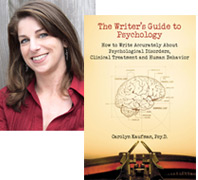
Carolyn Kaufman, PsyD's book, THE WRITER'S GUIDE TO PSYCHOLOGY: How to Write Accurately About Psychological Disorders, Clinical Treatment, and Human Behavior helps writers avoid common misconceptions and inaccuracies and "get the psych right" in their stories. You can learn more about The Writer's Guide to Psychology, check out Dr. K's blog on Psychology Today, or follow her on Facebook! 

Monday, January 28, 2013

The Case Against Blogging

The advice recurs on forums all the time: authors must blog to accumulate "platform." I've heard newly agented authors say "my agent says I should blog."

But is it good advice?

Setting aside for a moment the fact that I'm writing this on, erm, a blog, the answer is that blogging is not for everyone. It depends on your goals, your life and your style.

Some authors receive fierce sustenance from blogging. These are the happy people who blog like they breathe--easily and without angst. And don't get me wrong--a personal blog can be a super way to build your audience. When I think of blogging success stories, I think of authors such as Elana Johnson and Hilary Smith. These two lovely ladies have for years thrilled their readers with a lively discussion of the writing life. Examples of blogging success abound.

But it would be a mistake to say that every author and prospective author should aspire to become a blogger too. Before you drink that particular glass of kool aid, ask yourself a couple of tough questions.

Can I Spare the Time?
To blog well means to spend quite a few of your precious authorial hours working on something which is not a manuscript. Not only must you spend time writing blog posts, it takes time as well to build up your following. That means time spent reading others' blogs, commenting on them, and becoming part of the greater blogging community. If the very idea of spending time on those pursuits makes you quiver with anxiety, you are not insane. Blogging is a commitment. And if you approach it halfheartedly, your readers will notice.

Also, a blog is like a pet, providing companionship and entertainment. But pet owners are often slow to realize that it also needs frequent walks, and special food. And if you want to fritter off and neglect your blog for awhile, its liveliness and readership will soon flag. (Blogs, at least, do not poop on the floor in anger. They merely wither, like neglected houseplants.)

Am I a Becoming a Feedback Junkie?
To blog is to receive quick feedback. Warning: those blog stats and that comments section can be come an addiction. If you write a successful blog post, and twice as many people read and comment than you usually attract, that feels great. It even feels productive. For an aspiring blogger, it is. But if your number one goal is to write and sell books, this can become a trap. It's easier to brainstorm blog posts than to try one more time to fix the things wrong with your pesky chapter 27. If your goal is to write books, don't give yourself new and pretty excuses to set that goal aside. A little self knowledge can go a long way toward answering this question.

Should I Guest Blog Instead?
When you launch a book, guest blogging is a must. When you guest blog, you are making an exchange: you provide free and interesting content to another blog in exchange for fresh eyeballs. For many authors, this is a terrific compromise--you build audience without the distraction of an ongoing blogging project. If you would like to try your hand at blogging, consider offering a post or two to bloggers you admire. It's a great way to experiment.


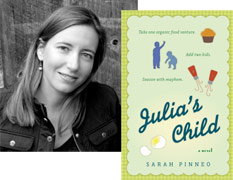
Sarah Pinneo
 
is a novelist, food writer and book publicity specialist. Her most recent book is Julia’s Child. Follow her on twitter at @SarahPinneo.

Wednesday, February 8, 2012

Does Your Grasp Exceed Your Reach? Triberr Can Help

As a writer who is only just beginning to break into publishing, I face the same problem that most ordinary mortals do: I don't actually know that many people.

I'm not a hermit or anything. I have a day job that puts me in contact with hundreds of people each week. I know my neighbors, my kids' friends' parents, and I have a decently-sized family. But when I stop and think about potential book sales, I realize that I don't really know a lot of people and, even if I sold a book to every person I knew, it wouldn't really be an impressive number.

Now, if each of my friends told another person to buy a copy, that number might double. And if they told two people? Do the math. The Tell A Friend system would really increase the size of my potential audience.

Writers depend on extended networks to sell books. Why else would we spend so much time building our networks with online communities and writing organizations? We watch our Twitter Follower counts and our Facebook Friend numbers almost as much as we stare at our email inboxes. I'm not Jedi enough to mind-trick myself instantaneous success, though, and so I continue to look for ways to build my network and increase the size of my audience.

Then, a few weeks ago, my friend and fellow author Tricia Schneider (@triciaschneider) introduced me to Triberr.


Triberr: The Reach Multiplier

"Have you ever heard of Triberr?" she wrote. "It's basically groups of people that help each other promote our blog posts on Twitter. I have nearly a 100% increase of hits on my blog. I belong to 2 tribes and have 58 members who promote my blog posts--which means I have roughly a 56,000 reach. That's more readers, more chances for my books to be purchased."

She had my full attention. Like a lot of start-up bloggers, I've been scraping together my readership any way I could: by commenting on other blogs, by participating in blog hops, and by cross-posting my entries to my other online accounts (Facebook, Twitter, Goodreads, Red Room.) I set up as many automatically posting cross-links as possible so I can spend more time writing and less time cutting-and-pasting my blog entry's URL.

So when Tricia said she has a "reach" of 56,000 people…shoot. I needed some of that. Off to Triberr.com I went.

A Way to Share and be Shared


Tribes are groups of bloggers with similar interests who band together and combine their resources: in this case, Twitter followers and blog posts. This pool of Tweeps is calculated and called the Tribe's reach.

The Tribal Stream shows a list of your tribemates' blog posts. You simply go down the list, clicking the approve button next to the articles you want to distribute. Triberr then sends them out through your Twitter account at a rate of one post every twenty minutes.

How does this help writers? The author of the post gets his work Tweeted out to the followers of everyone in the Tribe. If the Tribe has a reach of 30,000, that's potentially 30,000 people who are going to see the Tweet of your blog's link. (I say potentially because that many people will share a number of the same people as followers.)

The person approving the posts benefits, too, by having regularly-scheduled content going out via Twitter posts. Since everyone in my Twitter Follower list isn't in my tribe, any retweets of my Tweets will expand the reach of the Tribe as well as get me extra Twitter mentions, thereby increasing my name recognition.

Content. Distribution. Twitter. What a wonderful mix for writers seeking to distribute their work.

Ease of Use

Signing up was free and easy. It did take a while to figure out that my name wasn't showing up because I'd missed a hard-to-see link (extra thank you to the oh-so-patient Laurie (@lauriej170) for her tutelage) but, once that was fixed, my account ran quite smoothly.

I also read one of the moderator's blog posts on creating a branded Twitter app and had to give it a try. In a very easy-to-follow set of instructions, Dino Dogan (@Dino_Dogan) shows you how to rig your Triberr/Twitter interface so that the Tweets appear to come from you rather than the Triberr website. This provides two benefits: it gets your name out there even more and makes the links look more original, instead of just passed along posts.

There have been drawbacks to using it, though; I've had to re-do the app twice since I started, as it likes to suddenly stop working. It's a glitchy thing but not big enough of one to make me forsake the program. Thankfully, the Triberr gods are very attentive to their website and they work tirelessly to smooth out the kinks as they come up.

Bonfires are various topics on the community message board, which range from requests for tech support to open calls for new members. Most of my questions were answered by other Triberr folk (and I found new Twitter friends, too.) Each Tribe has its own message board, too, where members can greet and chat with each other. The Tribal member page displays the names of your tribemates and makes it easy to follow them on Twitter--which is a requirement for the entire Triberr program to work.

The nicest thing is that Triberr isn't just a web program, it's a community of people who all want the same thing I do: to promote our work, to network with other bloggers, and to share the load. It's a healthy symbiotic relationship, one that definitely makes it easier to get the job done.

Does it Work?

Apart from the tiny hiccups, I have to say that, after only ten days of Triberring (my unofficial verb), I've gained a ten percent increase in Twitter followers. That's amazing for me. They are prime followers, too, since they most likely found me through my Tribes—and therefore sharing my interests.

I added a new post to my blog and saw it Tweeted out more than 25 times in six days. Guess how many Tweets my posts regularly got before I started using Triberr? Answer: only as many as I churned out myself.

While a week may not be a very long time to form an educated opinion, I'd have to say: Yeah. It looks like it's working pretty well.

I joined two established Tribes and even started my own. After a week of being on Triber, my reach has climbed to nearly 140,000. All I have to do is post to my blog and away it goes, with a little help from my friends.

Think about the potential size of that audience. Don't you need some of that?


Ash Krafton is a speculative fiction writer who resides in the heart of the Pennsylvania coal region, where she keeps the book jacket for "Abraham Lincoln: Vampire Hunter" in a frame over her desk. Visit the Spec Fic Chick website at www.ashkrafton.com for updates on the release of her debut novel, Bleeding Hearts: Book One of the Demimonde, forthcoming in March 2012 through Pink Narcissus Press.

Monday, November 28, 2011

Writing: It's a Numbers Game

As a past (and future) querier, I've spent a lot of time on the Query Tracker website.

Query Tracker is a database of the most trustworthy literary agents, packed with the tools I needed to track each of my submissions to them. Query Tracker became a valuable part of my novel's road to publication and, at the height of my querying, I spent several hours a week using the website.

Assembling an agent list was the easy part. The search functions narrowed down the group of more than 1200 agents to those who were appropriate for my material. The spreadsheet showed my progress and tracked responses as they came in. The individual agent files contained contact information and links to their online dwellings.

But, after a while, those amazing features began to pale in comparison to the tab so innocently labeled "Reports and Statistics." Like many anxious writers who used Query Tracker, I quickly got sucked in to the stats of the querying game.

Numbers. Everywhere. The Query Tracker database had information on every statistic a writer could imagine. Which agent had the highest request rates. How many days until my own request should come in(ever the optimistic one.) How many lucky writers signed. How many unhappy writers marked their own queries as a "no response". Hard figures and agonizing percentages. Nail biting numbers. Knuckle crunching numbers.

Nasty thing, numbers.

Despite the pretty clear delineation between the left and right hemispheres of our brains, numbers will always want to mingle with the words crowd (much to my math-hating daughter's chagrin.) Word counts. Page counts. Royalty rates. Fun stuff. Essential stuff.

Here's some more "essential stuff" to get your mind off the agony of staring down the query stats.

We'll start at the beginning with the 10 Most Important Things every writer needs to know: while simply stated, there is a lot of down-to-earth advice here. For example, did you know that "your friends and family are not your audience"? Nope, they're not--and knowing it might help you define who your audience actually is. A list like this helps to reset ourselves, gets us to pull away from the keyboard for a moment and try to remember the reason we sat down to write in the first place.

Got blog? Then you got numbers. Here's 3 things your blog needs and 5 things it doesn't. (The comments are noteworthy.) And every blogger wants a bigger audience, right? Average bloggers will appreciate these 8 tips to grab those coveted readers while the over-achievers may prefer a heftier 19. Go big or go home, I always say.

Heck, as long as we're going big, let's go Hollywood. Here's 10 things that may decide whether your book is good enough for the big screen.

Once we're done daydreaming about cinematic fortune and fame, the blog 365 Stories In A Year will give us this more realistic list of 10 things we probably do but would never admit. On the flip side, we still have our integrity as writers—and so we'd be better off sticking to these 10 basics, which includes Wil Wheaton's Law. (If you are unsure of just how tremendously powerful a chaotic neutral overlord Wil Wheaton has become, then you seriously need to catch up. He's going to rule the world one day.)

The numbers get even more serious over at Twenty Palaces, where you can find 10 things that might be the proverbial slap you need to stay focused. However, these 10 magic ideas will inspire you with a much lighter touch. (Read it if you *heart* Voldemort as much as I do.)

Want advice from an agent instead? No problems. Rachelle Gardner has loads of great tips and she gets a perfect 10 for her 10 things theme on her blog. She's got several helpful lists on a variety of topics--have fun with them!

And Rachelle isn't the only one who's got her numbers lined up. Janet Reid lists 10 steps to diagnose your query for a particular agent. Some of us will read this and say, really? You need to spell all that out? Give us some credit! while an equal number of us will say, Now, that's what I call *clear* guidelines. Finally. Why don't all agents do it? (Don't get any ideas.)

Lastly, I'll point out a lengthy 10 secrets you might not have known about agents. There is a very poignant message in this one--if you don't have time to read the entire article right now, take the time to scroll down to the bottom of page 22 and read the last paragraph or so. It may help put querying madness into perspective.


Look at all those crazy digits floating around up there. Can writers learn anything from playing the numbers game? (Besides the apparent fact that writers seem to love the number 10.)

Maybe if we extracted all these numbers we'd realize there is no single magic formula to good writing. Sure, we can obsess over numbers and drown in the QT data explorer. We can calculate and extrapolate and postulate but, in the end, it's the actual words on the paper that matter. Word counts and page counts won't matter in the end if the heart isn't in the story. The words and the numbers must work together to produce a splendid story and it's our job to bring it all together.

Perhaps treat yourself and listen to "Hemispheres" by Rush, with an emphasis on the song The Sphere. Just as the heart and mind must unite, so must our right and left brains. Write the words but don't forget to enjoy the numbers…

And look forward to getting that single, most beautiful number: 1.

One "yes" is all it takes to win the writing game.

Ash Krafton is a speculative fiction writer who resides in the heart of the Pennsylvania coal region, where she keeps the book jacket for "Abraham Lincoln: Vampire Hunter" in a frame over her desk. Visit the Spec Fic Website at www.ashkrafton.com for updates on the release of her debut novel, Bleeding Hearts, forthcoming in early 2012 through Pink Narcissus Press.

Wednesday, October 19, 2011

Social Networking for Writers

By Ash Krafton | @AshKrafton


Note from Carolyn: Even now, before the publication of her first novel (see Ash's signature at the bottom of this post), Ash is such a successful networker that she maxed out the number of friends Facebook can handle, and had to create a fan page for her work.  Even more exciting? Her techniques are techniques everyone can manage. Read on for how she does it!

It's not going to do you any good to write an amazing book if you aren't going to do anything to promote it.

Writing is a solitary effort, right? But networking is a team sport all the way. When you emerge from your writing cave, shiny manuscript in hand, you should already have a plan on what you're going to do with it. Hopefully, it's not meant to sit in a drawer or in a computer file. You want that book out there, in the hands of hungry readers. That book was meant for the world.

And the world is not a solitary kind of place.

Odds are you aren't a famous authority on a huge platform of wisdom and fame. You may be more like me—a working mom who is trying to turn a hobby into a second job. Everyone starts small and so should we. First-time queriers agonize over the lack of an impressive bio in their query letter but few realize that often a solid online presence is enough to let an agent know you mean business.

Ever Google yourself? You should. If an agent is thinking about reading more of your work, she's definitely going to do it. Your online presence may be one of the first impressions you make.

Of course, one way to build your online presence is to get published, but that starts the whole chicken or egg type of quandary. There's a simpler way to start…and you are probably doing it already without realizing it.

It's called social networking.

Networking is key to the success and survival of your book. But it's a scary prospect for an emerging writer. You've written your first book, have no other publishing credits, don't have an agent or an inside track with a best-selling author, and have absolutely no courage to attend a conference…you're as good as anonymous. Who's going to listen to another faceless writer?

Thanks to the internet, you don't have to remain faceless. You don't have to remain friendless, either.

Twitter: Can't deny that I have been pulled into the Twitterverse, kicking and screaming. Unlike regular space, Twitterspace is not a vacuum. It's a human soup of news and interaction and connection. Thanks to dedicated readers like @Porter_Anderson, our blog gets tweeted with links and quotes to readers who may not be aware of our site.

Recently, I tweeted (from @ashkrafton) a shoutout with the question: What's your #networking magic bullet? I sent it out using Lazy Shout Out, a tool that helps me get a message out to all tweeps in a certain list. (Sounds like cheating but it's just good social media management.)

Here are some of the answers:

@eslarke Just being active on sites such as Twitter, Facebook and Goodreads. I interact with others and take part in discussions. 
@Bri_Clark I know my platform and it's natural for me to utilize it. I'm the belle of boise. 
@nancynaigle Friends like you are my #networking magic bullet :) I love meeting new people and gaining new perspectives! 
@jim_devitt there is no magic bullet, you've got to be hitting on all cylinders, that and have a good book! 
@wickedcoolflght …one of my best networking tools is @Paperbackdolls. 
@heidirubymiller reciprocation and interaction

Guess what? They are all right. Read that last tweet again: reciprocation and interaction. You can't network without putting some effort into it.

Your mission, should you choose to accept it, is to follow each of the tweeps mentioned above. Once you do that, you can congratulate yourself for networking. Shoutouts aren't the only aspect of Twitter. You can retweet interesting tweets, too. I often pass on links to articles or inspirational quotes, anything I think my followers might find interesting. Sharing information is networking.

Facebook is another great way to network. Visit your friends' pages and add friends from their lists. Worst thing they can do is not accept your request, right? Visit the sites of writers who write like you do and add from their friend list as well. Also, when responding to friend requests, click the link that allows you to see “all requests.” Often it opens up the friend requests to reveal a few of *their* friends. Add them, too. You're building bridges to other people—and bridges form the structure of a network.

If you have an account, you already know it can be used to interact with friends, acquaintances, and peers, but don't forget the other kinds of pages. You can start an author page (mine is http://facebook.com/AshKraftonAuthor) and invite friends to “like” your page. (The invite page is on the right side.) There's an opportunity to buy an ad but I feel the potential bill would be too costly for an emerging writer like myself. You can also participate in groups and perhaps start one for your own writing. Make the group reader friendly and participate regularly. You'll be networking in no time at all.

Blogging is a quick and easy way for us to express ourselves outside our formal writing. Originally designed to be journals, blogs (short for web log) quickly evolved into an effective means of sharing information to a variety of audiences. Blogging platforms have evolved, as well, enabling us to connect with readers using friending and following functions. Blogger.com, Wordpress, and Livejournal are three of the biggest blogging platforms and can get you up and blogging in no time. I love how the blogs, in turn, offer RSS feed capabilities as well as Facebook's “Like” and Twitter's “Tweet This” buttons for easy sharing.

You shouldn't stop at writing a blog; you need to read them—and comment, too. When you comment, you have the opportunity to provide a direct link to your website or blog that other readers can follow. More readers, more friends, more connections.

Blog hops are a fun way to find new blogs that focus on your interests. I'll be participating in the Coffin Hop Horror Web Tour (October 24-31, 2011) along with a bunch of great horror writers. Readers can view a huge clickable list of different blogs and hop (okay, it's a Halloween hop, so I guess readers will lurch or stagger) from blog to blog. The blogs are offering prizes for commenters as well as showing off their writing chops.

What do writers get out of all of this? Exposure, of course. And exposure brings new readers and new connections to the other bloggers and all of it is (say it with me) networking.

According to an article from Author Marketing Experts, blog commenting doesn't need to turn into a time suck. Set a goal to leave a certain number a week. You may be surprised to hear that certain number doesn't need to astronomical, either—you can gain significant exposure by commenting on as few as three to five blogs per week. And set a time limit, too. I use a kitchen timer to limit how long I fool around network via blog comments.

Goodreads, anyone? You can link your blog to your Goodreads page and Tweet your reviews. My favorite part of Goodreads is the giveaway program. Recently I held my first giveaway; I offered an anthology from my publisher, Pink Narcissus Press, in August and every day I logged in just to see how many people entered. My giveaway ended up having several hundred entrants, which really had me chuffed. Even if only a small percent of them went back to check out the book, that's still more traffic than the book had before the giveaway. Several of the entrants made friend connections to my profile, as well. And that, friends, is networking.

Of course, these websites are the basic, most popular ones, but there is no reason you can't use them to your advantage. The “basics” are used by millions of people around the world—and that's a pretty big potential audience.

You don't have to be a Wizard of SEO or a nationally-known keynote speaker. Successful networking begins at your fingertips with a click of the mouse or a Tweet of an idea. Give your book the biggest chance to succeed by reaching out to new readers, one step at a time.

Networking really is that easy.


Ash Krafton is a speculative fiction writer who resides in the heart of the Pennsylvania coal region, where she keeps the book jacket for "Abraham Lincoln: Vampire Hunter" in a frame over her desk. Visit the Spec Fic Website at www.ashkrafton.com for updates on the release of her debut novel, Bleeding Hearts, forthcoming in early 2012 through Pink Narcissus Press.

Friday, August 26, 2011

Publishing Pulse: 8/26/2011

Success Stories 

Congratulations to our latest QueryTracker.net Success Stories! We have five -- that's right, five -- QueryTracker.net members who became agented this week! Kaitlyn Schulz, Kate Karyus Quinn, Elizabeth May, Stephanie Denise Brown, and Ramsey Hootman.

Around the Web

As always, Rachelle Gardner has some great posts.  This week she explained When to Re-Query an Agent and shared some quotes from pass letters SHE'S gotten from publishers (happily, the books all went on to sell without needing any additional revisions).  Finally, she reminds us that smaller advances have advantages, too!

Creativity expert Susan K. Perry shares some tips from Joni B. Cole's Toxic Feedback in Don't Sleep with Your Critic (And Other Feedback Tips)

In Improving Your Submission Process, Fuel My Writing's Cynthia Morris gives you some straightforward tips on how to format all kinds of manuscripts to make them easy for editors to read.

Do you maintain a writing blog? ProBlogger offers some good tips on blog branding and promotion with What Do You Want People to Say About Your Blog? and How to Recruit [People Who Will Talk About] Your Blog.  And if you're wondering just how much time you need to spend saturating social media networks with your material, take a look at this post about the minimum effective dose. (Especially if you're feeling burned out!)

Have a fantastic weekend!


Carolyn Kaufman, PsyD's book, THE WRITER'S GUIDE TO PSYCHOLOGY: How to Write Accurately About Psychological Disorders, Clinical Treatment, and Human Behavior helps writers avoid common misconceptions and inaccuracies and "get the psych right" in their stories. You can learn more about The Writer's Guide to Psychology, check out Dr. K's blog on Psychology Today, or follow her on Facebook or Google+!

Monday, April 25, 2011

The Road to Publication: Beware the Public Diary


The secret diary: Most of us, especially women, had them as teens. We expressed our hopes, fears, problems and crushes in writing for various reasons. We railed against our arch enemy. In some ways it was therapeutic. Sometimes the therapy came from the knowledge that we had a special secret journal of our personal life that we could choose to share (if we wished) or hide from the *gasp* authority figures in our lives.

Some keep diaries even as adults.

Now, I've never been a diary keeper. In fact, it never made sense to me at all. I tried as a teen because my best friend was the diary queen. She would hide her diary carefully from her family or "accidentally" leave it open to a page to indirectly pass on information. She could control how, when, and to what degree the information was disseminated because she had physical control of the diary itself.

Enter the electronic age and the blog.

As writers, we know we need to have a web presence. We are told that by other writers, agents and editors. But there is a difference in a web presence and a beneficial web presence. "Make yourself Googlable," agents tell us. Okay. Done. I start a blog. It's free, it's easy, and heck, it's even fun sometimes.

Many writers use their blogs to journal their road to publication. Any of us who are walking on the sharp rocks of that road barefooted know it is a hell of a tough journey. Our bloody footprints prove it.

Here is the point of my post: Do not use your writer's blog as a private diary.

I pop onto aspiring writers' blogs all the time and large percentage of them are devoted to whining, complaining and lamenting the unfairness of the business.

Okay, Mary. It's my personal blog. I can write whatever I wish in any tone I wish.

Darn right. But writers need to be aware of the potential pitfalls.

Why do we blog? I think that is the first question to be asked. Specifically, What is the purpose of this particular blog? Who is the audience right now? Who will be reading it in the future?

My diary-loving friend would tell me how when she was famous, she was going to publish her diaries for lots of money. Again, she was physically controlling the information in that diary hidden in the bottom of her closet under her box of summer camp photographs.

In blogging, we lose control of the information the minute we hit "publish." There is a reason the button says that. "Publish" means to make known generally, and boy, do we. So many times on Twitter I've seen people say something like, "How to alienate the children's publishing industry," or "How to never get published," followed by a link to the post of a writer who has lost control on her/his blog and gone off on a career-impacting rant.

Yes, we can set the permissions on our blog to a very narrow audience, rendering it private, but if we, as writers, are using the blog to increase our web presence or establish platform, that is not practical.

Keep the nastiness private. I have a crit partners who have endured endless rants about the difficulty of this business along with my insecurities all laid out for examination. I would never put these tirades up on my writer's blog. But to remain stable, most of us need to vent occasionally.

My advice is to never write anything on your writer's blog you do not want read by your agent, publisher, spouse, child or fan. If your career takes off, your unpleasant post could be more wide-read than you ever intended. Think long-range.

Do not give tallies of the number of queries sent/rejected/accepted. This never works as planned. If I'm an agent and you have queried me, I might google your name if I like the letter or pages. What if I go to your site and see you have received zillions of rejections and very few requests? Naturally, it's up for interpretation, but it might backfire.

What if you have ranted about how unfair and crappy a certain agent was with her form rejection? I work for a different agency, but we share office space (this is common) and talk every day. I like her. So much for the full request I was going to send you.

There is nothing wrong with opening your diary about the hardships of publication as long as you keep in mind the person you least want to read it probably will. Don't rant and don't give out your rejection count. I know of several cases where agents have told writers they requested material based on their sites or online presence (I'm one). I also am aware of a couple of cases in which an agent said that she found the presentation of the writer's blog offensive and unprofessional and were not going to pursue representation for that reason.

Now, I don't mean you have to be serious and stuffy and only blog about writing. Your website can handle that part. Quite the contrary. A blog is where you let your personality show. I'm not much of a blogger by anyone's standards. I blog mostly about writing and my road to publication, but on the rare occasion when I post, I try to make it fun for myself. The posts where I am "me" are the ones that get the most hits. I've blogged about singing out loud in a Waffle House and getting caught at the country club in my pajamas. It lets my online friends get to know me as a woman and not just as a writer. It doesn't mean I don't get discouraged and have posts that reflect that, I just refrain from ranting, venting or giving out information that will come back to bite me someday (My ever-tolerant crit group receives the full force of all of that).

One last parting bit of advice from someone who needs advice herself: Refrain from mentioning anyone by name in a negative light. Most folks are aware of this, but I'm a total technotard and found this out a year into my writing career *blush*: There is a thing called "Google Alert." If a person has it on their name (as I do now for both myself and my book title), she will receive an alert every time her name is published online. I get dozens of alerts a day, most of them not about me, but some are. Agents/writers/editors use these. Your private diary can now broadcast with pinpoint accuracy to the people you are talking about.

Be yourself on your blog, but remain professional. Use care. Be aware of the image you want to project and keep in mind that every person with a computer holds the key to your private diary.

Have a fantastic week.

Mary


Monday, January 17, 2011

Should I Mention My Blog in My Query?

When should you mention your blog in a query, and when shouldn’t you? That’s today’s question:

If you have a well written blog that you work hard at, and are proud of, but the number of official “followers” is low, should you mention the blog in your bio or list it on your query? [I think mine is] funny and engaging. People who do read it seem to really enjoy it. But, I don’t have a high number of followers (at least that I know of). Or, should I mention it, but take out the follower’s box, so [an agent] can’t see how many I have? I notice some blogs don’t even list how many followers they have. I am on [Blogger.com].

Tracking Followers and Subscribers: Feedburner

Let’s start with finding out how many followers you actually have. The “Followers” widget in Blogger only shows people who have clicked “Follow” within the widget. It does not count people who have subscribed in other ways, e.g. by putting your RSS feed address directly into their preferred feedreader.

What you need to do is “burn” your feed using Feedburner, which is a free service (now owned by Google) that lets you track subscribers and post views. You can use it with Blogger, Wordpress, TypePad, and other blogging platforms. The instructions on the Feedburner site are pretty clear (just start where it says Burn a Feed Right Now!), so I won’t repost them here, though you are welcome to ask questions in the Comments if you have any trouble.

Once you’ve burned your feed and are getting subscriber results, you will need to add the number of subscribers you see in Feedburner to the number of Followers you see on your page. (You may find it reassuring that it seems to be pretty common to have, say, 3 times more subscribers through Feedburner than through the Followers widget)

Is Your Blog Related to Your Product?

Agents and editors may be interested in learning about your blog, but only if it relates to your story or book. What publishing professionals are looking for is a built-in audience that will (they hope) purchase your product (ie your book). In other words, if your blog is primarily about your life – family, friends, day-to-day activities and events – and you’re not writing a memoir or narrative nonfiction, you should leave your blog out of your query, regardless of how well it’s written. Likewise, if you have a huge blog on, say, mountain climbing, but your book has nothing to do with mountain climbing, you don’t have the built-in audience an agent or editor is looking for, and mentioning your blog will look like a non sequitur.

Many authors, however, have a blog related to their book’s topic. Granted, it’s easier to do this if your book topic is nonfiction, but expertise and a following in an area related to your novel can be useful. If you’re writing historical novels set during the Civil War and you have a strong history blog in which you regularly talk about the Civil War, that’s worth mentioning. Especially if your work on the blog gives you access to Civil War buffs who might be interested in buying your book – for example, by helping you find speaking engagements, or giving you the credentials you need to publish articles in Civil War magazines.

The whole purpose of mentioning your blog, then, is to prove what a nice big audience you bring to the table. For that reason, there’s no point to mentioning the blog unless you can also offer numbers, the higher the better. The minimum number of subscribers I’d mention is 1000, though I have seen books on platform use 10,000 as an example of a really strong number. “Strong” does depend a bit on your topic. If you have a niche market, a few thousand subscribers is good; if, however, you’re targeting a saturated market with a topic that has widespread appeal (a fantastic new diet or exercise program, for example), you’ll need significantly higher numbers (and probably some kind of professional certification or degree).

Increasing Your Followers and Subscribers

So what if you have a blog that relates to your book’s topic, but you still don’t have a lot of followers and subscribers?

I’m going to give you several tips, but I want to emphasize that this first one is the most important: You need to give the audience something they want or need with each post. If you’re a big celebrity, people won’t care what you post – Angelina Jolie could post what kind of toothpaste she uses and some people would be riveted – but the rest of us have to provide something valuable to readers.

What Would You Enjoy Reading?

Think about what kind of information you’d like to see in your feedreader. What would you find riveting? That’s the kind of material you need to produce, because even if you only post once or twice a week (with a couple days off for major holidays), you're looking at 50 to 100 posts in a year. You need a topic that you’re going to continue to be enthusiastic about for years to come if you're going to generate that many posts.

Finding (Valuable) Post Topics

If you don’t have extensive knowledge on your chosen topic, let the experts guide you. Take the time to research your posts – read books, magazines, and scholarly journals (if there are any) and newsfeeds on your topic, and then explain what you’ve learned to your readers. (Remember, emphasize how they can use that information rather than that you learned it. It’s all about your readers and what they’re getting from your blog!) Interview experts, other authors...people who can provide your readers with something they find valuable.

Impression Management: A Great-Looking Blog is Appealing

Once you’ve developed a plan for strong content, double-check that your blog looks professional – not too fussy or busy, not cluttered with things that will distract from your message (e.g. unnecessary widgets, unrelated things you like). This may seem like a small thing, but just as you make a particular impression with your physical appearance, so your blog’s appearance makes an impression. Make sure it’s a good one!

Social Networking

Now that you have 1) solid blog content that 2) intrigues you and offers you plenty of blogging possibilities and 3) a great look, it’s time to get the word out! You will want to include your blog address, along with your blog’s name and a short descriptive tagline (e.g. ours is The QueryTracker Blog: Helping Writers Become Authors) every place you can think of, including

  • Your email signature/s
  • Forum post signatures
  • Social networking sites like Facebook, Twitter, and LinkedIn
  • Business cards (Yes, you should have some. I’ll explain how to make some – or have some made – inexpensively in an upcoming post.)


If you have additional tips or places people should share their blog address, please share in the Comments section!

Carolyn Kaufman, PsyD's book, THE WRITER'S GUIDE TO PSYCHOLOGY: How to Write Accurately About Psychological Disorders, Clinical Treatment, and Human Behavior helps writers avoid common misconceptions and inaccuracies and "get the psych right" in their stories. You can learn more about The Writer's Guide to Psychology, check out Dr. K's blog on Psychology Today, or follow her on Facebook!

Friday, January 7, 2011

Publishing Pulse: 1/07/2011

Welcome to the new year! To start the new year off right, here are some success stories of fellow QTers:


Jaime Boust: http://QueryTracker.net/jaime_boust.php
Teresa Rhyne: http://QueryTracker.net/teresa_rhyne.php
Becky Taylor: http://QueryTracker.net/becky_taylor.php


Looking for an Agent?


Crafting a query letter? Wonder what agents aren't looking for? JM Tohline has an excellent list from literary agents of common mistakes they find in queries and how to avoid them.


Besty Lerner shares some great insights on the current marketplace and what to expect whether you're looking for an agent or have one already.


Literary agent Rachelle Gardner has an excellent post on how not to get an agent. And in a similar vein, Janet Reid discusses how not to be a good literary agent when submitting to editors.


Elsewhere on the Web


For those times when the words aren't flowing and the story comes to a standstill, here are some tips Susan Perry shares on using freewriting to loosen those writing muscles.


Nathan Bransford explains the fine art of commenting on blogs. 


And just a reminder of the awesomeness that is QueryShark. Not only can you learn how to craft a good query letter from a host of volunteered, real queries, but Janet Reid has also posted a quiz in the sidebar that can help you spot some very common mistakes she sees in the queries.


Have a great weekend!


Danyelle writes MG and YA fantasy. In her spare time, she collects dragons, talking frogs, and fairy godmothers. She can be found discussing the art of turning one's characters into various animals, painting with words, and the best ways to avoid getting eaten by dragons on her blog. 

Wednesday, January 5, 2011

Blog Avalanche: Knowing Which Ones Are Worth Your Time

Happy New Year to everyone! Has anyone committed to try to find more time to write this year? According to one person who sent in questions for our Ask QTB extravaganza, part of what consumes writing time is  reading other folks' blogs. How do you deal, he asks, with the blog avalanche?!

Need some guidance on either (a) the best blogs to read period for LITERARY novelists (including marketing issues) or (b) guidance o how to choose the best blogs for myself. Reason? BLOG AVALANCHE. There is so much out there, I can't finish my book -- too busy reading 80 million blogs.
Since I'm a genre writer, I thought some of you might have some suggestions for great literary blogs.  If you do, please post your suggestions in the Comments!

In the meantime, let's look at what to do with all those blogs you simply have to read.  As always, I believe in a practical approach that includes understanding what you're doing and why you're doing it so you can make an educated decision on how to handle things going forward.

Just How Much Time Are You Spending, Anyhow?

If you don't already know, spend a few days (up to a week) recording just how much time you spend on other people's blogs.  Are you spending the same amount of time each day, or are you just sort of wandering through blogs to keep yourself busy? Also try to write down exactly what you're doing while you're visiting.  Are you just reading, or are you commenting, too?

Now that you know just how much time you're spending and what you're doing in that time, let's talk about why you're really reading all of those blogs.  Here are some different reasons and what you can do about them.

You're reading and commenting like a madman/madwoman because that's "what you have to do these days" to build a platform and get published. 

The reality is that there are thousands of blogs out there that you can be reading in your quest to build a network of connections. If that approach isn't exhausting you or taking away from your writing time, it can be a great way to meet and learn from other writers.

Over time, though, some people realize they're spreading themselves too thin. In psychology we talk about 3 stages of stress, and the final stage is exhaustion.  When you hit that point (or even are just struggling to keep everything in the air), you can't make quality connections, which are the ones that are going to help you most.  What to do?  Try choosing three to five blogs you will read and comment on regularly.

Now, I'm not saying you need to dump all your blogging friends, or that you shouldn't comment on other blogs.  I'm suggesting you triage.  In other words, pick three to five blogs that you a) really enjoy reading and b) believe can open doors for you if you "get in" with the blogger.  They become your focus. The other blogs are bonuses, icing on the cake.  Maybe you watch them in your feedreader but you don't read every post.  Or maybe you skim most posts but only comment every couple of weeks, when something really stands out to you.

In his book The Tipping Point, Malcolm Gladwell argues that there are three rare types of people who do the most work in spreading a "social epidemic" (like, hopefully, news about your fab book).  These are the people you want to be connecting with in your three to five main blogs.  They include "connectors," who have enormous social networks of people who will listen to them; "mavens," who are  expert communicators who are sought-after because they share helpful information; and "salesmen," who are the persuaders.

Again, I'm not saying you shouldn't have ten or even twenty blogs you like in your feedreader, blogs you comment on here and there; maybe you even have more.  But I'm a huge advocate of quality over quantity.  It's hard to pick out what's important when you're overwhelmed by background noise.  So try picking your primary targets and work hard to become a valuable resource to those bloggers.

Also -- you will probably want to set a finite amount of time you spend on the blogs each day.  Remember, you are looking for a Return on Investment [ROI], and if you're investing way more than you're getting back, you're wasting resources. An hour a day might be reasonable when you're just starting out, or when you're really ramping things up because your book is about to come out, but I'd suggest something like half an hour a day other times.  Part of the reason I suggest this is that there are other ways for you to build a platform and you should also be spending time on those.


If a formula would be helpful, try spending no more than a quarter of your writing time on reading and commenting on others' blogs.  So if you have an hour of writing time a day, you should be spending no more than ten to fifteen minutes of it on others' blogs.

You're procrastinating.

If you're spending outrageous amounts of time on blogs and not getting anything written, you may just be avoiding your writing time. We have a tendency to fill empty space with "things" to entertain us.  Writing, especially first drafts, is all about empty space -- the empty page, the empty screen.  It's much easier to go out and passively consume other people's material than it is to produce your own.  But sometimes you really do need to sit there with a blank screen and sweat blood until you're compelled to write something...anything. (And by golly, you may even write something good!)


You're socializing.

A big part of networking is socializing.  That's why we call it "social networking." But our brains can literally only handle so many stable social connections -- psychologists usually suggest a number around 150.  If you're trying to maintain strong connections with more people through blogging, blog-commenting, Facebooking, or Twitter, you may feel overloaded because you are. Your neocortex (the most highly-evolved part of your brain) can only do so much!

Some relationships are going to be stronger than others, and that's okay.  Remember, triage.  Prioritize.  Focus on people who really get you and your work, and people who can help you in your quest to build platform, or learn the craft, or provide great support when you feel like throwing in the towel, or whatever you need most.  The others will probably be there when you go back later -- in the world of internet social networking, they have to prioritize too -- remember, it's literally a limitation of the human brain!


You're afraid you'll miss something you should know.

I'm going to argue that the most important information you can glean from other writers is information on your craft.  How to write well, how to edit, how to approach agents, and so on.  But if you're trying to learn all of that from blogs, you're probably learning it in a piecemeal way.  So try investing in a few good books.  Which ones?  Well, it depends on where you're weakest.

Here are a few quick suggestions.  If you have others, please feel free to include them in the Comments!

If you need help with: Try:
Platform and Marketing  Guerilla Marketing for Writers
Editing  Make Your Words Work, Self Editing for Fiction Writers, or Writing the Breakout Novel (which also has a workbook)
Writing a (NF) Book Proposal Write the Perfect Book Proposal (probably the definitive guide), or How to Write a Book Proposal
Writing Queries The Sell Your Novel Toolkit, The Writer's Guide to Queries, Pitches, and Proposals
Ideas The Writer's Idea Book, The Writer's Partner
The Craft On Writing (probably the most-recommended book on writing out there), Bird by Bird (a classic), The Artist's Way (another classic; also has a workbook), The Forest for the Trees

Use blogs to build on the foundation of knowledge you glean from books like this.

What To Do With the Time You Free Up

The most obvious answer to this is -- write!

Another suggestion is that you spend some of your time in critique groups, giving others feedback and getting feedback on your own writing.

Because  it doesn't matter how much time you spend networking if you don't have a quality product when it's time to produce.

Beyond that, I also want to talk a little more about my remark that you can build a platform in ways other than reading and commenting on others' blogs.  You can:

  • Build a website
  • Tweet (ie use Twitter) -- you can make connections quickly because you have to keep your side of the conversation to spurts of 140 characters or less!
  • Meet other writers on Facebook
  • Blog yourself (make sure you have something to say and can keep it up!)
  • Share your expertise by speaking, teaching classes, creating YouTube videos, etc.
Do you have any additional advice on how to handle the blog avalanche?  Let us know in the comments below!


Carolyn Kaufman, PsyD is thrilled that her first book, THE WRITER'S GUIDE TO PSYCHOLOGY: How to Write Accurately About Psychological Disorders, Clinical Treatment, and Human Behavior is now available. Learn more at the WGTP website.  

Also be sure to stop by Dr. K's new blog over on Psychology Today, where she tackles things like how to write great villains, what to do when your personal issues keep showing up in your writing, and which cliche to avoid when your badass character lands in therapy.