QueryTracker Blog

Helping Authors Find Literary Agents
Showing posts with label queries. Show all posts

Thursday, August 20, 2015

Five Query Mistakes That Make You Look Like An Amateur

A query letter is a declaration, of sorts. It says your book is ready for the world and that you are ready to be its author. Whether you query agents or editors, the query is going to tell its recipient two things: whether your book is worth reading, and whether its author is professional enough to back it up.

I know this sounds intimidating, but it’s got to be if we're going to listen. Many of us writers are still trying to make our debut. We've written our books out of passion, rather than obligation to a creative writing degree. Quite simply, many of us are simple folk who dream of seeing our hard work, our literary sweat and tears, our home-schooled writing craft bear publishable fruit. We came into this game as amateurs.

But amateurs don't become published authors.

Professionals do.

That doesn’t mean that home-schooled writers (such as myself) can never break into the ranks of the published. It just means we have to work all the harder to school our brains to the business side of writing…because the query letter is our final exam.

And as with all final exams, there is the risk of failure.

Your query must speak for both you and your book, a single shot to garner a second, deeper glance at your work. One thing is for certain: if your query appears to be the work of an amateur, it gets a rejection. End of story.

Here are five query mistakes that will make you look like an amateur. These mistakes may keep you from making the grade—and that final, big step towards publication.

1) QUERYING MORE THAN ONE BOOK A query is a pitch for a single product. It’s not a peek at your entire collection of unpublished manuscripts. I’m not an agent, but I imagine agents would have a list of opportunities and publishers and editors constantly circulating in their heads. As they read queries, they scan their internal list of possible markets and decide whether or not each book fits their current connections. Your first line—containing genre and word count—helps them sort your book against their outlets. If they think they can pitch the book, the query makes the first cut.

Pitching more than one book messes with that flow. Small wonder why this reason shows up on a lot of agents’ pet peeves lists. It also pegs you as an amateur because who writes a dozen books and doesn’t publish any of them? A professional would have either sold them or kept quiet about them until they were ready to sell.

2) QUERY IS TOO LONG A rambling query tells the recipient that there’s a solid chance your book rambles, too. You’ve probably spent twice as long editing as you did writing, so don’t let your query give the wrong impression. A query letter template is the perfect place to start—it will make sure you include all the requisite info about your product and yourself.

If this is your first query, follow the template. (See this classic QTB post here for a great example.) Unless you are touched by the hands of the writing gods, a template will suffice. You don’t need to be brilliantly unique; you need to be concise and professional. A query needs to tell everything the agent wants to know at a glance. Remember--they are professional skimmers. Be a professional author who helps the process instead of hinders it.

One page query. Intro, pitch, bio, thanks. That’s it. No conversations, no anecdotes, no bribes. Short and sweet is all you need to sell it.

3) BLANKET QUERIES Imagine: your dream agent receives hundreds of queries a day. You want yours to stand out, right? You want your book to be THE ONE that an agent cannot turn down. Why wouldn’t you give an agent the same consideration?

Don’t start with “Dear Agent.” You know how much you hate getting form rejections that begin “Dear Author”, so don’t inspire an immediate reciprocal response. Don’t query every agent in the company. If an agent gets a query that might be a better fit for one of their partners, they’ll pass it on because no one wants the Next Big Thing to get away. And don’t send one email to a slew of cc’d agents. If an agent doesn’t deserve their own query, your query doesn’t deserve individual consideration.

A professional author will send an individualized query to a single agent because ultimately, that’s who goes into a contract: one agent, one author.

4) NOT FOLLOWING GUIDELINES Every agent has guidelines. What they want in a book. What they want in their submission. How they want it sent. Don’t assume that one query package fits all because it doesn’t. If you want a particular agent to look at your work, show them what they want—no more, no less. Only an amateur thinks they don’t need to play by the rules. Are rules annoying? Sure. But they are in place for a reason.

A hallmark of professionalism is the query that shows you’ve read the guidelines and put effort into following them. Would you want to work with someone who thinks they are above the rules? Me neither.

5) NOT BEING READY And by ready, I meant completely ready.

Is the book ready? Is it finished? If not, DON’T QUERY. Remember that queries are marketing tools—and if you don’t have a product ready for market, you’d better not waste the salesman's time.

A query isn’t a cotillion. It doesn’t announce you and your nearly-complete wonder to the world. It’s not a proclamation that says Here I am, get ready for #mindblown. A query says I have a book, this is what it’s about. Can you sell it for me? Nothing about a query screams amateur louder than the realization that the author doesn’t even know what a query is for.

Not only that, is your query ready? If not, tweak it. Critique it. Run it by the other writers in the QT forum. And for the love of all that’s holy, proofread it.

And still not only that, are you ready? Because if an agent says yes, you’d better be. Everything changes. You don’t want to be the guy in his pajamas typing and fooling around on Twitter. You want to be the professional author, ready to debut.

A query letter tells an agent that you have a great book that’s ready for the market. It also tells the agent that you are a professional author who’s ready to promote it. Those are the two things that an agent is looking for—a product to sell and the professional client behind it.

Are there other mistakes? Goodness, yes. However, a slip-up may be overlooked if you present yourself and your work in the most professional way possible. A great book with a pro behind it won’t be passed over for the sake of a mere infraction. A great book with an amateur might be because, despite a great product, an agent wants to work with someone who is willing to make themselves easy and professional to work with.

And it’s important to remember that even when you present you and yourself in the most professional manner, you may still get a form rejection or three. It’s not you. It’s them.

And it’s okay, because you want a champion to say yes to your query. You want an agent that is the perfect match for your book and for you. Taking care to stand out from the amateurs will make sure that you avoid those amateurish first impression rejections.

If an agent or and editor is going to say no, make them say no for all the right reasons. Being an absolute professional makes it harder for them to say it.

 
Share this post--Click to Tweet!


Ash Krafton is a speculative fiction writer who, despite having a Time Turner under her couch and three different sonic screwdrivers in her purse, still encounters difficulty with time management. She's the author of the urban fantasy trilogy The Books of the Demimonde as well as WORDS THAT BIND. She also writes for YA and NA audiences under the pen name AJ Krafton. THE HEARTBEAT THIEF, her Victorian dark fantasy inspired by Poe’s “The Masque of the Red Death”, is now available.

Tuesday, August 18, 2015

QUERYING IS NOT A ZERO SUM GAME


Sometimes, it’s hard to be genuinely, selflessly, happy for someone else’s success, especially when you have been striving and failing to meet the same goal. In the querying trenches, writers can fall prey to the belief that getting an agent is a zero sum game. In game and economic theory, this term refers to a situation where each participant’s gains or losses are exactly balanced by the gains or losses of the other participants-- essentially, if one player obtains something of value, that means another player has lost that same item. There comes a point in every writer’s querying journey where the virtual claps and hearty congratulations we offer our fellow writers comes with a healthy dose of “Why not me?”

Why do we harbor this notion that when someone else gets an agent, your chances of getting an agent necessarily decrease? Perhaps because we know that agents reject up to 99% of queries they receive, including the good ones that they just “didn’t connect with.” (Raise your hand if this ubiquitous critique makes you want to scream) This is the reason we obsess over a typo in a query that can’t be un-sent and slap our heads in frustration at “blowing my ONE AND ONLY chance.” With that mindset, it’s no wonder that we battle with inner jealousy when our friends hit a career milestone: We assume that their success is not just their success, but also our loss. Conventional wisdom, also known as Twitter, reinforces the belief that only a select few will ever breathe the rarified air of traditional publishing. Naturally, with so many talented writers in the world, there just can’t be room for everyone, right? So if someone else gets a spot, that means one fewer spot for you, right?

In my opinion, this mindset is wrong and counterproductive. A writer connects with an agent because of timing, market trends, personalities, and a million other variables, including luck.  And that’s just the first stop. An agented writer doesn’t always get a publishing deal. Books often don’t earn back their advances.  Some writers get three book deals and some get digital-only one book deals. There is simply no point in equating another writer’s success with a commensurate failure on your part because everyone succeeds differently and at different times in their life. So if your “dream” agent picks up a new client, that new client hasn’t taken your spot any more than your promotion or pregnancy announcement means someone else is going to get demoted or be childless.  It stinks that publishing is not always a meritocracy but still, you’ve lost nothing by the fact of someone else’s success.  When your path to traditional publishing seems to be a series of dead ends, don’t be tempted to buy into the zero sum mentality and miss out on the celebrations.


Kim English - A native Floridian, Kim is the author of Coriander Jones Saves the World and the upcoming Coriander Jones On Assignment at Sabal Palm Academy. She lives in southwest Florida with her family and an ever increasing number of rescue pets.

Friday, March 13, 2015

The Query Process: laughably bad rejections

I've gotten some eyebrow-raising rejections, like the form that says (rough approximation) "This is nothing I would ever want to represent." But one personalized rejection stands out in mind whenever someone says, "What if a literary agent is just obnoxious?"

This agent had requested the full knowing the book had an angel in it. So imagine the fun when I got a rejection letter talking about how she knew my type and how people like me had to include "God on every page."

Based on her comments, I realized she stopped reading at page 30, and there hadn't been 30 mentions of God to that point. And this is even better: "I get that your main character is a religious fanatic."

My character was a Religious Fanatic because when the aforemention angel hassled her repeatedly, she hauled her butt out of bed and went to church to deliver brownies to a bake sale.

And then, when an extremely hot guy is at the bake sale, this happens:
He says, "Are you sticking around?"
I am not proud. Yes, I will find it in my heart to sit through church this morning.
Religious Fanaticism's bar is getting lower and lower. I read the rejection to my husband and said, "My main character also takes out the recycling. Does that make her an ecoterroist?"

I'm recounting this not just so you'll have a good laugh at this agent's expense (I certainly have -- and I've obfuscated/declarificated enough that she shouldn't recognize herself) but to show you sometimes agents are wrong. But even so, you may grant their wrongness authority because they're literary agents.

Think of them instead as just people. People with training and experience, but nevertheless, people.

Clearly because of her prejudices this agent wouldn't have been a good fit for me, and that's fine. But if I hadn't been able to go back through the manuscript and make sure her assertions weren't correct, I might have gotten discouraged. What if my main character really did drag herself to church under duress like all Religious Fanatics do? What if I really believed five equalled thirty?

In the end, this manuscript did net me a literary agent, although it didn't get us a Big 5 contract. It also placed second in 2013 Write Club and will be published by Philangelus Press in a few months. It's also got a sequel. Why? Because sometimes agents are wrong.

You're going to get nasty critiques. You may get them from members of your writing group (in which case, leave) or you may get them from agents, or you'll get them from editors, and eventually you'll get them from reviewers.

It's our responsibility as writers to make sure our writing is as good as we can get it, of course, and to do that we need to analyze others' comments. Some of the helpful rejections I've gotten were incredibly blunt: "This was confusing," "I hated your main character," and "Your book was boring." Sometimes a remark ("This was just a bunch of events strung together") pointed me toward the query as the problem rather than the manuscript, and then I could change the query to better fit the book.

The above were helpful because when I analyzed, the rejection-writers were absolutely, unequivocably right. The one who told me she hated my main character went on about it at length ("I wouldn't even accept a Twinkie from him!") and it was great because she totally nailed it; I revised and the story got bought by the next market I sent it to.

But we need to recognize that sometimes an agent or editor's comment is not right, and when it's not, we need to let it roll away.

Because rejections? Can be ridiculous. "The stakes are too high" was my favorite. But what do you do with "We just accepted a story with a main character that has the same name," or "When you said the relationship was platonic, I didn't realize it wouldn't be romantic"? What about an endless back-and-forth with a publisher where they insisted an adult novel must be midgrade because it had a child protagonist, and at the same time couldn't understand why the vocabulary, tone and themes (not to mention the length) were aimed at adults?

Laughter helps. Sometimes remembering how subjective it all is will help. So the agent writes a paragraph about how he doesn't connect with your main character? Awesome, but maybe you don't want to write a main character who's exactly like this agent. Shrug it off.

And think about what you do in a bookstore when you're selecting your next read. Do you take them all? No. Why? Sometimes, it's just not right. You may be wrong in your judgment call, but in the end, that's all it is: a judgment call.

Keep your head up. Analyze all comments to find the truth at their back. Use the true ones to improve. But the nasty ones? Laugh at them because doubtless that venom emerges from a place of overwork and burnout, jaded expectations and prejudices you had no hand in forming. Count them as victories because at least your work was notable enough that someone took the time to think of a cutting remark. (Incorrect, but cutting.)

And when you're done having a good laugh, go back to the main QueryTracker site and send another query. Send two for good measure. Let your persistence be the venom's legacy.


Monday, January 6, 2014

Five Query Mistakes That Make You Look Like An Amateur

A query letter is a declaration, of sorts. It says your book is ready for the world and that you are ready to be its author. Whether you query agents or editors, the query is going to tell its recipient two things: whether your book is worth reading, and whether its author is professional enough to back it up.

I know this sounds intimidating, but it’s got to be if we're going to listen. Many of us writers are still trying to make our debut. We've written our books out of passion, rather than obligation to a creative writing degree. Quite simply, many of us are simple folk who dream of seeing our hard work, our literary sweat and tears, our home-schooled writing craft bear publishable fruit. We came into this game as amateurs.

But amateurs don't become published authors.

Professionals do.

That doesn’t mean that home-schooled writers (such as myself) can never break into the ranks of the published. It just means we have to work all the harder to school our brains to the business side of writing…because the query letter is our final exam.

And as with all final exams, there is the risk of failure.

Your query must speak for both you and your book, a single shot to garner a second, deeper glance at your work. One thing is for certain: if your query appears to be the work of an amateur, it gets a rejection. End of story.

Here are five query mistakes that will make you look like an amateur. These mistakes may keep you from making the grade—and that final, big step towards publication.

1) QUERYING MORE THAN ONE BOOK A query is a pitch for a single product. It’s not a peek at your entire collection of unpublished manuscripts. I’m not an agent, but I imagine agents would have a list of opportunities and publishers and editors constantly circulating in their heads. As they read queries, they scan their internal list of possible markets and decide whether or not each book fits their current connections. Your first line—containing genre and word count—helps them sort your book against their outlets. If they think they can pitch the book, the query makes the first cut.

Pitching more than one book messes with that flow. Small wonder why this reason shows up on a lot of agents’ pet peeves lists. It also pegs you as an amateur because who writes a dozen books and doesn’t publish any of them? A professional would have either sold them or kept quiet about them until they were ready to sell.

2) QUERY IS TOO LONG A rambling query tells the recipient that there’s a solid chance your book rambles, too. You’ve probably spent twice as long editing as you did writing, so don’t let your query give the wrong impression. A query letter template is the perfect place to start—it will make sure you include all the requisite info about your product and yourself.

If this is your first query, follow the template. (See this classic QTB post here for a great example.) Unless you are touched by the hands of the writing gods, a template will suffice. You don’t need to be brilliantly unique; you need to be concise and professional. A query needs to tell everything the agent wants to know at a glance. Remember--they are professional skimmers. Be a professional author who helps the process instead of hinders it.

One page query. Intro, pitch, bio, thanks. That’s it. No conversations, no anecdotes, no bribes. Short and sweet is all you need to sell it.

3) BLANKET QUERIES Imagine: your dream agent receives hundreds of queries a day. You want yours to stand out, right? You want your book to be THE ONE that an agent cannot turn down. Why wouldn’t you give an agent the same consideration?

Don’t start with “Dear Agent.” You know how much you hate getting form rejections that begin “Dear Author”, so don’t inspire an immediate reciprocal response. Don’t query every agent in the company. If an agent gets a query that might be a better fit for one of their partners, they’ll pass it on because no one wants the Next Big Thing to get away. And don’t send one email to a slew of cc’d agents. If an agent doesn’t deserve their own query, your query doesn’t deserve individual consideration.

A professional author will send an individualized query to a single agent because ultimately, that’s who goes into a contract: one agent, one author.

4) NOT FOLLOWING GUIDELINES Every agent has guidelines. What they want in a book. What they want in their submission. How they want it sent. Don’t assume that one query package fits all because it doesn’t. If you want a particular agent to look at your work, show them what they want—no more, no less. Only an amateur thinks they don’t need to play by the rules. Are rules annoying? Sure. But they are in place for a reason.

A hallmark of professionalism is the query that shows you’ve read the guidelines and put effort into following them. Would you want to work with someone who thinks they are above the rules? Me neither.

5) NOT BEING READY And by ready, I meant completely ready.

Is the book ready? Is it finished? If not, DON’T QUERY. Remember that queries are marketing tools—and if you don’t have a product ready for market, you’d better not waste the salesman's time.

A query isn’t a cotillion. It doesn’t announce you and your nearly-complete wonder to the world. It’s not a proclamation that says Here I am, get ready for #mindblown. A query says I have a book, this is what it’s about. Can you sell it for me? Nothing about a query screams amateur louder than the realization that the author doesn’t even know what a query is for.

Not only that, is your query ready? If not, tweak it. Critique it. Run it by the other writers in the QT forum. And for the love of all that’s holy, proofread it.

And still not only that, are you ready? Because if an agent says yes, you’d better be. Everything changes. You don’t want to be the guy in his pajamas typing and fooling around on Twitter. You want to be the professional author, ready to debut.

A query letter tells an agent that you have a great book that’s ready for the market. It also tells the agent that you are a professional author who’s ready to promote it. Those are the two things that an agent is looking for—a product to sell and the professional client behind it.

Are there other mistakes? Goodness, yes. However, a slip-up may be overlooked if you present yourself and your work in the most professional way possible. A great book with a pro behind it won’t be passed over for the sake of a mere infraction. A great book with an amateur might be because, despite a great product, an agent wants to work with someone who is willing to make themselves easy and professional to work with.

And it’s important to remember that even when you present you and yourself in the most professional manner, you may still get a form rejection or three. It’s not you. It’s them.

And it’s okay, because you want a champion to say yes to your query. You want an agent that is the perfect match for your book and for you. Taking care to stand out from the amateurs will make sure that you avoid those amateurish first impression rejections.

If an agent or and editor is going to say no, make them say no for all the right reasons. Being an absolute professional makes it harder for them to say it.

 
Share this post--Click to Tweet!


Ash Krafton is a speculative fiction writer who, despite having a Time Turner under her couch and three different sonic screwdrivers in her purse, still encounters difficulty with time management. Visit Ash at www.ashkrafton.com for news on her urban fantasy series The Books of the Demimonde (Pink Narcissus Press) or stop by the Demimonde Blog at www.ash-krafton.blogspot.com .

Monday, January 21, 2013

How Much Can You Really Tell From a Query?

By Janice Hardy, @Janice_Hardy


It's the rare writer who actually enjoys writing a query (I'm one of those now, but that wasn't always the case). Say the word query around a group of writers and you'll most likely hear groans. Odds are, someone is that group will ask, "Why do we need to do this? It's not like an agent can tell anything about the book from two paragraphs anyway."

Would it surprise you to hear you can tell a lot about a book from the query?

As a writer, I've critiqued more queries and novels than I can count, and I don't even come close to the number agents and editors see every month. But I can tell what problems I'm likely to find in a manuscript after reading just the query.

Are you prone to passive voice? I bet I see several examples, and more than a few to be verbs. Are you fond of clichés? Odds are there's at least one in that pitch paragraph, maybe even a "little did they know" or "things aren't what they seem." Does the manuscript need tightening? That'll show, too, with overwritten sentences and a repetition of words.  

Here are six common query problems that could be holding your novel back:

1. It Sounds the Same as Every Other Book in its Genre
This query might do everything right, but if the story isn't original, that's a good indication the novel itself doesn't offer anything new (even if it is well written). Fix this by finding what's unique about your book, or revising to add a new twist.

2. There's No Focus
This query rambles on and introduces five characters and six plots in three paragraphs. Multiple points of view, tons of subplots, and none of them connect to any one major storyline. This suggests the novel rambles as well, and probably doesn't know what it's trying to be. Fix this by pinpointing what your core conflict is, identifying you protagonist's goal, and being clear what the novel is truly about.

3. There's No Sense of the Stakes
This query can't tell you why the plot matters. Sure, maybe the fate of the world is in the balance, but why exactly should the protagonist (and the reader) care? This implies your characters are acting for plot reasons and not because they have a personal stake in this story, so the novel will likely feel pointless. Fix this by raising the stakes and giving the protagonist a personal reason to want to solve the story problem. And real consequences if she fails.  

4. A Weak or No Plot
This query spends more time talking about the idea of the story, or just lists the events that happen in the book. There's no sense of what the core conflict is or how the protagonist has to solve it. This suggests a novel that feels episodic, where the chapters seem disconnected from each other and there's no sense of a protagonist trying to solve a big problem. Fix this by pinpointing your core conflict and the goals your protagonist needs to take to resolve that conflict.

5. Not Edited Enough
This query will have extra words, repetitious phrases, weak nouns and verbs. There may even be misspelled words or the wrong word, like their instead of there. This suggests the manuscript is likely riddled with the same errors. Fix this by revising and proofing thoroughly.

6. It's Got the Whole World
This query spends most of its time talking about the world, the history, the backstory of the characters, but never actually mentions the plot. This suggests the novel will be filled with too much world building, excessive backstory and a lot of infodumps. Fix this by cutting what isn't necessary for the story, and focusing more on the plot and character development. 

The Good News
Just as the flaws stand out, the strengths also shine through. That's why a not-so-great query can still catch an agent's eye. A well-written, original story with a compelling plot can usually be seen even if the query stumbles a bit.

Queries can be useful diagnostic tools to help you find--and fix--problems before your manuscript is sent off to agents and editors. Take an objective look at yours and see if you're showing the best parts of your novel or letting the flaws sneak in.

What does your query say about your book?

Janice Hardy always wondered about the darker side of healing. For her fantasy trilogy THE HEALING WARS, she tapped into her own dark side to create a world where healing was dangerous, and those with the best intentions often made the worst choices. Her books include THE SHIFTER, and BLUE FIRE. DARKFALL. She lives in Georgia with her husband, three cats and one very nervous freshwater eel. You can visit her online at www.janicehardy.com, chat with her about writing on her blog, The Other Side of the Story, or find her on Twitter @Janice_Hardy.

Wednesday, January 16, 2013

Why You Should Critique Other People's Queries

A Publishing Nerd is Born

I learned to be an editor by accident.

As a 19 year-old college student, I already knew that the world of publishing called to me. So the fact that students at my college wrote and edited an annual edition of The Insider’s Guide to Colleges for St. Martin’s press was a boon to me. I needed that on my resume.

Strangely, proto publishing nerds are not thick on the ground even at Yale. So the fact that I’d turned in five or six three-page college write-ups on time attracted attention. “Hey, you! Quiet girl in the corner—do you want to be an editor?”

Me?

I was wise enough to say yes, and my editing career was born. But I came to the task with a certain amount of trepidation. As I eyed that first stack of 800 word articles, I had no idea what it was I brought to the table. After all, the writer of each one had all the information, right? What use would it be to stick my nose in?

But then I began to read them. And before half an hour had passed, I was rearranging sentences and scribbling notes, asking for clarity. At least 50% of an editor’s job was simply to not be the person who wrote the thing. The job was to be unfamiliar enough with the material to know when things weren’t right. To not be blinded by my own intentions.

Fast forward *mumble mumble* years, and I found myself haunting the hallways of the Query Tracker Forum. At first, I critiqued queries on the board because it seemed like the helpful thing to do. Since I received assistance there, it seemed only right to chime in. But the critiquing I did there quickly began to strengthen my own query efforts. Any reader of the query critique threads will recognize familiar mistakes more easily than someone who labors only on her own work.

Whenever you step in, attempting to smooth out someone’s sentence—rescuing that sparkly description from drowning in adverbs, or untangling modifiers—you’re editing for yourself, too. It is the rare query which contains only mistakes I’m past making for myself. There’s always something to learn.

Last year, I heard a New Yorker Out Loud podcast on the subject of Twitter, in which the editors stunned me with their utter lack at horror over the idea of spending an afternoon trying to write the perfect tweet. Really? These masters of the long form would stoop so low? “It’s time in the batting cage,” one of them rationalized. And that’s what query critiquing can do for us all. Genre be damned.

And after you’ve read your 100th would-be query, a second layer of utility begins to form alongside all your new editing skills. By reading those threads, you’re putting yourself in the agent’s chair. Is this the fifth query you’ve seen which begins: “MC wants nothing more from summer vacation than a deep tan and an invitation to the beach jam, but…?”  Note to self! That opener, while perfectly sound, has been around the block a few times. I’d better not employ it myself. You will also start to spot common query ills—the dropping of too many character names, the compression of too much plot, the overly chatty bio ‘graf. Even if you’ve read up from excellent sources on the “Glamour Don’ts” of query writing, witnessing them in real time is starlingly educational.

Lastly, the art of critique is, in and of itself, an essential writerly skill. I have learned to start every critique by saying one positive thing. Even if the query needs buckets of work (and even if you suspect the manuscript does, too) there is always something encouraging to say.

At my children's school, the first grade teacher closes the day with a verse that the children stand at their desks to recite. The last two lines are keepers: "Every kind word makes me stronger. Every kind deed sets me free." What's true on the playground also works in queryland. Good luck out there!


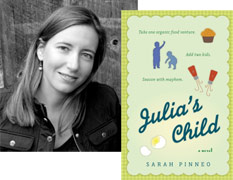
Sarah Pinneo
 
is a novelist, food writer and book publicity specialist. Her most recent book is Julia’s Child. Follow her on twitter at @SarahPinneo.

Wednesday, June 27, 2012

Sell it to me!

Last month I posted something along these lines in the QueryTracker forums, and apparently it was helpful. Now you get to enjoy it too. (Of course, if you were to join the QueryTracker forums, you could see all the other amazing advice we share routinely, but that's another matter.)


One of our members complained (accurately) that it's impossible to summarize an entire novel in 250 words. Which is the absolute truth: any novel that could be summarized in 250 words wouldn't be a novel worth reading. But this member was upset at how many unique and intriguing aspects of the novel's worldbuilding were going to get glossed or omitted. No doubt when writing your own query you got frustrated by the limits of the form, the character shading that got stripped down to stereotypes, the careful setup that got reduced to a trope.


Take a deep breath and play a game of pretend: your next door neighbor called you, frantic, begging you to take her to the emergency room. You grabbed a copy of your novel off the shelf, where it was magically just sitting there bound and printed and with a cover, and drove her there. When you got there, you realized you didn't have your wallet, and the ER staff told you it would be five hours. You're hungry. There are vending machines, but you don't have any money. 

You start re-reading your book and loving it. While you're doing that, I come sit down in the waiting area. Finally I say, "Are you reading a book?"

Instead of telling me, "No, I'm sewing buttons on pickles," you humor me and say, "Yes."

I say, "Is it any good?"

That's when you have a wicked idea: if you can SELL me your book, you'll have money for the vending machines and you won't be so hungry. You have a stack more books at home, so it's not a big deal to sell me this copy. The only thing you'll need to do is convince me to buy it.

Now, given that, how are you going to pitch me the book?  Well, first you'll want to get me excited about it, and then you'll want to slip in the idea that I'll want to read it, and then you'll make the generous offer that well you could let this copy go...  

But what you're not going to do is something like this: "Middle Earth is the home to five major races, each of which explores a different iteration of the human spirit."  And you're not going to say, "The underlying theme of my novel is death, but it's explored slantwise by showing the nuanced ways in which individuals respond to the lure of power." 

This stuff may be vital to the story (and in fact, it is vital to the novel I'm talking about) but it's not vital to the pitch. The pitch needs to be a separate entity. Because queries are not synopses or Cliffs Notes. They're sales letters. 

With that in mind, I think you would say, "It's about an ordinary guy who just wants to live his life, but instead he's forced to protect, and ultimately destroy, the one artifact an evil wizard wants most in the world."

I'd probably sit up and and say, "How'd that happen?"

You'd say, "Well, he had no idea what this ring was when he accepted it, but it was forged three thousand years ago by the Dark Lord in order to enslave the different races that live in Middle Earth, only now this guy Frodo has it. It will give him a really long life, but it's going to turn him into a horrible person if he tries to use it. And the only way to destroy The One Ring is to carry it right into the kingdom where that Dark Lord is. And he knows Frodo is coming."

It's not about giving an accurate portrait of the story. It's about teasing us and making us just as hungry as you are. You don't really care about conveying the nuances of Frodo's relationship with Sam as much as you care about making me shell over five bucks so you can get a sandwich.

Make yourself feel better: look on your bookshelf at your favorite books. Re-read their back cover copy. Think about how much it leaves out. But those few paragraphs still interested you enough to get you reading, right? Even if they didn't convey the subtleties of the character's growth?

It's okay. Take a deep breath. Sell your book.

---

Jane Lebak's first novel The Guardian will be re-released this September by MuseItUp Publishing! She is also the author of Seven Archangels: Annihilation (Double-Edged Publishing, 2008) and The Boys Upstairs (MuseItUp, 2010). At Seven Angels, Four Kids, One Family, she blogs about what happens when a distracted daydreamer and a gamer geek attempt to raise four children. If you want to make her unfathomably rich, please contact the riveting Roseanne Wells.

Wednesday, April 25, 2012

The exclusive query?

No, really. I saw this.

A writer on another forum asked about an agent who says she responds faster to queries if you write "Exclusive Query" in the subject line. The writer was interested in whether queriers actually abide by this.

I was able to track down the listing, and this is the second agent I've seen who mentions exclusive queries as if they're a desirable thing. This particular agent does not demand exclusivity (only rewards it); the other one demanded it.

Most agents feel differently:
https://twitter.com/#!/jsinsheim/status/194494383201067008
https://twitter.com/#!/jsinsheim/status/194494705642381314
Here's a thought: any agent who demands an exclusive query must feel confident that s/he is the very first agent you are going to query.  Otherwise, with agencies taking months to review queries, and writers sending out up to a hundred queries (not all at once, please!) and no-response-means-no, the agent would have to accept that s/he was probably your very last choice. By three months, after all the dust had settled.

So, what are exclusives? Some agents, when they request your full or partial, ask for the exclusive right to be the one and only agent reviewing your material. They generally set a time limit on how long that will be, and it's generally much shorter than the six months an agent might be expected to keep your full manuscript. This is fairly rare, but it does happen.

It's fine to tell the agent if you do not want to grant this (for example, if your manuscript is already in front of ten other agents.) Agents should be able to negotiate, right? If you don't want to grant an exclusive, you should also be up-front in stating that if you receive an offer, you will notify them immediately and give them a chance to respond before accepting. Be aware that some agents will rescind their request; others will allow you to submit on a non-exclusive basis. 

I would recommend against sending a query on an exclusive basis, especially in a climate where many agents never send rejection letters. Your query could be rejected in an hour, but you might wait for months. Months during which you could be seeking representation.

Here's another thought, from the inimitable Miss Snark, talking about exclusive submissions:

I NEVER ask for exclusives and most of my fellow agent buddies don't either. I figure if you want to work with me I'd better be able to tell you why I am a great agent for your book and what I bring to the table that those other sloths in the industry do not. I specifically do not want to sign anyone who hasn't queried elsewhere. That's the fastest way in the world to get a client with buyer's remorse the second something goes awry (and the first rule of publishing is that EVERYTHING goes awry).

If you query only one agent because that agent demands it, and you are offered representation, you'll never know what other agent interest your work would have garnered; you won't have been able to weigh the different kinds of agencies (a solo agent versus one in a large agency, for example) and you won't have been able to hear how different agents talk about their work. You'll lack perspective, in other words.

So let's say you're researching an agent and it turns out the agent wants an exclusive query. What should you do?

First, and most importantly, DO NOT tell the agent it is an exclusive query if it is not an exclusive query.  An author-agent relationship would ideally be career-long, and it should not begin with deception. Period.

(And think about it: a writer who lies about exclusivity is in a pickle if another agent makes an offer. What's the writer going to do? Dear Mr. Agent-Exclusive: I know I said you were the only one looking at my material, but a funny thing happened.... Sincerely, Liar-Writer. That's not how to increase membership in your personal fan club.)

Secondly, if the agent does not put a limit on the exclusivity, put one on it yourself. State in your query that the agent can consider this an exclusive query for one or two weeks (and then specify the ending date). If the "deal" is that exclusive queries get looked at faster, then it makes sense to advocate for yourself in this fashion.

Thirdly, be prepared that any request for materials will most likely also be on an exclusive basis.

Personally, I hope this kind of request doesn't become an industry standard. But remember, if you come across something like this, play smart. It's your time and your career: manage them wisely.

---

Jane Lebak is the author of The Guardian (Thomas Nelson, 1994), Seven Archangels: Annihilation (Double-Edged Publishing, 2008) and The Boys Upstairs (MuseItUp, 2010). At Seven Angels, Four Kids, One Family, she blogs about what happens when a distracted daydreamer and a gamer geek attempt to raise four children. She is represented by the riveting Roseanne Wells of the Marianne Strong Literary Agency.

Wednesday, February 15, 2012

Querying your unlikeable character

The common advice for query-writing is to have character, crisis and conflict. All well and good, but what if your main character is a jerk?

Worse, what if your main character is unappealing on gut-level?

Literature is full of unappealing characters, but I'm not talking about main characters some readers personally can't stand. I'm talking about the ones whom human beings in general categorically don't like, such as rapists. Murderers. You get my drift. Sure, once we start reading the book we may like these characters -- may like them a lot -- but in terms of a query, you don't get very much space to introduce these questionable people. Yet with edgy fiction, you may have a character on the fringes of what most people will tolerate.

In about 250 words, you need to convince an agent or editor to read about someone she probably would step out of an elevator to avoid.

So, how to introduce (and make someone root for) a bully, a demon, a kidnapper, a racist...? Or in the case of my first novel, someone who murdered a child? I think you do it by adding more to the package.

The very first thing I would suggest is working out for yourself exactly why you love this character. After all, you must have loved this character a lot in order to spend hundreds of hours writing and editing him (or her). Why do you find him appealing? (If it's just, "Well, assassins are cool!" then you're going to need to skip this step. If it's "Well, I wanted to raise everyone's consciousness that human traffickers are evil," then you might want to rethink the whole book.)

Maybe it's the character's intelligence. Maybe he was abused as a child and wanted to break out of the cycle but couldn't figure out how. Present those characteristics. Let us know the character is multidimensional.

Maybe it's how he justifies himself to himself. Show us the labyrinthine thought that allows this person to think well of himself despite what he's doing. 

Second: is he at rock bottom? Right now? Give it to us, raw and bloody, there in the first paragraph of the query, everything this person has already lost by being this unappealing. He's in jail awaiting the guillotine after assassinating the crown prince. Or maybe his wife went into hiding with their kids when she discovered the horrible thing he'd done last week.

Third: the voice. It might be that this character is as outrageously funny as he is outrageously appealing. If that's the case, pull out all the stops to showcase that character's voice in your query. If the character's just so gripping to listen to, we'll be willing to listen to some unsavory stuff.

Fourth: humor. According to Blake Snyder in Save The Cat, the movie Natural Born Killers works because the two guys are so funny that you want to keep listening to them. It's an extension of voice, but if your main character is funny, try to showcase that in the query. 

Fifth: the character's dreams -- and what stands in his way. If the character aspires to something other than what he is now, let us know. Maybe he wishes he could quit pimping and go to college, but first he needs to learn to read.

What not to include? Why the main character had no choice about what he is. Most of us have been in awful situations without becoming murderers or kidnappers, and therefore no matter what the circumstances, we're not going to find it convincing that this person had no other choice. It will just make the character sound weak and the plot contrived. But if the character chose this way of life, then we can believe that by the end of the book, the character can choose something better.

Obviously it's easier to make someone care about an orphan tween being raised by his cruel aunt and uncle, but querying an unappealing character is as possible as it is to write about one.

---

Jane Lebak is the author of The Guardian (Thomas Nelson, 1994), Seven Archangels: Annihilation (Double-Edged Publishing, 2008) and The Boys Upstairs (MuseItUp, 2010). At Seven Angels, Four Kids, One Family, she blogs about what happens when a distracted daydreamer and a gamer geek attempt to raise four children. She is represented by the riveting Roseanne Wells of the Marianne Strong Literary Agency.