QueryTracker Blog

Helping Authors Find Literary Agents
Showing posts with label query letters. Show all posts

Wednesday, November 7, 2012

Learning to Love the Pitch

By Sarah Pinneo | @SarahPinneo

I have often pondered the question of why QueryTracker is so effective at bringing writers together as a community. My favorite theory is that the querying process is a career bottleneck which forces everyone to learn a new and uncomfortable skill. When I recommend QueryTracker to people I meet, I often refer to it as a friendly "writers' ghetto." It's a place where whining about the query process is accepted, even encouraged. We encourage each other, we share information, we comfort those who hit road blocks. We gently steer first draft queries toward greatness, and we pass out tissues to those who bemoan the impossibility of compressing the nuance and greatness of their work into two solid paragraphs.

And while everyone deserves an occasional wallow, my opinion about the painfulness of query writing has evolved. A few years ago, as I strolled up a New York City avenue with my dear friend Abbey, she gave me a crumb of advice she’d once received during her formative years as an actress. And Abbey’s wisdom entirely changed my opinion about querying.

“Listen, kid,” she had been told. “If you want to be an actor, you’d better love auditioning. Because that’s what 90% of successful working actors do with most of their days—they audition. They wait in line. And then they get up in front of strangers and perform with a smile, and then they do it again the next day.”

The truth of it hit me like a wobbly stack of unsold manuscripts. Authors are in precisely the same boat. Pitching is a part of every writer’s life. And it doesn't go away once you land an agent.

Eventually I got my wish. By querying (and querying, and querying) I landed a terrific agent who sold my debut novel. Cue the champagne and streamers. But then last year we agonized together over the catalog copy. Later, the back cover copy. Then, I pitched other authors for blurbs to bedeck my shiny new cover. I pitched book bloggers who agreed to review it. And then? I wrote to every bookseller I've ever known, I pitched media outlets who might cover me.

I’m sure you've spotted the theme by now. The querying never stops. But—and it was a big surprise—I finally began to enjoy it.

Perhaps I shouldn't mention that I also enjoy preparing my own taxes. But my reasoning is the same. Who wouldn't want to devote a little extra time to really getting that right? In the same way that an accountant couldn't possibly care as much as I do about my bottom line, nobody knows my work as well as I do.

Which is just as well, because the pitching never ends. Having one success doesn't mean you’ll never write another pitch. If your agent believes your next book could be part of a two or three book deal, you’re going to have to write a few punchy paragraphs about the next books in the series.

Pitching, like taxes, is part of (the publishing) life. This is something your agent understands too. The first time your agent reads your pitch, she’s also writing her own in her head. Ditto your editor--she's going to have to sell your book to the acquisition meeting, and then later to her sales force. Agents and Editors are query writing professionals. If they can do it, so can you.

So we might as well stop hating pitching, and start to see it for the lifeblood that it is. A query, like an audition, is not an obligation, it's a chance to impress. So step up on that stage and give them your best Hamlet. To read or not to read. That is the question.
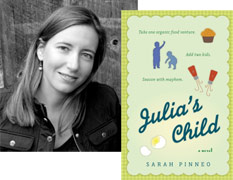

Sarah Pinneo
 
is a novelist, food writer and book publicity specialist. Her most recent book is Julia’s Child. Follow her on twitter at @SarahPinneo.

Monday, March 5, 2012

Query Letters: Constants and Not so Constants

Recently, I've taught several workshops on query letters and in studying examples of recent queries that work, I've noticed some minor changes in the trends.

Now, I can't possibly tell someone what will or won't work for sure because there are way too many variables involved and every project and agent is different. What I can say is some things remain the same. It's still essential to include book specifics like genre and word count, along with a synopsis and brief, relevant bio. It's still important to use the agent's name in a personalized salutation and to include your contact information in the letter.

Two primary things seemed to have shifted a bit in letter protocol: blog mentions/links and visual media comparisons. I'm not saying you should include these, I'm simply pointing out that many successful, agent-attracting letters include them. As recently as three years ago when I was querying, this was not the norm.

Blog links: One thing I have noticed changing is the "never include your blog if you are not gigantic" rule.  From the agent-garnering letters I've read, it is common to mention your blog or at least put a link if it has a devoted (not necessarily huge) following, well-known blog co-authors, or is relevant to your project. Be careful, though, to analyze how you will look to an outside reader before you include a link. Poorly-written material riddled with grammatical and punctuation errors could do more harm than good.

Another element I've noticed becoming more prevalent is the "this meets that" comparison. It used to be a no-no to compare your work to a movie or TV shows (only literary comparisons were thought to be acceptable), but I'm seeing a lot of this in successful queries and even in publishers' book descriptions, like that of our own QT member, Cole Gibson, whose book, Katana, is described by her publisher as "Kill Bill meets Buffy." This doesn't work if you use little known or obscure references. If you look through the QT success story interviews, you will see a lot of these in recent letters.

So while the query letter remains pretty much the same, it might be of benefit to check out the recent success story interviews over on our main site and scroll to the bottom of each interview to see if the agented writer includes his/her query, so you can check out what is working right now.

Some of the letters are fantastic. You can find them by clicking HERE.

Have a fabulous week!

Mary


Monday, November 7, 2011

Why should I care?

 Back in college I took a close-reading class, and since then I haven't viewed prose in quite the same way. The right single word can propel a poem to greatness -- or as Mark Twain said, the right word versus the wrong word is the same as the difference between lightning and a lightning bug. 

At the Muse Online Conference last month, I taught a query-writing class. Students posted their queries for critique, and a few times I found myself rearranging their sentences without knowing why. This is fine for my own work, but a student is going to want a reason, or at least a reason more than "It just works better this way, trust me."

This is a generic example of something I saw in the queries, and I want you to sit up because you're about to learn some verbal sleight of hand.

The original query would say something like this:
Jane thought her worst problem was going to be writing next week's QueryTracker blog entry until the day she discovered she was a Hedger, one of only seven women who could destroy the Earth.

Okay, we've got stakes and a person and maybe a shred of personality, but do you notice what's missing? An emotional reaction. Time and again, I'd rearrange that kind of sentence to something more like this:

Jane thought her worst problem was going to be writing next week's QueryTracker blog entry until the day she discovered the existence of the Hedgers, seven women who could destroy the world. And she is one of them.

Now why would you do that?, you're asking me. And I realized after a while that until we know the meaning of the made-up word, we don't know why we should care.

Let's boil it right down to its simplest: Look at the following two examples:

  • Fritz died last night. He was my puppy. 
  • Fritz was my puppy. He died last night.


In the first example, you the reader delay feeling anything until you know to what degree you should care about Fritz's death. You can't wail, "Oh, how awful! Who was Fritz?" so you need my verbal cue to indicate whether you should be devastated for me, whether you should shrug, or whether you should laugh out loud and say that was a long time coming. 

In the second example, I telegraphed the expected reaction by establishing the relationship between me and Fritz, and you can backfill with your own understanding of what it means to own a puppy. Then when I tell you he died, you know what degree of response is appropriate.  

Now replace "puppy" with "my neighbor's ex husband" or "the guy who shot my parents." See how giving you the information up-front changes your reaction? As readers and listeners, we guard our emotions until we know how we're expected to respond.

Also, we need to know why we're going to care. In the following circumstances, think about how differently you'd listen to a series of instructions on how to deliver a baby:
  • reading them on my weblog
  • attending a class for certification as an EMT
  • hearing them from the 9-1-1 operator

As a writer, you need to slip in the necessary information first, and then follow up with the cause for emotion.

Mind you, those initial examples about Jane discovering her powers -- they're awful and you wouldn't want them in your query anyhow. In your final draft, you'd do something more like, "While clearing her grandmother's papers out of the attic, Jane discovers a crumbling journal describing the seven women --Hedgers -- who can destroy the earth. Oh, geez -- maybe Grandma's mind was failing three decades before the Alzheimer's took her. But then Grandma's journal describes the birthmark that will appear on the wrist of the seventh Hedger. The birthmark Jane was born with ten years after the date on that entry."

Your query is short compared to your book. It would be short even as the setup of a short story. Two hundred fifty words: hit your reader hard. Tell us first why we need to care about the impending revelation, and then give us the revelation. Tell us the importance of what your MC is going to discover before she discovers it. 

Agents are receiving a hundred queries a day, and while it's a fair bet that they recognize terms like vampire, mermaid and demon, it gets tougher when you're inventing your own paranormal elements. Tell me that your main character is a Hedger or a Silter, and without excitement I say, "Okay, what's that?" Tell me that your main character cancels out entropy and occasionally clusters (totally by accident) all the oxygen at one end of a room, and now I'm saying, "Tell me more."

Remember that "Tell me more!" is the reaction you want to get to your query. The query's only purpose is to get the agent to say "There had better be pages pasted into this email," and the purpose of those pages is to get the agent to hate the subway tunnel that prevents her from sending an email demanding the rest of that manuscript right this minute. The prelude to "Tell me more" is showing me why I'm about to care.


---

Jane Lebak is the author of The Guardian (Thomas Nelson, 1994), Seven Archangels: Annihilation (Double-Edged Publishing, 2008) and The Boys Upstairs (MuseItUp, 2010). At Seven Angels, Four Kids, One Family, she blogs about what happens when a distracted daydreamer and a gamer geek attempt to raise four children. She is represented by the riveting Roseanne Wells of the Marianne Strong Literary Agency.

Wednesday, August 24, 2011

Query Bombing: Your Query Timing Questions Answered

Can I send multiple queries at a time? 


How many is too many? 


Should I wait for a response from one agent in an agency before querying another person in the same agency?

 First off, query bombing is a no-no.

 Who or what is a query bomber? 

One who sends out dozens or even hundreds of queries at one time.

 Listen, we get that you’re excited. You think your book is the next Harry Potter. You want to be at the casting call when your book is being made into a movie. We all have those dreams, and yes, some of them may come true, but sending hundreds of queries at once isn’t the trick to getting there.

 It’s kind of like looking into a job. Should you send a mass email out to several businesses? No, because each business (or in this case agent) is looking for something different. For that reason, you need to tailor each letter.

 So what’s the best plan of action?

 For the sake of this post we’ll assume you’ve mastered your manuscript, query letter, and synopsis. Next:

 1. Make a list of agents you’d like to query. 


(This can be as small or as large as you want. I normally go with the cliché “Go big or go home.”) QueryTracker.net is a great resource to help you do this.

2. Research each agent.

Remember, this person could have a big influence on your writing career, so you want to know who you’re working with. Check out agent information sites like AgentQuery, Publisher’s Marketplace, and Preditors and Editors. (QueryTracker.net provides links to these resources for each agent.) Also dig up interviews the agent has done, as well as her website/s, blog/s, and Twitter account. Who are the agents on your list representing? Are they making deals? How long have they been in the business? Find someone whose personality and interests (and sales) are a good match for what you write.

3. On QueryTracker.net (or via whatever spreadsheet system you’re using), prioritize the agents you just gathered.

I use the numbers one to ten. (Yes, you’ll have several under each number). Ones are for your top agents, and tens for great candidates that aren’t quite a perfect match. It’s also a good idea to make notes as to why you chose to rank agents the way you did. Sometimes it’s something as simple as a funny quote on their blog or the fact that they like cupcakes (and so do you!). Or maybe you’ve fallen in love with the advice in their Tweets, or believe you write like someone they’ve represented.

4. Send queries. 

Now, bombing isn’t the way to go. Instead, send a few out at a time. The goal is to see how they respond and then make necessary adjustments based on any feedback. 

I start by looking at my spreadsheet. Personally, I pick out all of those agents I ranked with a number five because while they aren’t necessarily my dream agents, they are agents I’m excited about. I normally send out five queries at a time.

Some writers send another out another query the minute they get a rejection, some wait for feedback, while a few are tempted to burn through their query list.

5. Re-evaluate.

I wait after I send out each batch of queries. I want to see how the agents are reacting to my query. If the first five queries didn’t succeed, I tweak the query, send it out to friends to make sure I’ve improved it, and then send out five more queries to agents on my list. Querying is a tough sport. That’s why sending two dozen out at once is a bad idea. You don’t know what needs adjusting until you’ve gotten some rejections, feedback, or requests. Try and try again are words to live by.

So the next time you’re thinking of query bombing, step back and ask yourself if you want a job. If the answer is yes, send out five and see how it goes.


Jen Daiker writes humorous women’s fiction, where cupcakes and cocktails are always on the menu. She’s spends way too much time on Twitter and can be found on her blog Unedited.


Carolyn Kaufman, PsyD's book, THE WRITER'S GUIDE TO PSYCHOLOGY: How to Write Accurately About Psychological Disorders, Clinical Treatment, and Human Behavior helps writers avoid common misconceptions and inaccuracies and "get the psych right" in their stories. You can learn more about The Writer's Guide to Psychology, check out Dr. K's blog on Psychology Today, or follow her on Facebook or Google+!

Monday, August 8, 2011

Conveying Thy Characters in Queries

Everyone who has attempted to write a query knows the fear: We’ve finished the manuscript. We’re feeling awesome. We’re planning out who is going to be cast as the main lead and their love interest in the movie version of our stories.

It is then that we open up that blank sheet of paper and our eyes fill with fear.

How am I going to condense my amazing book into 250 words?

What will I include?


I’ve read many queries (some being my own) where an important character is missing and in their place is a random grocery attendant. Maybe you’ve done the same thing in your query, and now you’re looking at it and STILL can’t figure out what it’s not working. Why someone doesn’t understand your full story.

Think about this… Just like you need to understand the plot and climax, you need to understand your characters and who moves from point A to point B.

If your main character in a paranormal universe has a ‘protector’ and that protector doesn’t make it into your query, you’ll lose the key part of the story.

Sending it out only to have the agent reject you…and you’re still not seeing the main problem.

There are moments to capture and others that can be tucked in. The key points are the ones you want to share.

Which characters carry the story structure?

If you say the secondary character can be removed then you might want to go back and rework your novel because the secondary character isn’t important enough. Even in the movie Castaway, Tom Hanks is alone but his SECONDARY character is the volleyball, Wilson. Wilson would have made the query. He’s a critical part in the story.

Does a character have a power that’s not being fully utilized?

Did you mention your character has the gift of cleaning? Or the fact that with a single touch she can kill any human, which is why she always wears gloves? What about the fact that a shape-shifter loves a vampire? We must know more about your characters; those details are what bring the story to life.
A story about a character attending high school isn’t nearly as enticing as a girl who can kill with a touch of a finger… making high school that much more difficult. When you leave out key components, you leave the agent out on the juicy news.

Is your character in a love triangle?

Mentioning all three characters in the triangle is pivotal. The agent, as well as the reader, needs to know each person is important. Do you think an agent would have known about a love triangle between Bella, Edward, and Jacob if she’d left Jacob out of the query letter? I think not. It adds depth and it’s something that should be known.

If you’re writing a YA are the parents still alive?

Mentioning that the parents have disappeared or are still alive is a great way to show what developmental stage your character is at. If your main character is about to fight crime, a normal set of parents is NOT going to allow that (if they find out, anyhow). Making a quick comment about where they’re at can be very helpful.
Friends, Frenemies, and enemies, finding out who’s important.

If there’s a villain you’ll want to mention him or her. Adding tension to your query helps not only brings out the voice but keeps the reader (or agent) intrigued to read more. Only talking about those fighting HALF the battle will leave the agent figuring you didn’t finish your novel since the other HALF of the battle isn’t explained.
I should mention you don’t want to get carried away. Agents don’t want to read about 30 guys in a 250 word query. Make sure that who you’re sharing are the MOST important characters, the ones who make the story shine. As much as you don’t want the plot to outshine the characters, you don’t want the characters to outshine the plot. Be sure to keep it equal. Just don’t forget about the key points.

Excellent Examples from the QueryTracker Success Stories Files

Leah RaederFull Query

Leah leaves nothing to chance with her query. Right from the beginning you learn the two important individuals in this story. If she were to remove Ben from her query the whole story wouldn’t be the same. The whole reason Rosa is infected is because of him. Don’t you think he’s pretty important? She did, so adding him into the query helped her get requests.

Rosa Farrow didn't kill Ben Waters. She moved in with her brother to get away from violence: the alcoholic father who was behind the wheel the day Mom died. But she's the last one who sees Ben alive. When his body turns up brutally mauled—with evidence of human bite marks—everyone wants to talk to her. Cops. Social workers. Even her brother seems unsure of her innocence. Rosa's starting to feel like she's in some waking Kafkaesque nightmare.

Until Ben's body disappears from the morgue.

And he shows back up at school, bloody, pissed off—and with lots of murderous new friends.

That's when he does the one thing you shouldn't let the recently deceased do: he bites her. She flees with her brother, but something escapes with her, stows away in her veins. She's infected. Changing. Becoming something like Ben. Becoming a monster even worse than her dad.

Rosa's no killer. Whatever happens, she won't follow in her father's footsteps. But how can she fight something that's inside of her?


Ashlyn MacnamaraFull Query

Titles are something to watch out for. Aislinn has titled her novel A TALE OF TWO SISTERS. If her sister wasn't mentioned at least once within the query how many agents would pass it by? My money's on several. If you didn't take the time to show her in the query then you didn't take the time to put her in the novel!

Scarred by her governess' suicide, debutante Julia St. Claire must marry to save her family from financial ruin, so she seeks to guard her heart in a civilized, sensible union. When such an arrangement is offered by the man of her sister's dreams, Julia must either betray her sister or risk giving her heart to childhood friend, Benedict Revelstoke. But Benedict, a second son, fears he has destroyed her trust by revealing his love for her--until she turns up at his townhouse with a scandalous proposal.


Patrick GabridgeFull Query

In Patrick's novel we have the lovely Tyra and her Grandpa Rudy. She desperately wants to know what he is searching for in the woods when he goes on his many adventures. If the grandpa disappears from the query then Tyra really has no reason for an adventure and Patrick had no reason to write the story.

Eleven-year-old Tyra is stuck spending the summer with her irascible Grandpa Rudy in a lakeside town where she's the only black person (she's adopted). It's clearly going to be the worst summer ever. And a weird one, too. Every night, Rudy disappears into the woods, hauling tools and maps. He's searching for something, and Tyra desperately wants to know what it is.

One night, Tyra follows her grandfather and discovers him digging for an old bootlegger's buried treasure. He swears her to secrecy, but soon Tyra leads her new summer friend, Cory, to Grandpa Rudy's dig site. After being chased deep into the woods by an enraged Rudy, Tyra and Cory uncover clues that lead to Emerald Eddie's secret stash.

Grandpa Rudy isn't the only person in Spirit Lake obsessed with Emerald Eddie's legendary treasure, and it becomes a race to see who will find it first. Someone has been poking around the excavation site and has even broken into Rudy's house. Soon, Tyra, Rudy, and their friends find themselves in very real danger. Only a great sacrifice will allow them to escape unharmed. Through all the ups and downs of their treasure hunt, Tyra and Grandpa Rudy ultimately realize they need each other a lot more than they ever expected.


Jen Daiker writes humorous women’s fiction, where cupcakes and cocktails are always on the menu. She’s spends way too much time on Twitter and can be found on her blog Unedited.


Wednesday, March 9, 2011

Querying Age: Are You Too Young or Too Old?


                                        ©Stina Lindenblatt

 
I was recently asked if there is an age beyond which a literary agent will shy away from when it comes to signing a new client?
First, I want to make it clear. Never, ever, mention your age in a query. You only include the essentials. Your age is not essential.
It doesn’t matter if you’re a teen writing YA. Yes, your voice might be authentic compared to a ninety-nine-year-old writing a YA novel, but the agent doesn’t care. Nor is it important that you’re approaching the upper end of your life span.
The agent only cares about three things: your story appeals to her, she loves your voice, and your writing skills are honed.
That’s all. And these three things will be reflected in your query. Right?
The only circumstance in which you would tell the agent your age is when you’re a minor (under the age of eighteen). Then a parent or legal guardian will have to co-sign your agency agreement. But you only mention it to an agent when you get The Call. Not before.
And really, what does it matter how old you are? Sure, if you’re eighty, your writing career might not be as long as someone in his twenties. But the same twenty-year-old might die in a car accident and that’s the end of his writing career. You can’t predict these things, and neither can an agent.
So don’t worry about your age. Just focus on producing the best possible query and manuscript.


Stina Lindenblatt writes romantic suspense and young adults novels. In her spare time, she’s a photographer and blogging addict, and can be found hanging out on her blog, Seeing Creative 
                                         

Monday, February 21, 2011

Mentioning Similar Books in a Query: How To

Today's question is:

Many say a query should include reference to a novel the agent has represented in the past that's similar to your own. How pertinent is this advice? If it's important, does a writer proceed by spending weeks reading numerous novels before querying each agent? I can't imagine doing so, and this tactic may not even succeed.

Mentioning a novel or novels the agent has represented serves several purposes. First, it tells the agent that you read (a surprising number of "writers" claim they don't) and that you know how your book would be positioned in the marketplace. Second, it tells the agent that you know and appreciate that she has sold books similar to your own, which suggests that you and she might in fact be a great match.

To figure out which agents are selling books like yours:

1. Read in the genre in which you write!

I don't know about you, but one of the reasons I'm a writer is because I love books! Every month, I head over to my local library and pick up between five and seven books in genres I love to read. I don't usually read all of them (because not all of them end up appealing to me when I start reading), but I've discovered amazing stories this way.

One writer in particular I recently discovered is Sara Creasy, who writes science fiction. Her book Song of Scarabaeus was an amazing mix of fascinating sci-fi plot and romance -- something I also aim to accomplish.

2. Check out the Acknowledgements.

New authors in particular often thank their agents in their Acknowledgements. So when you find a book you love, flip to the front and check the Acknowledgements.

Creasy did in fact mention her agent, Kristin Nelson, in her Acknowledgements, so I can make a note of this and go from there. But let's say the author you're admiring (and feel has a similar style and story to you) isn't mentioned in the Acknowledgements.

Lucky you -- you belong to QueryTracker, so you have a secret weapon in your arsenal!

3. Check out QueryTracker.net's Who Reps Whom database.

QueryTracker.net gives you access to the incredibly useful Who Reps Whom database. (Look under the Resources pulldown menu.) In this database you will find nearly 10,000 authors and the agents who represent them (or have represented them in the past). Lo and behold, Creasy's agent (Nelson) is also listed here.

Additional Tips:


  • Be sure the author you're mentioning is in fact someone whose writing is similar to yours -- not just someone you admire.  For example, you may love Stephen King's writing -- but do you really write like him?
  • Try to pick authors who aren't household names.  Again, this suggests that you really do read in the genre and know the work of the author you're mentioning.
  • If you're able to, mention more than one author the agent represents.
  • Try to explain -- briefly -- why you feel your story will appeal to the readers of the authors you're mentioning. 


Carolyn Kaufman, PsyD's book, THE WRITER'S GUIDE TO PSYCHOLOGY: How to Write Accurately About Psychological Disorders, Clinical Treatment, and Human Behavior helps writers avoid common misconceptions and inaccuracies and "get the psych right" in their stories. You can learn more about The Writer's Guide to Psychology, check out Dr. K's blog on Psychology Today, or follow her on Facebook!

Wednesday, January 26, 2011

Querying The Cliché

Recently I heard a writer complaining that the "rules" for querying were impossible to follow. She pointed out that there are only eight (or twelve, or four) standard plots, and therefore it's ridiculous for agents to issue decrees such as "Don't tell us it's a story of forbidden love: that's cliché." Or "Don't say 'choosing between life and love.' That's overdone."

In effect her question was this: What if your story really is about forbidden love, or about choosing between life and love, or could be quickly described by some other cliché? Are they saying you can't query it?

Of course you can query it. If there are only four (or eight or twelve) standard plots in the world, you can assume there's going to be some repetition.

Therefore it's up to you to do your future literary agent a favor. Assume your future agent goes to  her inbox every day to find a hundred new queries. She's read all the clichés. She wants to find something she'll enjoy, but in order to enjoy your story, she needs something to remember. Something specific.

Remember that a cliché is a shortcut. And when you use one to describe your own work, you're giving only a surface rendering of a story with depth. Work harder. Give it that depth.

It's cliché to say, "Theirs is a forbidden love." Instead you say, "Mom has taken out a restraining order against Tanner, so Emily learns to scale the chimney in order to sneak out at night."

You don't write in your query, "Choosing between life and love," but you do say, "Unless Steve hands over the Omega Stone, the Bertrandians will drop Esmeralda into the vat of boiling oil."

You have to "show-don't-tell" in your query the same way you do in your manuscript.

A coming of age story? No. A teenager whose mother just died, struggling to guide his young brother through their father's emotional absence? Better. A high school dropout choosing between a joyride with his garage band buddies or protecting his ten-year-old brother from their drunken father's rampages? Memorable because we can feel for the characters.

The specifics are the difference between a cliché and a compelling story.  If your future agent really is receiving a hundred queries a week about forbidden love, make it so she remembers yours.

---
Jane Lebak is the author of The Guardian (Thomas Nelson, 1994), Seven Archangels: Annihilation (Double-Edged Publishing, 2008) and The Boys Upstairs(this December from MuseItUp). At Seven Angels, Four Kids, One Family, she blogs about what happens when a distracted daydreamer and a gamer geek attempt to raise four children. She is represented by the amazing Roseanne Wells of the Marianne Strong Literary Agency.

Wednesday, December 29, 2010

Pathway to Becoming a Bestselling Author


Now that the New Year is rapidly approaching, it’s a perfect time to discuss writing goals for 2011. What you want to accomplish next year may be dependent on where you are on the above pathway to becoming a bestselling novelist (or one with a loyal and growing fan base).

Newbie Writer

So you want to write a novel (or have already started one). Congratulations! The first thing you need to figure out is WHY you want to be a writer. Is it because you want to be the next Stephen King or J.K. Rowling? If so, quit now. You’re doing it for the wrong reasons. But if you want to be a writer because you hope to write stories that might one day be published and make a difference in someone’s life or entertain your readers, then welcome to the club. But before you join us, there’re some things you need to do:

  • Read Read Read in the genre you want to write. If you woke up this morning and decided to become a YA writer, then you’ve got a lot of homework ahead of you. Same deal if you want to write a medical thriller and have never read one before. Of course, in this case, you might want to consider attending medical school first (or law school if you want to write a legal thriller).
  • Read outside your genre. You might get some brilliant ideas for your story. Plus, you might discover a genre you never thought about writing before.
  • Study nonfiction books on writing.
  • Read blogs. A lot of writers are delighted to share their knowledge and writing tips in bite-sized pieces. This makes it easier for you to remember the pointers when writing and editing your novel.
  • Analyze the writing of your favorite authors and see how it can improve your writing.
  • Join a critique group or find some knowledgeable beta readers.
  • Learn to research. Most novels require research, even if it’s just to make sure your characters aren’t stereotypes.
  • Attend conferences. They’re a great learning and networking experience.

Querying Writer

You’ve written your novel and done numerous revisions based on feedback from your critique partners and beta readers. You’ve polished your novel until it shines, and have given it some much needed distance. Now you’re ready to query.
  • Learn how to write a query and how not to write one. Many queries are rejected because writers did those things that irritate agents and editors the most. Don’t be one of these writers.
  • Research agents. Don’t waste your time and theirs by querying the wrong agents.
  • Write a query and have it critted by your critique group and by people who don’t know the story. And don’t forget to make sure it has voice. If it doesn’t, the agent might think your novel lacks voice, too. (Hint: It needs to be in the same voice as in your novel. Believe it or not, this mistake does happen.)
  • If you’re just getting form rejections, go back and redo the previous three points.If agents are rejecting requested materials, figure out why. IF you’re lucky, they might give you a hint. For example, if an agent mentions the characterization wasn’t as strong as she would like, now’s the time to study some books on characterization.
  • Start working on a new project. I can’t stress this one enough.
  • Consider trying out a different genre. Maybe you aren’t cut out to write legal thrillers, but discover you can write a kickass romantic suspense.

Agented Writer
Congratulations, you’re getting closer to your goal of publication, but you’re not there yet. When you consider how many agents represent your genre and how many editors are looking for it, well, the odds aren’t great in your favor of your book being sold.
  • Keep reading books in and out of your genre.
  • Continue to develop your craft. Just because you’re agented, it doesn’t mean you can stop learning and challenging yourself to do better.
  • Start working on a new project so if your current book doesn’t sell, you’ll have something new for your agent.
  • If your manuscript is only collecting rejections, study the reasons behind them. Unlike agents, many editors do provide some feedback as to why they rejected the book. See this as an opportunity to improve that area of your writing (if that was the reason for the rejections), especially if they’re consistent. Remember, your goal is to be a professional one day (i.e. make money from your stories). And professionals (physicians, accountants, lawyers) are always learning. It never stops. Which brings me to the next point.

Published Author
Wow, you did it. You’ve made it to a place a lot of writers dream about. Of course, you still have a lot of work to do. You have to promote the book (which I’m not going to go into here) and write a new one. But just because yours is published doesn’t mean you can stop challenging yourself and pushing your writing to the next level. Keep studying those books on writing and attend conferences. Unless you’re an award winning author (I’m talking the major literary awards), you probably still have room to grow. Don’t be the foolish author who assumes he knows everything.

Bestselling Author
Okay, I know no bestselling authors are reading this, but hopefully you keep this advice in mind if you ever get to this point. Your fans might be forgiving, but that can only take you so far. If you start to ignore the rules, it might not necessarily work in your favor (though sometimes it can). How many of you have stopped reading books by your favorite author because the writing just isn’t there anymore? The writer has become lazy. Once your fans drop you, you have to work even harder to get them back—if you ever can. That’s why I consider the pathway to being a bestseller (or a much admired author) a two-way circle. It is possible to move backwards and not just forwards. Also, your first published novel might have been a bestseller, but it was mostly because of hype. Your next novel might not do as well if readers where disappointed with the last one.

Remember, no matter where you are on the pathway, you should never stop learning and challenging yourself to do better. Your readers will thank you for it. So where are you on the pathway, and what are you planning to do next year to help you meet your goal of being published (or keep being published)?
(Note: Because of the limitations of my graphics program, this graph is slightly misleading. Only under very rare instances could a newbie writer skip the querying step and go straight to being a bestselling author. And a writer’s first book might be a bestseller (i.e. they skipped the part about developing a fan base over a period of several books), but I couldn’t show that in my graph. Also, you might be published by a small pressed before landing an agent for your next book.)

Stina Lindenblatt writes romantic suspense and young adults novels. In her spare time, she’s a photographer and blogging addict, and can be found hanging out on her blog, Seeing Creative.  

Friday, December 17, 2010

Publishing Pulse: 12/17/2010

While I was supposed to be writing the Pulse, I was Stumble Upon-ing and I found Tweetaboogle.  Tweetaboogle searches Google...and Twitter tweets.  I didn't find most of the tweets to be especially relevant, but I suppose if you Googled something that was trending you might. Kind of fun, anyhow.  Do you use any interesting search tools, like StumbleUpon or Tweetaboogle?

On to the other good stuff 'round the web, specifically for writers!

QT Premium Membership Makes a Great Gift

Don't forget that you can ask for (or, okay, give) the gift of a premium membership at QueryTracker this holiday season!

New And Updated Agents

Brianne Mulligan with Movable Type is looking for MG and YA.

* Also be sure to double-check the QueryTracker listing for any agents you're submitting to over the holiday season -- some agents/agencies are closed until January!  (If you missed it, you may also want to read Mary Lindsey's recent QTB post on querying this time of the year.)

Around the Internet

The Yarn Harlot does a great job of what goes through a writer's mind on D-Day -- the day she submits her manuscript to her editor.

Over on Novel Journey, author James Scott Bell, who wrote The Art of War for Writers, asks When Should You Quit Writing? (Yes, this is safe to read.)

Another gem on Novel Journey: Tips for Surviving Bad Reviews.

Planning to use social  media to sell books?  Learn what not to do in Jane Friedman's When Social Media Fails to Sell Books.

Have a wonderful weekend!


Carolyn Kaufman, PsyD is thrilled that her first book THE WRITER'S GUIDE TO PSYCHOLOGY: How to Write Accurately About Psychological Disorders, Clinical Treatment, and Human Behavior is now available. Learn more at the WGTP website.  

Also be sure to stop by Dr. K's new blog over on Psychology Today, where she tackles things like how to write great villains, what to do when your personal issues keep showing up in your writing, and which cliche to avoid when your badass character lands in therapy.

Monday, November 29, 2010

’Tis The Season To Query?

Now that it’s almost December, most querying writers have one thing on their mind: is this a good time of the year to query, or should I wait till the New Year?

The answer depends on the agent. Some agents go on a query holiday at this time of the year, which can begin sometime in November and end in January. The best thing to do is check their websites, blogs, and Twitter. If you register for the QT agent update, this info will be sent to your inbox (Thanks, Patrick!).

If there’s no indication that the agent is closed to queries during the holidays, you can certainly send yours in, but read Nathan Bransford’s advice first. Or you can listen to author Elana Johnson and wait for the New Year, and spend December making sure your query and manuscript are in the best possible shape.

And if you need another reason to wait, I’ve got the best one yet. A friend of mine received a rejection last year. On Boxing Day. Kind of a downer after a wonderful Christmas day. Oh, and don’t send any queries on January 1st at 12:01 am, especially if you’ve been partying. I’m just saying, you know.


Stina Lindenblatt writes contemporary and romantic suspense for young adults. In her spare time (LOL), she’s a photographer and blogging addict, and can be found hanging out on her blog, Seeing Creative.

Monday, November 22, 2010

Agents Requesting Material: The Happy Dilemma

Again we have some questions from the QueryTracker Festival Of Questions.

Do you include a synopsis in the body of the email when sending out a partial?
When sending a partial, it's always best to follow the agent's instructions if any are given. If not, then arrange the following in one document:

  • First page: your original query letter so the agent can remember why she loved your work enough to request pages.
  • Second page: begin your partial material.
  • After the partial material: your synopsis.
  • In the body of the email itself, I would include only thanks for this opportunity and a mention that you have sent everything as requested.

--
Next question:

I got a partial request from an agent back in June, and the email said to wait 12 weeks for her response. It's been 16 weeks and the agent hasn't replied to any of my emails. Should I just keep waiting for a response? Or would it be okay in this instance to call the agent?
You're not alone, if that makes you feel any better. Same question, different asker:
I am not sure what to do when I query an agent and they make a request and then I don't hear back. Is it okay to call if they don't respond to an email?
I ran into this a couple of times, and it's a head-scratcher. I would say no, don't call.

Here's where having a QT membership helps. A lot. First, you can look at the agent's stats to see her average response time for requested material. If she says twelve weeks but her QT stats show an average of 26 weeks, you know to keep waiting.

Secondly, if you have the premium membership, you can narrow down the agent's response time from the time you submitted. It may be that her average response time is twelve weeks, but her recent responses have taken five months.

One agent who requested my material said she responded in three months, but when I checked her stats, over time her average response time had climbed to 282 days! I could also see that for the past month she'd responded to no submissions at all. With that data, I knew not to nudge her. In another I could see from the QT stats that an agent had requested eight manuscripts in a week, then none for the next two months, and responded to none of those eight for a month beyond that. Again, I didn't bother nudging.

If it appears you should have received a response, assume a technology fail. Send a status query to the agent from a different email address, just in case her reply went into your spam folder (You are checking that periodically, right?)

Please note: we are talking about requested material, not queries. Don't send a status update for a query. If you think you should have received a response, just resend the query.

Once a submission went overdue (to me, that's the stated time plus 25%, although not before 12 weeks under any circumstances) I would nudge at one-month intervals.

A phone call demands an immediate response from the agent (Yes, no, or "I don't remember your project.") The highest likelihood is that the agent won't remember your query and has sent requested material to the back burner due to being overwhelmed by already-signed clients. You don't want to be the equivalent of a telemarketer who asks for money for the Ruthenian Policemen's Fund For Starving Chipmunks while someone is making dinner and wrangling three children. You might well get an answer by pushing, but it won't be the one you want.

Because you won't have stopped querying while waiting for this one agent's response (right? RIGHT?) your efforts are best focused on finding other agents to request your material, thus distributing your hopes more widely. And, of course, working on an unrelated novel. If you do get an offer, you can nudge with the subject line "Offer of Representation: {title of work}" and that will be your final nudge forever.

Best of luck!

---
Jane Lebak is the author of The Guardian (Thomas Nelson, 1994), Seven Archangels: Annihilation (Double-Edged Publishing, 2008) and The Boys Upstairs (this December from MuseItUp). At Seven Angels, Four Kids, One Family, she blogs about what happens when a distracted daydreamer and a gamer geek attempt to raise four children. She is represented by Roseanne Wells of the Marianne Strong Literary Agency.

Monday, August 2, 2010

Guest Post-Cynthia Watson: Premature Querying

Our guest post today is by aspiring author, Cynthia Watson:

Premature Querying (Rapid Submission), or, It’s Not Me, It’s You

A lot of us unagented, unpublished writers have probably been there at one time or another.

You’ve just created the MS of your dreams; exciting, funny, sensitive, fantastical, cerebral, beautiful, sexy. You’re walking on air; you want to shout it from the proverbial mountain tops; share your feelings of euphoria, and amazing good fortune with the agenting world. One word of advice: DON’T. Although you’re sure this is THE ONE, please heed my advice, and remember your judgement is clouded; it’s usually high on expectations, and low on reality. You are not seeing your MS clearly. This is commonly called the Honeymoon Phase.

Regrettably, the Honeymoon Phase is often accompanied by the embarrassing but little spoken of malady many writers suffer from: Premature Querying, sometimes referred to as Rapid Submission, or RS. Some factors that commonly contribute to RS are unrealistic expectations, inexperience, excitement and ego; not to mention high levels of caffeine, or nicotine. One of the downsides of RS is psychological. It can decrease self-confidence, increase frustration, and cause many a writer to prematurely break up with their MS. And, of course, RS will force many a literary agent to head for hills, shouting, “It’s not me, it’s you.”

To gain control of your relationship with your MS, and avoid the unpleasant, and humiliating side effects of RS, slow down, and wait for the next stage in your relationship with your MS: The Reality Phase. This is the most important phase and one where the real work begins, with eyes wide open. You need to develop a MS that has lasting qualities: perfect grammar, structure, pace, voice, vivid imagery, realistic dialogue, conflict, resolution; in other words, polish. This phase takes great care, patience, and TLT (time, love and tenderness, in the words of Michael Bolton).

Once you have gained control, and developed a rock-solid relationship with your MS, you can avoid Premature Querying, penetrate the querying process with confidence and satisfaction, move on to the Commitment Phase, and maybe even live happily ever after.

* * *

Cynthia Watson is in the query process for her first novel, WIND, a Young Adult Paranormal Romance, while writing the second book in the saga, SAND.

Cynthia lives just north of Toronto, Canada, with her Cocker Spaniel, Symon, and five rescued cats. More about Cynthia can be found on her website and her blog.

Thanks to Cynthia for sharing her wisdom with us today.