QueryTracker Blog

Helping Authors Find Literary Agents
Showing posts with label NanoWriMo. Show all posts

Tuesday, January 17, 2017

Did you NaNo? Welcome to the "Now What?" Months

As Jane mentioned at the end of November, November isn't the time to query your NaNo novel. And, despite the glory of starting your year of by sending out batches of queries, that isn't the best idea, either. After all, traditional advice for revision includes waiting (at least) a month between your first draft and your first re-read, so you can look at the story with fresh eyes.

So, using the official NaNoWriMo etymology, January and February are the "Now What?" months. This, however, is where the official site falls short. Per their page on revisions, they recommend the same kind of "anything goes" approach to revisions as they do to writing.

While I (and most others) are all for first drafts in which anything goes and nothing matters but the words on the page, revisions should be approached more carefully. There are many moving parts in a novel that need to be in perfect alignment if you want the smoothest, most enthralling story for your readers. You need to have characters that are well-developed and (usually) follow a character arc, a plot that hits the major plot points, and a theme that comes organically out of the characters and plots.

It can be overwhelming to think about everything your novel needs when you first sit down to re-read what you've written. The most important thing you can do is realize what you have accomplished. Think about the strengths in your story. Consciously dwell on the pieces you're most proud of--whether it's a specific line, or a plot twist, or a fascinating character you just love. You've already done more than most people ever will: you've written a novel!

There are lots of successful writers who use intuition in revision, but if it's your first go of it, or you like a little more structure, I recommend finding a revision process that works for you. I use the detailed revisions process laid out by Susan Dennard as a jumping off point, which has evolved over time to suit me.

A Google search for "Revising your novel" leads to a lot of x-step guides to a finished novel. Holly Lisle, for instance, says she edits a full novel in one to two weeks and if you're taking more than a few months you're probably doing it wrong. I disagree with her, especially if writing isn't your full-time job. Many of us, myself included, simply don't have the time to devote 6- to 8-hour days to working through our manuscript. Take the time you need to take. That said, she offers excellent advice (set a realistic deadline for yourself; write the best book you can now, without worrying about the best book you can write next year) and some great questions to ask as you re-read. Despite the title, Anne Lyle's Revising Your Novel in 10 Easy Steps doesn't overly simplify the process, but gives you a great place to start and concrete steps toward making your book the best it can be.

If you either enjoy consciously plotting story structure or don't understand much about it, K.M. Weiland's website, Helping Writers Become Authors, is my go-to website for learning about structure. There are series on structuring the whole of a book, structuring scenes, and structuring character arcs, as well as a database of examples and a plethora of other things. If you don't know what to look for when it comes to making sure your story holds together, her website is an excellent source.

However you choose to go about revision, there are a few things to remember:

  • Always revise big picture first and details last. If you have to add a new scene, treat it like a new first draft, making sure the right things happen before making sure dialogue is perfect before making sure typos are absent.
  • There comes a time when you will need to show your work to critique partners and betas. This is absolutely necessary before sending to agents or out for self-publishing. For me, this step is after my second draft, when I've done my revision for the big picture and tackled much, but not all, of the smaller issues. For you, it might be after the first draft, so your critique partner can work as a sounding board for how to change things. It could be as you write, chapter by chapter. It might be after your fifth draft. What matters isn't the timing, it's making sure you get someone else's opinion.
  • Revise again after you receive feedback. Probably set it aside for a few weeks and revise another time after that. Revise until you're not sure you like the story anymore. Then stop, trust yourself, and head over to QueryTracker to start querying. That's when you'll be ready.
Rochelle Deans is an editor and author who prefers perfecting words to writing them. She lives in Portland, Oregon with her husband and two young children. Her bad habits include mispronouncing words, correcting grammar, and spending far too much time on the Internet.

Tuesday, November 29, 2016

How to publish your NaNoWriMo novel

Don't! Not yet!

Okay, let's back up a step. If you've just completed National Novel Writing Month for the first time (http://nanowrimo.org) you're probably riding the crest of your success, thrilled with your book, and already thinking of what to wear at your first book signing.

I get it. Even though I'm a jaded old lady who knits socks on cold nights, I get it. Right now, you love your book. Love it with every last atom of your heart, and you want it in the hands of readers who will love it just as much as you do and sketch pictures of your favorite scenes to post on their tumblr pages where they tell all their friends to buy your book. You can't even think "my book" without thinking 💜my book💜. I've been there.

Do not try to publish it yet.

1) Your book needs time.

Let your book "rest" a bit so you have time to come down from the endorphin rush. You're in love. You're producing so much oxytocin that you could singlehandedly power a rocket to Neptune and then ride a gravity whip out to Pluto. That's not the time to make any kind of judgment about your book.

Go read someone else's book and force yourself not to look at your manuscript for a little while. Later you can come back to it and be a little more objective about the main character, the plot, the setting -- you know, the small details people tend to want to hang together in a story.

If you have a nagging concern in the back of your mind about one specific part of the story, it's probably correct. Even if you don't yet know how to fix it.

2) Your book needs feedback.

Find a few avid readers who aren't afraid of tears or screaming, and ask them if they'll read the first draft of your book. You might have to look online for what's known as a "beta-reader" but do find one, someone who will read through the story and be unafraid to voice all those repeating concerns you had in the back of your head. You know, about things like the main character, the plot, the setting...  It has to be someone who's not afraid to say things like, "I didn't care what happened to your main character" and "Why didn't he just get in his car and leave the house full of spiders?"

(Yes, even if neither of those things apply to 💜your book.💜 A beta-reader must be tactful but fearless.)

It doesn't feel good to get negative comments, but trust me, when the book is published, no one will hesitate to bestow them upon you by the crate-load. And if you're going to publish traditionally, agents and editors also won't worry about your feelings. If you get a negative response at all, it will be along the lines of, "Not for me." You'll need actual feedback.

3) Your book needs detailed critique and an editor.

Once you've gotten through some beta readers, you want a critique partner to go over the book with you on a much more detailed level. Ideally this should be another writer, that way the two of you can chew on different solutions to complex problems. A beta reader might know the plot is confusing but a critique partner will be the one to point out that these three characters could be combined into one character without any damage to the plot, or that the main character's stakes should be raised in Act III (and then make a suggestion on how to do it.)

4) Your book needs a sharp query and an interesting synopsis

Get both of those ready before you start pitching to agents. Make sure you know exactly how querying works and what to expect when you approach agents. Learn what agents do. If you're going to approach small publishers, you'll need to know what they do too, and the kinds of things they want to see. Get other eyes on your query to make sure it's a tantalizing sales letter for your book.

5) Your book needs not to fall prey to scammers.

The larger NaNoWriMo gets, the more predators are going to try making money off it. Before you even consider publishing your book, you need to learn how publishing works, both traditional and independent. The QueryTracker blog is a good start (this site, if you got here by googling "publishing my nanowrimo novel") but you should also find guidance in writing groups. Double check that any service you use is not a scam.

Traditional agents do not charge money to read or represent your manuscript. Traditional publishers do not charge money to publish your manuscript. You should not be bound by contract to purchase a certain number of your own books. You should not have to earn back the publisher's net expenses before receiving royalties. You should be the owner of your own copyright. You should not be forced to sign a non-compete clause. You should have a lawyer review any contract you sign and be prepared that every sentence of any contract will be leveled against you in the worst possible way. If you can't abide by the strictest interpretation of the document, don't sign the contract.

Many writers are desperate to get their stories out there, but if you try too soon, you will undercut your book's success. Your story...I mean, 💜your story💜 deserves the best you can give it. That means time, editing, and honest business practices.

You finished! Congratulations! Now give 💜your book💜 a huggle and tuck it in to rest for a little while.

---


Tuesday, November 22, 2016

NaNoWriMo for the rest of us...

The QueryTracker Blog Crew are busy getting ready for this week's holiday. In the spirit of the real Reason for the Season--by which I mean NaNoWriMo--I'm sharing a past article on my own NaNo misadventures. Enjoy, and Happy Thanksgiving to all to celebrate! ~*~ Cheers, Ash


I have a confession to make: I’ve NaNo’d. And I’ve NaNo’d badly.

I know the rules for National Novel Writing Month. It’s all about the word count. The aim is to bar all excuses and get that first draft down. Goal is 50,000 words in the thirty days of November, during which you mark your progress in your NaNo profile.

For the past three years, I’ve used NaNo to plump up the word counts of my side projects while working on my Demimonde series. But I’ve never hit my 50k goal. Not once.

The biggest obstacle to getting my first draft down isn’t writer’s block or inspiration or ambition. Plain and simple, it’s time. I work full-time outside the home (as well as inside the home, thanks to my wonderfully over-active family life). My writing time is at a premium: solitary mornings between school bus and work, waiting time while kids are at judo, a few hours on my days off.

I’m willing to try any system that forces me to sit down and write. This summer, I participated in a Fast Draft with a group of writers, during which we wrote in sprints with support from each other. I had a major deadline to meet and the week-long event fueled my drive to meet it. (For more on my experience with Fast Draft, read this.)

The annual NaNo is another tool I try to use, but I always feel like I join in with a handicap.

Think thirty days is too short a time to write a novel draft? Try ten. That’s all the time I have to participate. I suppose if I could write 5k a day on each of those ten days, I’d have it made. Although I have never actually managed that, it does provide me with a theoretically plausible goal. That’s why I NaNo each year—there’s always hope.


NaNo: The Winners

I envy those writers who win their NaNo. I see their proclamations and their nifty I WON badges all over the place and I invariably end up scolding myself for not trying harder. But I don’t scold very hard or very long because, while I was never a definitive winner, I usually got good work done.

And NaNo’ing isn’t just designed to give writers an exercise in endurance or inspiration to get those latent stories written. Our WriMo books aren’t always meant to hide away in drawers and on hard drives. I’ve read accounts where writers went on to finish the books and get them published. You can see the lists of books that NaNo participants have published, many by traditional houses.
 
Stuff like that is inspirational. More so, it's intimidating for the rest of us.

Sure, there are loads of NaNo winners, and heaps of success stories for the books that made it to the light of day. But I was never one of them. I’ve never hit 50k in a month. I’ve never ended up with a first draft by November 30th. That’s why I feel like a bad NaNo’er.

My project in 2011 fared pretty well, with just over 30K for the month. I might have actually written a little more, but I was doing final edits on the first Demimonde novel, which came out the following March. NaNo 2012 was completely abysmal by comparison; I simply wasn’t committed to the project because I was busy promoting the first Demimonde book while editing the second, which was due out in six months. I think I spent more time revamping my NaNo profile than I did writing.

This past November, my edits on the third Demimonde book had been submitted early and I was between projects. I had space to breathe and think about an unfinished project that had been brewing in the back of my head. Although I only spent six days on NaNo 2013, I managed 15k words, plus a synopsis. (I think the synopsis impressed me more than anything because books are easy, by comparison.)

Three years, three projects, and none of them “winners”.


The Rest Of Us

But I didn’t lose. Not by a long shot. Despite my shortcomings, I think there may be hope for me yet because I decided NaNoWriting doesn’t have to be limited to a single “Mo”.

The project from 2011 didn’t just evaporate in the ether. I pulled it out this past summer and read through the unfinished book. I still loved the idea of the story and decided those 30k words were too much to let languish. In August, I resurrected the file and enlisted the help of a professional reference/fellow author/good friend and began investigating the details of the psychology in the story. I went on to finish the first draft in early October and revised over the next two months. Bugged a few beta readers, entered a few contests, revised some more…and today it’s ready for the eyes of an editor.

It took two years, but my NaNo ’11 book got written, got edited, and got submitted. Hopefully, it’ll get published, too.

Two years to a complete first draft. Not thirty days. And I don’t feel bad about it.


The True Spirit of NaNoWriMo

In the meantime, I carry a bit of NaNo around in my writer’s soul every day. I look forward to the NaNo emails that arrive throughout the year.

Right now we are in the "I Wrote a Novel, Now What?" months. A recent email addressed helpful topics for all writers, including tips on editing, participation in writers’ communities, and an invitation to a program on the subject of self-publishing.

Writing a novel isn’t a dash. It’s more like a relay race, and your novel is the baton. The first leg of the race is the first draft. Then, you pass the baton on to the edits and revisions, which make several more laps. The race still doesn’t end there; you hand the baton off to critique partners or beta readers. Perhaps you’ll pass it to an agent or the editor of a small press. Then the edits and revisions do a few more laps before reaching the finish line, where your readers await.

Does it sound like a lot of running in circles? Sure it does.  But never for one moment think you aren’t going anywhere. Even a spring can be straightened into a straight line—and the length of it may surprise you.

Some writers can get the first lap done in thirty days, during NaNoWriMo. I’m not one of them. But I do encourage every writer to participate. Don’t miss out on a fabulous program just because you can’t write for thirty days or because you’re sure you can’t get that word count down. You may not make the 50k goal and you may not earn a Winner’s badge, but you’ll have a new reason to sit and write, a source of encouragement and support, and access to helpful resources throughout the year.

In the long run, you just might finish that book, and edit it, and publish it. To me, that’s a huge win.

Author's note: out of the four books I started during NaNo, two are now published. One is through The Wild Rose Press and has won several awards...the other became my indie-pubbed international best seller.

Do not underestimate the power of the work you do during NaNo. Start writing, keep writing, and don't slow down! Good luck, everyone.


Ash Krafton is a speculative fiction writer who, despite having a Time Turner under her couch and three different sonic screwdrivers in her purse, still encounters difficulty with time management. She's the author of the urban fantasy trilogy The Books of the Demimonde as well as WORDS THAT BIND. She also writes for YA and NA audiences under the pen name AJ Krafton. THE HEARTBEAT THIEF, her Victorian dark fantasy inspired by Poe’s “The Masque of the Red Death” (and NaNo project), is now available.

Tuesday, November 24, 2015

Don't Let NaNo Ruin Your January

There is a board on the NaNoWriMo forum dedicated to reaching 50,000 words. A noble goal: after all, isn't that what we're all there for? But some of the suggestions that I've seen (not necessarily in that forum) seem counterproductive at best to me. What I love to see in that forum are threads for encouraging one another,

We've reached the final stretch of NaNoWriMo, the last seven days in which everyone will write like crazy, trying to reach 50,000 words. There's even an entire section of the NaNoWriMo forum dedicated to reaching that elusive 50k. However, I've seen suggestions there and elsewhere that seem counterproductive at best. Sure, they'll get you closer to that beautiful purple bar on your profile, but will they really help your book?

Tricks that Almost Never Work

Spell out all your contractions

No, just don't. It may add lots of words to your word count in a semi-legitimate way, but it won't be much fun come January when you have to go back and decide which ones need re-contracted.

Rehash the plot to a new character

Sometimes the plot needs to be rehashed for believeability. But in the final draft, you know it will suffice as, "I told my sister everything that had happened since she left for France last week," rather than a whole conversation.

Have a flashback to the beginning of the book... and copy-paste the first scene

No. Pretty please don't do this. This doesn't help you find the story. It doesn't help your editing process. It doesn't help anything at all.

Give characters really long names/titles

Imagine if every reference to Voldemort in the Harry Potter series was "He-Who-Must-Not-Be-Named." An extra five words every time someone mentions him. Five words you'll probably delete later. How many times does that full phrase appear in the million-word series? Not many. Even worse if you do this at the end, using find/replace to beef up a character/place name just to hit 50k.

Write Every. Single. Line. of dialogue

Obviously, you should write all the dialogue that belongs in the book or gets you closer to understanding the book. What I'm talking about are the pleasantries and small talks that happen in real life and never, ever happen in novels (unless they're used as foreshadowing, but that's a topic better suited to revision). It will add words to your story if you write, "Hello." "Hi, how are you?" "Fine, you?" "Good I guess." "So what did you do today?" "Not much, just played video games. You?" "Well my sister's in the hospital." That's a given. But in the final book it will almost certainly look like two characters approaching each other and one of them saying immediately, "My sister's in the hospital."

When all else fails, add aliens/a zombie apocalypse/a meteor crashing/etc.

The further along you are in your novel, the worse an idea this is. I often see it advertised as prompts for sprints or for people who are stuck, "just to shake things up." There may be a few times it's worked and prompted the story to go in the direction it was always meant to go. But for the love of revision in January, don't go adding these things to a contemporary just so you have the words. What's the point of writing them when you know without a doubt they'll be deleted the moment you re-read?

Tricks that Can Work

Write a scene from a non-POV character, or outside the timeline of your story

This is the kind of suggestion you should take if, for instance, you're having a hard time getting to know a character, or want to explore a character's history to see how it would be affecting their present. There is a lot of value in this, even if it is the kind of thing you're going to immediately cut come January. (You are going to cut it immediately, right?) The catch lies in not getting so distracted from what you actually want to write that you can't get back on track. This should be a quick troubleshoot, a diagnosis... not the new program.

Add a fight

Fights are always appropriate in books, regardless of the genre. You have battles, fist fights, gun fights, cat fights... all of them can not only add words but conflict to your novel. The trick here is to keep it organic. It's important to be true to your characters and the story, but you don't have to have best friends being besties all the time. It can be useful to think about a verbal fight in terms of "What's the worst thing she could possibly say right now?" and then, of course, have her say it. Even if the fight doesn't stay in the final book, you may have learned something about their relationship dynamics.

Relentlessly describe everything

Unlike including every bit of dialogue you possibly can, this can be useful. There are two ways in which I mean it, too: first, describe all aspects of the setting and make sure you're using all five senses (assuming your character uses all five senses). Make sure you personally know the setting and the layout so that the scene begins to come to life around your characters. Second, if you aren't sure which way to word something, use both. I know there are times I have to stumble through a paragraph of description before I hit on the perfect two- or three-word phrase I was looking for. The way to make sure you ease into January here is to make sure you cross out the words you know you won't keep. Don't make your future self do more work than s/he has to.

If a scene isn't working, try again

Sure, you're not supposed to edit during NaNo, but what about a do-over? Wondering what that scene would be like if a different character were present? Thinking a witty line of dialogue might have sent the plot off in a completely different direction? There's no use not trying. In the end, one or both of the scenes will have to go, but you should be closer to finding your story in the process.

The Litmus Test

In my opinion, whether these methods of padding your word count are "good" or not comes down to one question: Does this further my story and/or my understanding of the story? If the answer is yes, then do it. If the answer is no, you might want to rethink which is more important to you: winning NaNoWriMo or eventually having a polished novel that you're proud of.

What are some ways that you power through the last week of NaNo?

Tuesday, November 17, 2015

Truth Amongst the Lies: Why Fiction Needs to be Factual

NaNoWriMo is a blasted challenge for me. See, I don't actually get 30 days to write—I get just a little over a third that number. That's because I'm slavishly devoted to my day job, which is fraught with 12-hour computerless shifts. Horrid, horrid thought for a writer to be cut off from the ebb and flow of words for such long stretches of time.

I suppose it's a writer's saving grace that writing is mostly mental: I believe that writing is only 10% typing and 90% thinking. It just seems more apparent to me during the month of November. This time of year, I tend to quantify my writing efforts and, like every other good little Query Tracker enthusiast, I obsess with the numbers.

As a writer with limited screen time, I have to work very hard to make sure I make the most of my typing time—usually by using my thinking time to fullest advantage. Sometimes, though, that turns against me and I start to overthink the story.

And that's almost as bad as not writing at all.
 
Truth in Fantasy
I'm a speculative fiction author with definite fantasy leanings. My favorite genre to read is high fantasy, the stories that make you work to unlock every storyline, every character, every unique world element. I love complex family hierarchies, social and ruling systems, and unique magical theories and arts. I thrive in those worlds where there are no limits beyond the authors' imaginations.
 
But when I stop reading and start writing, I find myself thinking about the facts in fiction. A lot.
 
Research takes up a huge chunk of my thinking time. Historical periods, locations, events—accuracy is important to my story telling craft. It's not enough for me to spin a tale—the story must have strong, believable feet upon which to stand. Truth is the structure that suspends my disbelief.
"Suspension of disbelief or willing suspension of disbelief is a term coined in 1817 by the poet and aesthetic philosopher Samuel Taylor Coleridge, who suggested that if a writer could infuse a "human interest and a semblance of truth" into a fantastic tale, the reader would suspend judgment concerning the implausibility of the narrative. Suspension of disbelief often applies to fictional works of the action, comedy, fantasy, and horror genres." Wikipedia, the font of all wisdom (and probably the number one cited reference for high school term papers)
A "human interest and a semblance of truth" can mean so many things: an honestly-portrayed emotion, a genuine personal experience, an accurately described setting, a relevant recounting of an historic event. Our stories must ring true enough so that the reader may become one with the story, a part of the telling itself.
 
Someone who doesn't read fantasy may believe that the very nature of fantasy would be at conflict with truth. Not so. Fantasy begins the moment a writer frees himself from the bound of reality, the point where he utters "what if…?" and takes the first step of discovery.
 
And what could be more truthful than capturing that journey from an honest emotional perception or an accurate portrayal of the setting?
 
That journey— whether through outer space, deep under the earth, or entirely within the realm of a character's psyche— must always have a truthful element, even if the character is completely alien. If not, the human reader may not connect to it. 

Truthfully…
As for me, my word count is balking at the moment because I'm neck deep in Civil War maps and regiment muster dates and the Pennsylvania Bucktails. I'm trolling historical society websites and getting really close to hitting up a history professor or two. Why? Because I need a setting for my NaNo story. The book isn't about the Civil War or soldiers or battlefields. But there's a house, next to an unmarked cemetery, which a character believes may have been a Civil War regiment's temporary camp.

It's not a huge part of the story. It's only a vehicle to explain what happened in the backstory.  It's not the most crucial element of the book.

But it needs to be right. It needs to be plausible. It needs to be something that could possibly have happened 150 years ago or else I'll just feel like I slapped something in there to fill a space.
I can't do that. I need that element of truth in my possibility.

What I should do is shut off the Internet, pick a non-threatening place in my manuscript, and get back to writing. I can skirt the truth for now and avoid the places where I'd have to make open declarations. I can focus on the characters and their relationships and their trials, seeking the human interest and the truth of their discoveries. Just because there's a ghost or two in it doesn't mean it has no base in reality. There is still a lot of truth to be told.

But I know that sooner or later, I'll go back to flipping open one of my books on Gettysburg and looking for a hint so my characters, human and ghost alike, don't remain homeless forever.

Thanks a lot, Coleridge. First Xanadu, now this. You know to really make a girl overthink everything.


Ash Krafton is a speculative fiction writer who, despite having a Time Turner under her couch and three different sonic screwdrivers in her purse, still encounters difficulty with time management. She's the author of the urban fantasy trilogy The Books of the Demimonde as well as WORDS THAT BIND. She also writes for YA and NA audiences under the pen name AJ Krafton. THE HEARTBEAT THIEF, her Victorian dark fantasy inspired by Poe’s “The Masque of the Red Death”, is now available.

Friday, November 7, 2014

Publishing Pulse: November 7, 2014

This Week at Query Tracker
Congratulations to this week’s Success! Read J.A. Holton's story.

Ready to write your own success story? If you're a QueryTracker member (membership is free) you can view the database of more than 1200 agent and publisher profiles. Premium Members can be notified whenever an agent or publisher is added or updates their profile, in addition to receiving access to several other enviable features.

This Week In Publishing
How many words are hiding inside you? November is the perfect month for getting them out... it's time for NaNoWriMo 2014! Get started on your November novel today!

For DIY indies: a guide to creating your front and back matter.

Test your Agent IQ…you may be surprised at the answers!

After writing your press release (if you need it, here's a handy reference), top it off with the perfect headline. Here are five tips you need to read.

Curious about Kindle Scout? Victoria Strauss provides a nice explanation with pros and cons.

Have a great weekend, everyone!


Ash Krafton is a speculative fiction writer who, despite having a Time Turner under her couch and three different sonic screwdrivers in her purse, still encounters difficulty with time management. Visit Ash at www.ashkrafton.com for news on her urban fantasy series The Books of the Demimonde (Pink Narcissus Press). Her paranormal romance WORDS THAT BIND (The Wild Rose Press) is now available.

Wednesday, January 15, 2014

NaNoWriMo For The Rest of Us

I have a confession to make: I’ve NaNo’d. And I’ve NaNo’d badly.

I know the rules for National Novel Writing Month. It’s all about the word count. The aim is to bar all excuses and get that first draft down. Goal is 50,000 words in the thirty days of November, during which you mark your progress in your NaNo profile.

For the past three years, I’ve used NaNo to plump up the word counts of my side projects while working on my Demimonde series. But I’ve never hit my 50k goal. Not once.

The biggest obstacle to getting my first draft down isn’t writer’s block or inspiration or ambition. Plain and simple, it’s time. I work full-time outside the home (as well as inside the home, thanks to my wonderfully over-active family life). My writing time is at a premium: solitary mornings between school bus and work, waiting time while kids are at judo, a few hours on my days off.

I’m willing to try any system that forces me to sit down and write. This summer, I participated in a Fast Draft with a group of writers, during which we wrote in sprints with support from each other. I had a major deadline to meet and the week-long event fueled my drive to meet it. (For more on my experience with Fast Draft, read this.)

The annual NaNo is another tool I try to use, but I always feel like I join in with a handicap.

Think thirty days is too short a time to write a novel draft? Try ten. That’s all the time I have to participate. I suppose if I could write 5k a day on each of those ten days, I’d have it made. Although I have never actually managed that, it does provide me with a theoretically plausible goal. That’s why I NaNo each year—there’s always hope.


NaNo: The Winners

I envy those writers who win their NaNo. I see their proclamations and their nifty I WON badges all over the place and I invariably end up scolding myself for not trying harder. But I don’t scold very hard or very long because, while I was never a definitive winner, I usually got good work done.

And NaNo’ing isn’t just designed to give writers an exercise in endurance or inspiration to get those latent stories written. Our WriMo books aren’t always meant to hide away in drawers and on hard drives. I’ve read accounts where writers went on to finish the books and get them published. You can see the lists of books that NaNo participants have published, many by traditional houses.
 
Stuff like that is inspirational. More so, it's intimidating for the rest of us.

Sure, there are loads of NaNo winners, and heaps of success stories for the books that made it to the light of day. But I was never one of them. I’ve never hit 50k in a month. I’ve never ended up with a first draft by November 30th. That’s why I feel like a bad NaNo’er.

My project in 2011 fared pretty well, with just over 30K for the month. I might have actually written a little more, but I was doing final edits on the first Demimonde novel, which came out the following March. NaNo 2012 was completely abysmal by comparison; I simply wasn’t committed to the project because I was busy promoting the first Demimonde book while editing the second, which was due out in six months. I think I spent more time revamping my NaNo profile than I did writing.

This past November, my edits on the third Demimonde book had been submitted early and I was between projects. I had space to breathe and think about an unfinished project that had been brewing in the back of my head. Although I only spent six days on NaNo 2013, I managed 15k words, plus a synopsis. (I think the synopsis impressed me more than anything because books are easy, by comparison.)

Three years, three projects, and none of them “winners”.


The Rest Of Us

But I didn’t lose. Not by a long shot. Despite my shortcomings, I think there may be hope for me yet because I decided NaNoWriting doesn’t have to be limited to a single “Mo”.

The project from 2011 didn’t just evaporate in the ether. I pulled it out this past summer and read through the unfinished book. I still loved the idea of the story and decided those 30k words were too much to let languish. In August, I resurrected the file and enlisted the help of a professional reference/fellow author/good friend and began investigating the details of the psychology in the story. I went on to finish the first draft in early October and revised over the next two months. Bugged a few beta readers, entered a few contests, revised some more…and today it’s ready for the eyes of an editor.

It took two years, but my NaNo ’11 book got written, got edited, and got submitted. Hopefully, it’ll get published, too.

Two years to a complete first draft. Not thirty days. And I don’t feel bad about it.


The True Spirit of NaNoWriMo

In the meantime, I carry a bit of NaNo around in my writer’s soul every day. I look forward to the NaNo emails that arrive throughout the year.

Right now we are in the "I Wrote a Novel, Now What?" months. A recent email addressed helpful topics for all writers, including tips on editing, participation in writers’ communities, and an invitation to a program on the subject of self-publishing.

Writing a novel isn’t a dash. It’s more like a relay race, and your novel is the baton. The first leg of the race is the first draft. Then, you pass the baton on to the edits and revisions, which make several more laps. The race still doesn’t end there; you hand the baton off to critique partners or beta readers. Perhaps you’ll pass it to an agent or the editor of a small press. Then the edits and revisions do a few more laps before reaching the finish line, where your readers await.

Does it sound like a lot of running in circles? Sure it does.  But never for one moment think you aren’t going anywhere. Even a spring can be straightened into a straight line—and the length of it may surprise you.

Some writers can get the first lap done in thirty days, during NaNoWriMo. I’m not one of them. But I do encourage every writer to participate. Don’t miss out on a fabulous program just because you can’t write for thirty days or because you’re sure you can’t get that word count down. You may not make the 50k goal and you may not earn a Winner’s badge, but you’ll have a new reason to sit and write, a source of encouragement and support, and access to helpful resources throughout the year.

In the long run, you just might finish that book, and edit it, and publish it. To me, that’s a huge win.


Ash Krafton is a speculative fiction writer who, despite having a Time Turner under her couch and three different sonic screwdrivers in her purse, still encounters difficulty with time management. Visit Ash at www.ashkrafton.com for news on her urban fantasy series The Books of the Demimonde (Pink Narcissus Press) or stop by the Demimonde Blog at www.ash-krafton.blogspot.com .

Monday, March 11, 2013

No Excuses.

Let's talk about that novel that's been in progress for ages, the one you're pretty sure you'll finish someday (especially if it's your first novel but even if it's your twentieth). Let's talk about why it's stalled.

I'm finishing my novel for Lent. For reasons we don't need to get into here (but I did elsewhere, for the curious) I've turned the runup to Easter into my own personal NaNoWriMo. You may remember I said I don't do NaNoWriMo, and I don't -- I've set the word count at a sustainable rate for myself, and I've been able to nail it every day except for the time the school called and said they foresaw an ambulance ride in my son's future. (There wasn't. He's okay.)

What I've realized is not just that I required a swift kick in the pants to get finished, but why I needed it: I was allowing normal problems to derail me. So let's back up a bit. Are you too-easily discouraged?

The problem with being an instinctual writer, the kind of seat-of-the-pants writer who navigates the drafting process via instinct rather than road map, is that sometimes our instincts are wrong. Or rather, as instinctual writers, we believe it should be easy. When it gets hard, we may mistake resignation for a writing pause.

This kind of stall is not just the writer making excuses for not writing. I mean that sometimes we legitimately get derailed, only by something that shouldn't have had that much power over us. Maybe in those cases, it's time to borrow tricks from our more-disciplined outlining and word-counting siblings to clear the hurdles. Maybe that's the time to pull out the yardstick and figure out just how much we should be producing per day. And then produce it. No excuses.

Just after the midpoint of my WIP, the reader needs to know a minor character has realized something vital to the plot. The problem? He's not a POV character. Another problem? He keeps this information to himself. I couldn't figure out how to convey his realization, but I had to because it's going to explain why things start going wrong for my protagonists, and yet no solution I came up with resolved the problem to my satisfaction.

I asked my agent. I ranted at my Patient Husband. I lamented to a friend. I wrote nothing. I wasn't even at that part of the novel, but I stalled.

But once I resolved to write my daily minimum, that scene came up, and when it came up, I had to solve the problem. I had no choice. No more dithering. And while I walked out to get the mail, on the day I needed to solve it -- I found the solution.

It's not just that one scene. I've discovered repeatedly that when I'm forced to solve a problem because the word count demands it and we're at that scene...the solution comes. What's the next scene? I don't know. But that doesn't mean I need to take five weeks to figure it out. It's not going to be any easier to figure it out in May than it is today, right? The pace forces me to settle on a solution and enact it -- today. Otherwise I won't get today's pages done.

That's not to say I haven't revisited those pages the next day to do it better. What I'm saying is that sometimes if you're a SOP writer, the tendency is to say, "The solution will come when it comes."

Maybe instead it's better to get up and stride toward the solution. Because now I'm chugging ahead on the manuscript, and I'm furious at myself for the time I've lost waiting for The Idea Fairy to present the next scene, or a way to convey a third party's information, and so on. 

I still hold to the idea of a literary pause. But not literary laziness. Only the writer can tell the difference.

Here's my suggestion, though. If you've got a work-not-in-progress when it should be, and if your literary pause has lasted longer than a week, pick it up again. Write all the way up to your trouble spot. Force yourself to write through it. If it works, then you're steaming ahead. If it doesn't, then rip out those pages and try another approach. But don't discount the idea of momentum. Sometimes going through the motions does lead to real results.

---
Jane Lebak is the author of The Wrong Enemy. She has four kids, three cats, two books in print, and one husband. She lives in the Swamp and spends her time either writing books or ejecting stink bugs from the house. At Seven Angels, Four Kids, One Family, she blogs about what happens when a distracted daydreamer and a gamer geek attempt to raise four kids. If you want to make her rich and famous, please contact the riveting Roseanne Wells of the Jennifer DeChiara Literary Agency. 

Wednesday, January 2, 2013

Why I Use yWriter (Writer Software)

yWriter icon by The Madd Hatter
In December, QueryTracker Blogger Sarah Pinneo talked about why she uses the Scrivener writing software. Of course, there’s other software out there, so today I’m going to share my experiences with another option—yWriter.

yWriter was developed by an author/programmer, and it’s a PC-based freeware alternative to Scrivener (that will, according to the creator, “also run on GNU/Linux and Mac OS X using Wine”).  And by free I mean FREE: it costs nothing and has no ads, popups, unwanted toolbars, or other annoyances to interfere with your work.  It also has bunches of little bonus tools (discussed further below) that you won’t find with a lot of other software. For example, if you don’t want to work in English, you can switch over to everything from Spanish and Hebrew to Russian or Chinese.

Like Sarah, I was reluctant to try writing software, stymied as to how it could help me. But the two methods I was using to brainstorm—writing on an old-fashioned notebook tablet PC or using physical notecards—had problems. My tablet PC is so old it’s slooooow, and I kept dropping and losing my notecards. Trying to outline something on a regular word processor or in a spiral-bound notebook was a nightmare for me. I like to move things around. A lot. And I couldn’t see everything at once, so it was hard for me to figure out where things went best. yWriter helped me with all of those things.

Getting Started

You begin in yWriter with a new Project. A project wizard helps you set up the project, prompting you for your project title, your name, and where you want to store your files. Rather than working at the chapter level, yWriter has you create a chapter and then each scene within the chapter. You can name the chapters anything you want (e.g. Chapter 1, or How It Began). The software encourages you to use descriptive titles for scenes, which makes it easy to see what’s going on in each chapter. It also tracks how many words you’ve written in each scene, along with totals for each chapter. You can easily drag and drop scenes within a chapter or between chapters.

The main project window, with chapter list on the left and scenes on the right.
Click on any image in this post to enlarge it.

Double-click on a scene and you enter a word processing window where you can actually write the scene. As with Scrivener, scenes and chapters can easily be compiled into a single document. Below the word processing window there’s a place to identify the viewpoint character and an area for scene notes.


Along the top are pulldowns and tabs that allow you to dig deeper into characters, locations, items, character goals, timeline, and so on.

Locations list on the left; location image (Pittsburgh airport) on the right.

Features

I don’t usually spend a lot of time creating character profiles and such (I’m more likely to give my characters personality tests), but I found that I like having a place that lists my cast of both major and minor characters and shows me how many viewpoint scenes they have. Each character section includes places you can write a bio, explore goals, include a picture, and take notes for each character. There are similar tabs for locations and items, and you can tag any entry with appropriate terms.

The storyboard places scenes on a series of character timelines, so you can see who has the proverbial ball when. The scene cards can be dragged and dropped, and you can double-click on a card to edit all of its details.


For those writers who like to create 24-like stories, you can even use the software to track to the minute when a scene begins, as well as how long it lasts.


The program will also please NaNoWriMo writers: yWriter keeps track of how fast you’re typing and automatically logs how many words you’re writing each day. It also lets you set word count goals.


You can easily search the entire project with the built-in Search function, and you can also define and identify “problem words” (for example,  -ly words). There’s also a word usage count that lets you see how many times you’ve used particular words.


An auto-backup feature makes it difficult to lose something you’ve been working on, which is fantastic for people who forget to back up frequently as they work. Since the software creator is a programmer, he’s included the ability to automatically back up to your email or an FTP site as well as locally.

You can export everything: scenes, scene cards, scene notes, characters, project notes, synopses, chapters, character lists…and on and on.

It’s Free!

As noted above, the software is free. If you like it, you’re encouraged to register it, which essentially means you donate a reasonable amount (right now, about $12 or about $25) to support the programmer and his time.

I have very few complaints about the software. (And it’s free, so they aren’t vociferous complaints!) One is that I would like to be able to include more than one picture for a scene, character, location, etc. The program also tends to shrink the pictures when I’d prefer them large.

Also, the character goals section is set up based on Dwight Swain’s Techniques of the Selling Writer. Since I haven’t read the book, it took some Googling for me to figure out what I was supposed to do with it. You could probably make Blake Snyder’s Save the Cat! and Save the Cat Strikes Back techniques work in those areas, though, if you’re familiar with those.

The Goals section, based on Swain's book.

Instruction, Help, and Support

If you’re the kind of person who likes instructions and tutorials to help them with new software, there’s an optional sample project included with the install, as well as a Quickstart Guide, a Wiki, a comprehensive help file, group support, and plenty of other resources.

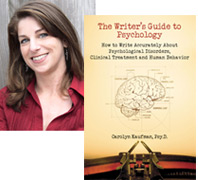
Carolyn Kaufman, PsyD's book, THE WRITER'S GUIDE TO PSYCHOLOGY: How to Write Accurately About Psychological Disorders, Clinical Treatment, and Human Behavior helps writers avoid common misconceptions and inaccuracies and "get the psych right" in their stories. You can learn more about The Writer's Guide to Psychology, check out Dr. K's blog on Psychology Today, or follow her on Facebook

Monday, November 26, 2012

Knitting a Book is Like Writing a Sweater


By Sarah Pinneo | @SarahPinneo

November at my house is all about writing and knitting. The writing bit might be obvious—I’m trying NaNoWriMo again. The knitting is in response to a beautiful crafts fair that my children’s school holds the first week of December. The parents contribute handmade items, we give them all a you-are-shopping-at-a-fundraiser price tags, and the proceeds benefit the school.

In theory this combination of activities should work well. I can think about my NaNo book while I knit. To knit means to take a linear thing—a string—and twist it around and over itself until it becomes a multidimensional piece of art. To write a novel is to do just the opposite. You begin with a beautiful, colorful mess of ideas and emotions, and tease out a linear thing—a string of words in black and white—which best captures its essence.

In practice, I work myself into a lather every November, trying to meet both deadlines. (And both activities make a girl prone to repetitive stress injury. Bummer.) But it turns out that one exercise has given me a lot of perspective on the other. If you’ve never knit before, you should know that any knitting project begins looking awful. The first row of stitches cast on to the needle looks like little more than a snarl of yarn.

Good grief, I always think. How will this ever amount to anything? Maybe I should have chosen a different project. I’ve never seen a less promising start to anything.

A few rows in, things still don’t look better. The only difference is that now I’ve sunk a fair amount of time into something that still underwhelms. All the other knitted toys are going to point and laugh, I imagine. I could just stop now and forget the whole thing.

Veteran knitters learn that any project imprisoned on the needles will always look wrong. It’s only when you spend the time to compose the bulk of an object (or a story) that you can see what you’ve accomplished. And now I understand that NaNoWriMo is trying to teach me the same thing. It isn’t enough to sit admiring the idea for a novel. They all look beautiful when they’re still in your head. You have to grab that wooly pile of inspiration and yank out the beginning of the thread. Chances are you’ll start in the wrong place, and have to rethink that beginning later. (The un-doing of a knitting project is called “frogging.” Nobody has ever been able to tell me why.) This violent beginning will also create more than a couple of knots in your story, and you may not notice them immediately. But at least you will have begun.

This past year I’ve wasted a lot of time trying to figure out which of my many ideas is the most likely to succeed. I’ve made notes for several different projects, falling in love with first one and then another. But that way lies the abyss, because only by knitting well into the heart of things can an idea be given its due.

I had the pleasure of working with an architect on a renovation several years ago. She would often show me a plan, adding “but it still needs to be proved out.” And fiction is just the same. Only by plowing ahead can I nail down the truth. Is there sufficient conflict? Is there enough at stake? Is this character someone that I want to spend fifty or eighty thousand words with?

I will never be the ideal NaNoWriMo writer, because I love to revise as I go. There may be no little “winner!” badge next to my name. But I can still absorb the lessons that NaNo teaches, and feel pleased with my progress. And hey—I made a fish.


Sarah Pinneo
 
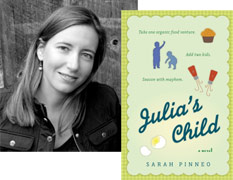
is a novelist, food writer and book publicity specialist. Her most recent book is Julia’s Child. Follow her on twitter at @SarahPinneo.

Friday, November 2, 2012

Publishing Pulse for Friday, November 2, 2012

Wanted: Success Stories.

Get started on your success story today: write that novel and get your query on. The book part is up to you...but we got your query covered at QueryTracker.

If you're a QueryTracker member (membership is free) you can view the database of more than 1200 agent and publisher profiles. Premium Members can be notified whenever an agent or publisher is added or updates their profile, in addition to receiving access to several other enviable features.

NANOWRIMO!

The great annual race to write is on! November is National Novel Writing Month--and writers everywhere use these thirty days as their inspiration to get the stories out of their heads and on to paper. The goal is 50,000 words…and the trick to winning is simply writing. Not editing. Not last draft perfection. Just the pure joy of following a story wherever it takes us--no pressure. It's true literary abandon.

Of course, NaNoWriMo isn't just a writing exercise-- many people have turned previous NaNo projects into success stories.

Are you a NaNoWriMo'er? Why or why not?

The Industry

Penguin and Random House have merged
But it's not necessarily bad news for indie writers. Here's how it may benefit them.

EBook News

No doubt, we are living in a digital world--but analog kids like me might appreciate this article, which totes paper over pixels.

Digital kids, however, need love, too--which is why you'll be glad to have this reference: a list of websites that will help you keep on top of epublishing news.

The Bloggity Blogs

An oldie but goodie: reasons why fiction manuscripts are rejected. I'm guilty of at least two of them. :) (And got published anyway…so don't despair.)

Janet Reid talks about the things self-publishing cannot do for an author…it all comes down to hard numbers.

Jason Rust talks about what he's looking for in his agent search. Are you looking for someone to show you dollar signs? Or someone who loves your work as much as you do?

Have a great weekend, everyone!


Ash Krafton is a speculative fiction writer who resides in the heart of the Pennsylvania coal region, where she keeps the book jacket for "Abraham Lincoln: Vampire Hunter" in a frame over her desk. Visit Ash's blog at www.ash-krafton.blogspot.com for news on her newly released urban fantasy "Bleeding Hearts: Book One of the Demimonde" (Pink Narcissus Press 2012).

Monday, October 29, 2012

Why I'm not doing NaNoWriMo

This is the time of year when writing boards have their obligatory "Are you doing NaNoWriMo?" thread, and where among some writers, the peer pressure becomes intense. Will you? Won't you? If you're on the fence, people start urging you, "Do it! Do it!"

National Novel Writing Month is awesome: don't get me wrong. I've done it twice and finished it twice, and I'm delighted that so many writers find it so invigorating. The challenge? Write 50,000 words during the month of November. Since a smallish novel can clock in at fifty thousand, this is the time for anyone who's ever said "I really should write that novel" to get in gear and write it. Forget the excuses and just put the seat of the pants in the seat of the chair...and write your novel.

The scope has expanded beyond "I really should write that novel" to include even career novelists, and there's no shortage of writers publishing tips to help other writers. According to NaNoWriMo.org, it began with 21 participants in 1999 and expanded to over a quarter million last year. Obviously this is a felt need: it's a limited time, an easily-understood scope, and oodles of mutual support.

Thirty days, fifty thousand words: about seventeen hundred words a day. So why am I not doing it? Especially why am I not doing it this year when I'm gearing up to do a lot of writing anyhow?

Burnout.

Every writer has her own ideal pacing. It depends on your state-of-life, your obligations, your side activities, your energy level, and what kind of book you're trying to write. A mother of five high-need children who is coaching soccer and caring for her elderly father may count herself lucky to write two hundred words a day. A college student who considers coffee the real base of the food pyramid might clock in three thousand words a day without a problem. Moreover, a novelist may be able to write more than a philosopher, and obviously a poet will be generating fewer pages than even the philosopher...but these are all good. There's no one metric that works for all writers, and NaNoWriMo is an artificial construct.

Moreover, some of us (for example, yours truly) need what I've referred to before as "a literary pause." In a literary pause, we're not blocked, but we find we can't write, at least not right now. It happens instinctually just before a pivotal scene, or a moment where we're going to need every bit of skill to craft the work. Those mini-breathers give us the emotional and mental energy necessary to get through the tough bits.

We can overcome the lack of natural pauses by forcing through, but what that breeds is exhaustion. It breeds resentment. After a while, the book becomes your enemy, the word-count a living thing you need to fight and subdue every day, every day, every day.

And after that month ends? Well, it's over. You defeated the book.

Do you want to defeat your book?

Do you want to have to look your book in the face after you defeated it, or after it defeated you?

There's nothing magical about NaNoWriMo except that many writers find it helpful, and I'm glad for them. But for those of us who become competitive with ourselves, or who tend to take a guideline as an iron-clad rule, who don't realize we're sacrificing ourselves in pursuit of ourselves...for us, it's better not to start. Or to set your own goal, something more sustainable. Thirty-five thousand words in a month is just lovely. It's not a small novel, but it's half a regular-size novel, and at a gentler pace, you have the stamina to do it again. You don't have to sprint to run a marathon. In fact, I'm told that to run a marathon well, occasionally you need to walk.

Two times I went the distance, carved out that extra half-hour a day and poured out seventeen hundred words every day, and two times, I crashed in December and didn't touch the book again until I absolutely had to. One is still unfinished.

I don't dispute that National Novel-Writing Month helps many writers get a start, gain their confidence, and learn they're more skilled than they ever imagined. Someone who goes from "I should write that book someday" to "Wow, I can do this!" is a better person all around, and we should encourage that sort of self-discovery. 

NaNoWriMo taught me the value of graphing my progress. When I'm focused on finishing a project, I set up a ticker and update it every day, and I find motivation in "feeding the ticker." I encourage my friends who are struggling with their own NaNo projects, and I encourage those who are on the cusp of deciding whether to sign up. It may be for them. 

Similarly, it may be for you: you don't know until you begin, or until you finish. Just give yourself permission to back off if the pace is too much. The cutoff for "winning" is fifty thousand words, but if you "only" write thirty-five thousand words you didn't have before, I can't see how you've lost. 

For myself, I'm not doing NaNoWriMo again, not while I still have children at home, not while I still find my most comfortable pace to be twelve hundred words a day with a few random days off every month. Because for me, a hundred thousand words in ninety days births a novel just fine.


---
Jane Lebak is the author of The Wrong Enemy. She has four kids, three cats, two books in print, and one husband. She lives in the Swamp and spends her time either writing books or ejecting stink bugs from the house. At Seven Angels, Four Kids, One Family, she blogs about what happens when a distracted daydreamer and a gamer geek attempt to raise four kids. To make her rich and famous, please contact the riveting Roseanne Wells of the Jennifer DeChiara Literary Agency. 

Friday, November 5, 2010

Publishing Pulse: 11/5/2010

NaNoWriMo?

With NaNo in full swing, some awesome tips from Nathan Bransford in his NaNoWriMo Boot Camp that are relevant to anyone starting a new story:

And in the spirit of NaNo, Rachelle Gardner has an excellent guest post (Erin MacPherson) up on her blog about writing under a supertight deadline. Along with some Twitter tips.

Other Advice From Around the Web

Jessica Faust over at BookEnds, LCC gives some excellent advice on querying agents at the same agency.


Agent Kathleen Ortiz is taking questions on what you would like to know about effective online marketing.

Trying to figure out what genre your WIP falls into? Agent Jennifer Laughran has an excellent post detailing genre.


And finally, an excellent post on why characters aren't real people.

Have a great weekend!


Danyelle collects dragons, talking frogs, and fairy godmothers in her spare time. She is currently getting ready to query SLIPPERS OF PEARL, a YA fantasy. She also enjoys making new friends, and can be found at http://myth-takes.blogspot.com.

Friday, November 13, 2009

Publishing Pulse 11/13/09


This will be the finest Publishing Pulse I have ever posted. You'll see a big reason why at the end of this post.

But first... some great QueryTracker news:

QueryTracker.net has passed a couple of big benchmarks!

QT now boasts over 20,000 members and over 200 QueryTracker success stories!
So big congratulations to Patrick!

In Publishing News:

Barnes & Noble's Nook has burst onto the e-reader scene.

Today's the new deadline for Google to submit a revised plan for their digital library to comply with copyright law, after receiving an extension on Monday.

Writer's Digest released their online list of 24 Agents Who Want Your Work

In Publishing Blogs:

Agent Miriam Goderich made a compelling case as to why you need an agent. (Hey... over 20,000 members at QueryTracker couldn't be wrong, right?)

Agent Elana Roth called for children's literature submissions.

Agent Rachelle Gardner posted a great breakdown of the business side of a book deal... with hard numbers. MUST READ!

Also on Rachelle Gardner's blog, Guest Blogger Angie Ledbetter discusses Writerly Ailments and Hazards (WAAH!). Perfect timing for mid-NaNoWriMo.

And now for my favorite part of this pulse...

The rest of the blog team and I had a knockdown, drag-out fight over who got to post today's Pulse, and here's why:

I have the honor of announcing to the QueryTracker community that our own Elana Johnson... resident Query Queen... has accepted an offer of representation from Michelle Andelman at Lynn C. Franklin Associates.

As Elana's critique partner, fellow blog mistress, unofficial fan club president, and someone lucky enough to have read her amazing work, all I can say is: Michelle Andelman is one lucky woman.

I'm sure you'll all join me in a huge to Elana!