QueryTracker Blog

Helping Authors Find Literary Agents

Monday, August 12, 2013

How Novelrank Works, And Why We Care

I am a nerd. I am the kind of nerd who enjoys doing her own taxes, and who spent twelve years trading geeky derivatives on Wall Street. So buckle your seatbelts, kiddies, and nerd out with me for a minute, 'kay?

For years now authors have been obsessing over their Amazon ranking numbers as a sort of hobby. But an Amazon ranking, aside from supplying fodder for your next psychiatry appointment, doesn't tell you what you really need to know: how many books have you sold at Amazon? Since the ranking is proprietary, without 3rd party help it's little better than a measure of your popularity, emotional stability and self worth. (I'm kidding. Sort of.)

Enter Novelrank.com. This 3rd party website helps authors track their Amazon.com sales. To use it, you must submit your book's Amazon page to the Novelrank database. An author should do this just as soon as the book has an Amazon ranking. (Hit the big blue Track Your Book button, and paste in the Amazon URL.)

When your book has been entered into the database, Novelrank starts watching your rank for you. Not only does it save this information, but it does something even more useful. (Quick Disclaimer: I have reverse engineered this understanding of how a service like Novelrank could be built, but it is entirely possible that the site actually works in a different way. Nevertheless, thinking through this algorithm helps authors understand how sales vs. rankings are related. So bear with me.)

While a ranking doesn't tell you how many copies your book is selling, a close look at your ranking relative to books nearby does. Suppose your book is currently ranked 12,345. And then suppose you snuck a peek to see which books were ranked 12,344 and 12,346. An hour later, you checked those three books again. If they are still ranked tightly together, then it's a safe bet that none of them sold a copy since the last time you looked. Books which don't make a sale should float around together, drifting up and down on the waves in a group, like so many pieces of driftwood.

But if your book (or one of its neighbors) sells a copy, then that book would vault out of its standing with the others, and find new neighbors at a lower (better) ranking, right? And then a website like Novelrank could watch your target book in relation to its new neighbors. Lather, rinse, repeat.

For accurate results, more than two book "neighbors" would have to be watched, of course. But you get the general idea. The result is a way of accurately estimating how many sales your book has made at Amazon, and when. Novelrank keeps track of your book's sales and stores it. You can graph your sales over time, for American sales and also at international Amazon sites. Since many traditional publishers don't update their authors' sales terribly often, this can be valuable.

Other tools for monitoring your books progress in the world include Amazon's Author Central and Random House's author portal. (More on those in a later post!)


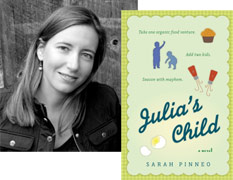
Sarah Pinneo
 
is a novelist, food writer and book publicity specialist. Her most recent book is Julia’s Child. Follow her on twitter at @SarahPinneo.

Friday, August 9, 2013

Publishing Pulse for Friday, August 7th, 2013


Querytracker Success Stories:Please join me in congratulating three newly agented Querytrackers this week! Click on their names to read their interviews. They are: Thomas Torre, Rachel Lynn Solomon and M.K. Nissen. Well done, peeps.

Around the Internet:
Here's a bestseller Cinderella tale: a Fox News interviewer's harsh treatment of the Muslim author of Zealot: The Life and Times of Jesus of Nazareth propelled the book to #1 on the New York Times list.

Uber successful novelist Danielle Steele gives an impassioned argument against ever asking someone "Are you still a writer?"

Mystery Writer Elizabeth Spann Craig tells us why she enjoys being a hybrid writer (published both traditionally and self published at the same time.)

And Bowker released its (pricey) annual compendium of consumer book buying demographics and statistics. Included in this nerdy data dump is the fact that women buy 58% of books, and that 44% of books were purchased from online retailers in 2012, up from 39%.


Sarah Pinneo
 
is a novelist, food writer and book publicity specialist. Her most recent book is Julia’s Child. Follow her on twitter at @SarahPinneo.

Wednesday, August 7, 2013

How to Keep Your Website or Blog From Exploding


©Stina Lindenblatt


One of the first pieces of advice I received when I started writing, with the goal of publication, was to buy my domain name. It doesn’t matter if you won’t be published for several more years. You don’t want someone in the meantime to swoop down and nab it.

So that’s what I did.

And every year, without fail, I would pay the fee when I received the renewal notice.

I was happy. And as time passed, my follower numbers grew and grew and grew. I’ll admit they weren’t all my target audience. They were mostly writers. And my target audience? Most wouldn’t care about my writing posts.  

And then the worst thing that could possibly happen did. Google sent me my annual renewal notice last month, but no matter what I tried, I couldn’t access my Google Admin Console. I eventually asked for help. All I got were a symphony of crickets. Jimmy Cricket and the Blue Fairy would have at least been nice, but even they didn’t come to my assistance.

I tried to transfer my domain to another provider, but I couldn’t access my domain EPP and password. My happy feelings were rapidly declining, to be replaced by frustration and a clawing fear.

Last week, I woke up one morning to find my blog had vanished. In its place was a bogus company page. At first I thought someone had swept in and was holding my domain for an exorbitant fee. Yes, apparently there are individuals who do that. Turns out Google had put a freeze on my domain name and if I wanted it back, I had to pay a hefty fee. I’ve heard the same story from several other writers, and not all were with Google.

In the end, I viewed the disastrous tale to be a sign from the Goggle gods. I now have a new blog (at a blogspot url address this time), which focuses on my target audience. My real target audience. I also have a new domain name from a different service provider (I haven’t done anything with it yet).


How to avoid this from happening to you

1. Before you buy a domain, get recommendations for a service provider (and be prepared for conflicting advice).

2. Make sure it will be easy to transfer your domain to another provider if you decide to go with someone else later on. For example, will you be able to transfer it to Wordpress if you decide to create a website through them?

3. Ensure the provider has a solid customer service. You don’t want to end up with nothing but crickets serenading you when you need help. Trust me on that one.

4. If you decide to transfer your domain to another provider, do this well in advance of your contract expiration date. It takes at least 14 days for the transfer to happen. It will be more expensive if you’ve fallen into your so-called grace period (and after that, it will be very expensive to get it back).

5. Diversify when it comes to your social media sites. Because I have Twitter and Facebook profiles, I was able to get the message out that I had lost my domain name and therefore my blog. My friends were able to find me again, and many posted on Facebook and Twitter what had happened. If I hadn’t been involved in these other forms of social media, I would have had a tougher time getting the message out.

Have you registered your domain name? Do you have any nightmarish tales to tell?


Click the link to Tweet it! Share what you read today:


Stina Lindenblatt @StinaLL writes Young Adult and New Adult novels. In her spare time, she’s a photographer and can be found at her blog/website.  She is represented by Marisa Corvisiero, and finds it weird talking about herself in third person. Her debut New Adult contemporary romance, WIDE AWAKE, will be released 2014 (Carina Press).


Monday, August 5, 2013

The Organized Writer: Using a Chapter Framework to Manage Plots and Subplots

I should start by saying, first, I am not an organized writer. And that's part of the reason I'm writing this post. Until I started writing mysteries, I was a proud pantser who sorta/kinda organized plot events as she went along. But no more.

For one thing, mysteries need to be tightly plotted. For another, I'm contracted to turn in an outline many months in advance of a manuscript. And though the outline was helpful, it wasn't enough for me in terms of structuring my story. I needed an extra layer of organization that would help me flesh out and manage the main mystery plot, as well as the subplots. So I tried each of the following, sometimes in isolation, sometimes all together:

  • sticky notes
  • colored sticky notes
  • index cards
  • colored index cards
  • writers' software 
  • highlighting text in Word
  • changing the color of my text in Word
  • using an Excel spread sheet
  • using the table function in Word
  • using a large whiteboard with different color dry erase markers
  • using a blotter-size desk calendar for the timeline
  • making a flow chart of plot events
As you can imagine, my office is a pretty messy place. The index cards kept getting lost and the sticky notes wouldn't stay stuck. Excel, it turns out, will screw with you even more than Word, and I would end up getting confused by my own flow charts. (And I know that one of the QT bloggers uses writing software with great success, but her name is not Rosie.)

 So now I'm down to three main tools: the white board, which is invaluable in terms of scribbling ideas, re-ordering them, or just writing little notes to myself. The blotter size desk calendar serves well for a timeline; the blocks are large enough to write in, and personally, I need big visuals. But the board and the calendar, like my editorial outline, aid me in macro-plotting: where the story is going and how it's getting there. I think of those things as a map. It's the micro-plotting--exploring motivation and showing cause and effect, planting clues and red herrings, both to the mystery and to the personal life of my protagonist, and delineating the interior life of my main character--that I tend to get lost. So my third tool is the table function in Word, which I use to create a compass to go with the map:  


The table function in Word helps me track my main plot and subplots.
While working with Word can be less than rewarding for a writer, I do like the nifty table function. It's easy to use and manipulate. I set up a fairly simple chart for myself; the one pictured here is the one I'm using for my WIP, The Wedding Soup Murder. It uses a chapter breakdown in which I indicate place, time, date, and characters. I use red text for the main mystery plot, and other colors for the subplots. As I draft each chapter, I go back and fill in the chart. The chart, or my story compass, helps me stay on course in a number of ways.

For example, cozy mysteries move at a fairly quick pace. If I look back over my chart and see that the green, purple, and blue text is taking up more space than the red, I go back to the ms and ensure that the subplots aren't bogging down the main story. I can read straight down the red text and isolate the main plot from the subplots, to make sure the mystery arc is swift, tight, and logical without the distraction of my main character's love life. On the other side of things, I can choose a color and follow that subplot, but I can also see how it is threaded into the main story, chapter by chapter. The chart also helps me identify a missing element. My main character has two love interests; I indicate one in green text and the other in blue. When I looked over my chart I realized that the blue ink didn't show up until Chapter Six. Her second guy had gotten short shrift in the story, so now I am working on ways to introduce him sooner. One last reason to love the chart: it makes a nice break from composing. Filling in another chapter is rewarding, and provides evidence of my progress.

Whether we use sticky notes or fancy software, we all need to find our own way through our stories. What about you? What serves as your map? Your compass?


A Jersey girl born and bred, Rosie Genova left her heart at the shore, which serves as the setting for much of her work. Her new series, the Italian Kitchen Mysteries, is informed by her deep appreciation for good food, her pride in her heritage, and her love of classic mysteries, from Nancy Drew to Miss Marple. Her debut novel, Murder and Marinara, will be released October 1. An English teacher by day and novelist by night, Rosie also writes women’s fiction as Rosemary DiBattista. She lives fifty miles from the nearest ocean  in central New Jersey, with her husband, two of her three sons, and an ill-behaved fox terrier.

Friday, August 2, 2013

Publishing Pulse for Friday, August 2, 2013

This Week at Query Tracker…

The profiles of several agents were updated this week--including a few new listings. Please make sure you double-check every agent's website or Publisher's Marketplace page before querying.

This Week in Publishing…

The editors of the Wild Rose Press discuss their pet peeves. Want to survive the slush pile? Make sure your writing is free of these clichés and over-used words.

JK Rowling pledged to donate royalties from The Cuckoo’s Calling to a soldier’s charity. The lawyer who leaked her identity also made a substantial contribution to the fund “by way of damages”.

An interesting commentary on ghostwriters and unsavory review practices—how widespread are these practices and does it affect you as a writer in the same market?

Sometimes, a writer will get frustrated with the agent search and think, “Fine. I’ll just self-publish.” However, self-publishing shouldn’t be a way to avoid the traditional pub process—it’s an entirely different discipline. This first of a four part series describes the work and expense that must go into a successful self-pubbed book.

Brian S Hall at readwrite.com give you a visual ten-step guide on how to publish your book on Amazon’s Kindle platform.

No denying the importance of your Internet footprint—see why agents are using Google to see if your query is worth a follow-up. The most common quote? “I always Google…”

Chip MacGregor offers advice about what a new writer should expect from meeting with an agent at a writer’s conference. It starts with having realistic expectations.


A Writer's Thoughts...

Books—bright windows in this life of ours, lit by the shining souls of men. --H. G. WELLS

Have a great weekend, everyone!


Ash Krafton is a speculative fiction writer who, despite having a Time Turner under her couch and three different sonic screwdrivers in her purse, still encounters difficulty with time management. Visit Ash's blog at www.ash-krafton.blogspot.com for news on her urban fantasy series The Books of the Demimonde (Pink Narcissus Press) as well as her other titles.

Wednesday, July 31, 2013

Ideas = $ cheap $

Recently I applied for a position co-writing a graphic novel. As a geek who frequently spent her lunch money on comic books, I felt qualified for the job, plus I have some expertise in the subject matter specified by the creator. He decided to go with a different writer (no biggie) and then...

...and then he asked me to stay onboard as a consultant, to give his paid writer ideas akin to the suggestions I'd already made during the selection process. Then, after I came up with the ideas, his other writer would write them.

I don't blame the creator for wanting to assemble the best team possible, but that kind of arrangement is in no one's best interest.

Why? Because ideas are cheap.

Realizing those ideas to their fullest extent? That's the key.

Do you want proof? Think about how often you mention you're a writer, and someone tries to tell you the idea she has for the  novel she's never written.

I could come up with a dozen ideas for this person's graphic novel. A couple of them might even be good. But bear in mind that the other writer is, presumably, a better fit for the project than I -- and therefore also ought to have many of his own ideas for the project. Trying to force the other writer to enact my ideas would be like trying to force the other writer to wear my shoes. They probably won't fit all that well because those ideas resonated with me -- and they might not resonate with the other writer.

What if I want to explore the main character's feelings of guilt and tie them to his relationship to his father? Awesome, right? But the other writer sees the guilt pretty much as a sidecar to the main character, something to be shed and left behind rather than explored. Forcing the other writer to explore it would result in a bored writer and, ultimately, a bored reader.

Picture an idea like the trunk of a tree. You could have two identical trunks, but you won't have identical branches. They won't split off in the same places, won't reach toward the sun in the same way, won't sprout leaves in identical spots. One idea is great, but the micro-ideas are going to give your story its richness, its texture and depth. And micro-ideas only matter inasmuch as they're continuous with the whole.

That's why you can read ten "portal stories" and none are the same, or ten different stories about a young boy finding his destiny and fulfilling a prophecy to save the world. Percy Jackson and Harry Potter have a lot in common -- but they have more not in common.

Moreover, every writer is going to find interest in different facets of the same question. That's why fellow QT blogger Carolyn Kaufman and I both wrote very different fanfiction for Battle of the Planets, using the same characters, the same setup and even based on the same episodes -- but all involving different ideas or different ways of exploring the same ideas.

What about when you go to your beta readers or critique partners and start tossing around ideas for your story? Invariably I'll bet you find your CP makes a suggestion, and most of the time you're going to think, "No, not quite right." But when the CP makes a suggestion that's just right, how do you respond? Not with "Oh, yeah, I'll get right on that" but "OH! And it would be even better if..."

And that's because once you adopt the suggestion, you're going to tint it with all the ideas and all the subtext you brought to your original idea.

Writers often ask if they should copyright their work before querying, afraid an unscrupulous agent or editor might steal their idea. But so what? Your idea should be fully realizable only by you. If an editor wants to try marketing a cheap knockoff of your golden idea, it'll look like a cheap knockoff.

Your story came out of your heart. Your heart is not easily duplicated.

At any rate, I wished the graphic novel team well, and I bowed out. That writer will want to develop his own ideas, and I encourage you too to develop your own ideas. Write your own ideas. Explore your ideas in a way that resonates within the story. No one else will grow your ideas the way you can.


---
Jane Lebak is the author of The Wrong Enemy. She has four kids, three cats, two books in print, and one husband. She lives in the Swamp and spends her time either writing books or still knitting that same endless pair of socks. At Seven Angels, Four Kids, One Family, she blogs about what happens when a distracted daydreamer and a gamer geek attempt to raise four kids. If you want to make her rich and famous, please contact the riveting Roseanne Wells of the Jennifer DeChiara Literary Agency. 

Monday, July 29, 2013

Finding a Reputable Agent or Publisher

Base Image: DragonTash
I recently got an excited email from an acquaintance whose book had been accepted by a "publisher" with a terrible reputation for doing very little publishing and a great deal of stealing starry-eyed writers' hard-earned dollars. I had to give her the bad news that the publisher was not only disreputable, it was a scammer.

To keep the same thing from happening to you (or your friends), it's good to understand what makes a publisher reputable or reprehensible. Read on!

How Do I Find a Reputable Agent or Publisher?

There are a lot of ways to get published these days; Jane Friedman summarized them well in her recent objective infographic, 5 Key Book Publishing Paths. With regards to financial risk and value, a summary of her paths is:


  1. Traditional: Advance + royalties model; publisher takes on all financial and creative risk but is extremely selective about which books are chosen (e.g. Penguin)
  2. Partnership: No fee to publish, no advance; partner selective about which books are chosen (e.g. Rogue Reader)
  3. Fully Assisted: Author pays upfront free; all work is accepted (e.g. AuthorHouse). This is also sometimes referred to as vanity publishing.
  4. DIY + Distributor: Author does most work, pays service for conversion of all files into e-book, POD, or print; distribution service may take a percentage of sales and is responsible for paying you (e.g. CreateSpace)
  5. DIY Direct: Author does all work and provides retailers with completed books; retailer takes a percentage of sales (e.g. Amazon KDP)


Friedman's Key Publishing Paths Infographic
For a long time, the die-hard rule of the road was, never give money to an agent or a publisher, but the pond has gotten a lot muddier with so many available options. If you wish to self-publish or go through a “fully assisted” service like Author House, you will be paying some money to see your book published; however, if you produce a true quality product that people want and you are willing and able to do the work to promote it, you may do extremely well.

The most outspoken (and one of the most successful) self-publishing authors is J.A. Konrath, who could be called an entrepreneur. He's had so much success and made so much money that he had no problem turning down a $500K publishing deal from a mainstream publisher in 2011.

Of all the publishing approaches, the “fully assisted” (aka vanity) route is still seen by most as the worst since the service will publish anything, regardless of quality, and along the way they will push you to spend more and more money on things you don't need. As Friedman notes, “The self-pub success stories you hear about do not come from full-assist services.” So if you’re going to self-publish, take one of the DIY approaches.

If you want to go a more traditional route, however, you will either need to go through an agent or approach small publishers directly. The trick to this can be sorting the shysters from the reputable, so let’s look at some rules of thumb.

Agents

Not all resources, including some of the big-name publications and databases, put the legitimacy of the agent or agency first, but QueryTracker does. Though you should always keep your eyes open, administrator Patrick McDonald does his utmost to include only reputable agents. People frequently ask why this agent or that agent is not included, and now you know why. (Note: Sometimes there is nothing actually wrong with an agent, she may just be new enough that she has not yet built any reputation either way.)

You should never give money to an agent. If one tries to charge you for anything—from reading to editing to finding a home for your book—run.  Many less-than-upstanding “agents” make their money not from book sales, but from referring unwitting authors to editors who will charge them an arm and a leg without actually providing a quality service. In these cases, the agent gets a kickback from the editor. It’s fine for an agent to recommend more extensive editing than she is willing to do, but choose your own editor rather than accepting a referral. And if an agent takes you on, her editing assistance must be free.  It’s a conflict of interest for an agent who is also your editor to take your money.

When you find an agent or agency that interests you, always do some additional research—and that includes agents on QueryTracker, just to be safe. Two of the best resources (listed beside each QT agent’s entry) include Preditors and Editors for agents and agencies and SFWA’s Writer Beware. You can also ask what other people have heard on message boards like those in the QueryTracker Forum.

Finally, be sure to check out the agent and agency's website and (if available) blog. Reputable agents and agencies should have significant recent sales in the area you wish to publish.

Publishers

QueryTracker has a growing list of publisher listings, which include the same information on acceptance and rejection statistics that is provided for agents and agencies.

The rules of the road are very similar to those noted above for agents.  Traditional and partnership publishers should not charge you upfront fees of any kind, including those for editing. And again, always double-check the publisher’s reputation by looking for recent sales, and by visiting Writer Beware. (If you want to take a look at one active “publisher”—who keeps changing names to try to avoid its own bad reputation—that is notorious for bilking writers, look at the Writer Beware entry on SBPRA.)

Don't Forget!

In both cases, remember—a publisher makes its money from sales. It gets the big percentage (often around 90%), and you get the small one. Likewise, a literary agent makes money because she gets a percentage—usually 15% for domestic sales and 20% for foreign sales—of any money the author makes. If an agent is involved, any money you make goes from the publisher to your agent, who takes her 15% and then sends the rest along to you.

It is therefore in the interest of such reputable agents and publishers to only choose writers who can actually sell books, because the author has to start making money on the book for them to get paid!

Once your manuscript is as polished as you can possibly get it and your betas (and/or editor) can't find much to complain about, you're ready for the next step—querying. More on choosing an agent or publisher who really "gets" your work in a future post!*

Have you ever had a bad experience or a close call with an agent, agency, or publisher? Without naming names, tell us about what you learned from the experience in the comments.


Click the link to Tweet it! Share what you read today:


*I’ve gotten several questions via email recently asking me about dealing with agents, so this is the third part of a series of posts on figuring out whether you’re ready to start querying, whether you need an agent,  finding a reputable agent, and choosing someone who really “gets” your work. Of course, QueryTracker.net will help you through all of the stages, and fellow QT blogger Jane Lebak recently wrote a great post on How to Use the QueryTracker Site.


Carolyn Kaufman, PsyD's book, THE WRITER'S GUIDE TO PSYCHOLOGY: How to Write Accurately About Psychological Disorders, Clinical Treatment, and Human Behavior helps writers avoid common misconceptions and inaccuracies and "get the psych right" in their stories. You can learn more about The Writer's Guide to Psychology, check out Dr. K's blog on Psychology Today, or follow her on Facebook