QueryTracker Blog

Helping Authors Find Literary Agents

Friday, January 17, 2014

Publishing Pulse for Friday January 17th, 2014

From around the web:

From author Beverley Kendall come some must-read survey results. Ms. Kendall is a romance author who wanted to explore the question of whether self-published authors were making a living wage, or whether the only successes belonged to a few much written-about lottery winners. Her results are thorough and fascinating!

Holiday sales slid 60% for the Nook unit of Barnes and Noble. Ouch.

They say "write what you know," and he did. It was revealed this week that the winner of a prestigious crime writing contest--and a publishing contract--was actually serving time for murder in prison.

If you write marketing blurbs for your work, you should read these statistics that BookBub put together. The book marketing website tested different copy for the books it advertises, and they reveal 5 observations about what works.

Simon & Schuster announced a new science fiction imprint called Simon451. (And if the imprint name doesn't ring any bells for you, then sci-fi is probably not your bag, baby.)

Oyster, aiming to be the Netflix of books, raised even more capital this week. So that's going to be, like, a thing soon.

Have a great weekend, people! (And thanks for allowing me that little Austin Powers reference.)


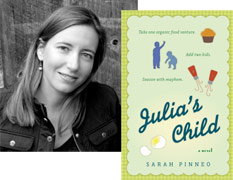
Sarah Pinneo
 
is a novelist, food writer and book publicity specialist. Her most recent book is Julia’s Child. Follow her on twitter at @SarahPinneo.

Wednesday, January 15, 2014

NaNoWriMo For The Rest of Us

I have a confession to make: I’ve NaNo’d. And I’ve NaNo’d badly.

I know the rules for National Novel Writing Month. It’s all about the word count. The aim is to bar all excuses and get that first draft down. Goal is 50,000 words in the thirty days of November, during which you mark your progress in your NaNo profile.

For the past three years, I’ve used NaNo to plump up the word counts of my side projects while working on my Demimonde series. But I’ve never hit my 50k goal. Not once.

The biggest obstacle to getting my first draft down isn’t writer’s block or inspiration or ambition. Plain and simple, it’s time. I work full-time outside the home (as well as inside the home, thanks to my wonderfully over-active family life). My writing time is at a premium: solitary mornings between school bus and work, waiting time while kids are at judo, a few hours on my days off.

I’m willing to try any system that forces me to sit down and write. This summer, I participated in a Fast Draft with a group of writers, during which we wrote in sprints with support from each other. I had a major deadline to meet and the week-long event fueled my drive to meet it. (For more on my experience with Fast Draft, read this.)

The annual NaNo is another tool I try to use, but I always feel like I join in with a handicap.

Think thirty days is too short a time to write a novel draft? Try ten. That’s all the time I have to participate. I suppose if I could write 5k a day on each of those ten days, I’d have it made. Although I have never actually managed that, it does provide me with a theoretically plausible goal. That’s why I NaNo each year—there’s always hope.


NaNo: The Winners

I envy those writers who win their NaNo. I see their proclamations and their nifty I WON badges all over the place and I invariably end up scolding myself for not trying harder. But I don’t scold very hard or very long because, while I was never a definitive winner, I usually got good work done.

And NaNo’ing isn’t just designed to give writers an exercise in endurance or inspiration to get those latent stories written. Our WriMo books aren’t always meant to hide away in drawers and on hard drives. I’ve read accounts where writers went on to finish the books and get them published. You can see the lists of books that NaNo participants have published, many by traditional houses.
 
Stuff like that is inspirational. More so, it's intimidating for the rest of us.

Sure, there are loads of NaNo winners, and heaps of success stories for the books that made it to the light of day. But I was never one of them. I’ve never hit 50k in a month. I’ve never ended up with a first draft by November 30th. That’s why I feel like a bad NaNo’er.

My project in 2011 fared pretty well, with just over 30K for the month. I might have actually written a little more, but I was doing final edits on the first Demimonde novel, which came out the following March. NaNo 2012 was completely abysmal by comparison; I simply wasn’t committed to the project because I was busy promoting the first Demimonde book while editing the second, which was due out in six months. I think I spent more time revamping my NaNo profile than I did writing.

This past November, my edits on the third Demimonde book had been submitted early and I was between projects. I had space to breathe and think about an unfinished project that had been brewing in the back of my head. Although I only spent six days on NaNo 2013, I managed 15k words, plus a synopsis. (I think the synopsis impressed me more than anything because books are easy, by comparison.)

Three years, three projects, and none of them “winners”.


The Rest Of Us

But I didn’t lose. Not by a long shot. Despite my shortcomings, I think there may be hope for me yet because I decided NaNoWriting doesn’t have to be limited to a single “Mo”.

The project from 2011 didn’t just evaporate in the ether. I pulled it out this past summer and read through the unfinished book. I still loved the idea of the story and decided those 30k words were too much to let languish. In August, I resurrected the file and enlisted the help of a professional reference/fellow author/good friend and began investigating the details of the psychology in the story. I went on to finish the first draft in early October and revised over the next two months. Bugged a few beta readers, entered a few contests, revised some more…and today it’s ready for the eyes of an editor.

It took two years, but my NaNo ’11 book got written, got edited, and got submitted. Hopefully, it’ll get published, too.

Two years to a complete first draft. Not thirty days. And I don’t feel bad about it.


The True Spirit of NaNoWriMo

In the meantime, I carry a bit of NaNo around in my writer’s soul every day. I look forward to the NaNo emails that arrive throughout the year.

Right now we are in the "I Wrote a Novel, Now What?" months. A recent email addressed helpful topics for all writers, including tips on editing, participation in writers’ communities, and an invitation to a program on the subject of self-publishing.

Writing a novel isn’t a dash. It’s more like a relay race, and your novel is the baton. The first leg of the race is the first draft. Then, you pass the baton on to the edits and revisions, which make several more laps. The race still doesn’t end there; you hand the baton off to critique partners or beta readers. Perhaps you’ll pass it to an agent or the editor of a small press. Then the edits and revisions do a few more laps before reaching the finish line, where your readers await.

Does it sound like a lot of running in circles? Sure it does.  But never for one moment think you aren’t going anywhere. Even a spring can be straightened into a straight line—and the length of it may surprise you.

Some writers can get the first lap done in thirty days, during NaNoWriMo. I’m not one of them. But I do encourage every writer to participate. Don’t miss out on a fabulous program just because you can’t write for thirty days or because you’re sure you can’t get that word count down. You may not make the 50k goal and you may not earn a Winner’s badge, but you’ll have a new reason to sit and write, a source of encouragement and support, and access to helpful resources throughout the year.

In the long run, you just might finish that book, and edit it, and publish it. To me, that’s a huge win.


Ash Krafton is a speculative fiction writer who, despite having a Time Turner under her couch and three different sonic screwdrivers in her purse, still encounters difficulty with time management. Visit Ash at www.ashkrafton.com for news on her urban fantasy series The Books of the Demimonde (Pink Narcissus Press) or stop by the Demimonde Blog at www.ash-krafton.blogspot.com .

Monday, January 13, 2014

Filing off the serial numbers

When Pixar posted their rules of storytelling, my favorite was Rule 12.

#12: Discount the 1st thing that comes to mind. And the 2nd, 3rd, 4th, 5th – get the obvious out of the way. Surprise yourself.

This weekend, I critiqued a story where this was my first encouragement to the writer. Her technique was fine, and she had her pacing down, so why didn't the story grab me? Trust me, I analyzed this piece to death, and even while driving to my critique group, I was still coming up with new angles for making the story start to breathe.

But finally I came down to the final answer: tropes and stereotypes dominated the story, whereas the places the story lived were the places the author had struck out her own path.

I'm obfuscating and declarificating the details because it's her story, not mine (whereas I make merciless fun of my own story.)  But at one point in the story, a walk-on character mentions her pet. The character is a gentle, sweet old lady, Mrs. Witherspoon, who owns a purebred Persian cat named Cuddles. During the conversation, she mentions her neighbor, Bo, who keep a nasty alley-cat named Butch. 

You can see the stereotypes at work here. But what if she'd thrown away her first idea? What if the sweet little old lady had the nasty alley cat? What if she'd named the nasty alley cat Cuddles? What if the redneck neighbor was raising purebred Persian cats and had several champion showcats? What if the fluffy purebred Persian cat were named Butch?

This is where you can start taking your readers' presuppositions and turning them on their heads, keeping everyone intrigued because no one is predictable. Send your story off the rails -- or rather, lay out rails and send your story on a different set of rails. Why? Because your readers are going to enjoy the ride more with the occasional surprise that makes them say, "Oh…?" followed by, "Of course!"  

The story in question had taken all the tropes of its genre and recombined them, but they were still all the same tropes, and because of that, you pretty much knew the ending after the second page. Every genre has its stereotypes (the damsel in distress, the tortured man with a past, the reluctant hero, whatever) but your job is to get more mileage out of those characters by filing off the serial numbers and fully owning them.

Escape the stereotypes. Your mobster doesn't need to be named Frankie or Vinny. Your romantic lead doesn't need to have green eyes and beautiful hair. Your villain may still be a mad scientist, but maybe his motivation is more than just "I wanted to show everyone my brilliance, until the day I went too far." Your first ideas are probably good, but take them further. Reshape them. Surprise us.

---
Jane Lebak is the author of The Wrong Enemy. She has four kids, three cats, two books in print, and one husband. She lives in the Swamp and spends her time either writing books or knitting socks. At Seven Angels, Four Kids, One Family, she blogs about what happens when a distracted daydreamer and a gamer geek attempt to raise four kids. If you want to make her rich and famous, please contact the riveting Roseanne Wells of the Jennifer DeChiara Literary Agency. 

Friday, January 10, 2014

Publishing Pulse for January 10, 2014

Success Stories

The QT hits just keep on comin’! Congrats to our latest success story, Erica M. Chapman.


Around the Web


Need some motivation for a new project? Author, literary agent, blogger, and all-around Cool Guy Nathan Bransford talks about getting started on that next book.

The Books section of the Huffington Post offers tips on writing here.

At Writer Unboxed, Heather Webb shares insights about character arcs.

 And despite all popular wisdom, according to the Washington Post, independent bookstores are holding their own against Amazon.


A Jersey girl born and bred, Rosie Genova left her heart at the shore, which serves as the setting for much of her work. Her new series, the Italian Kitchen Mysteries, is informed by her deep appreciation for good food, her pride in her heritage, and her love of classic mysteries, from Nancy Drew to Miss Marple. Her debut novel, Murder and Marinara, released October 1. An English teacher by day and novelist by night, Rosie also writes women’s fiction as Rosemary DiBattista. She lives fifty miles from the nearest ocean  in central New Jersey, with her husband and two of her three sons.

Wednesday, January 8, 2014

11 Tips For Making A Book Trailer


by Stina Lindenblatt @stinaLL


©Stina Lindenblatt


There are a multitude of ways to promote your book, book trailers being one method. Whether you need one is up to you. They can be an effective method to promote your book, or they can be a waste of money with no returns. If you do decide to make one, here are some tips for making the most out of yours.

1. Decide what the purpose of the trailer will be. Most trailers don’t sell books. But they might get a potential reader interested in your book…if you don’t bore them with your trailer. I know a few people who decided NOT to read a book after watching the trailer. When I recently made one, I wanted a teaser trailer that was short. My goal was to get people interested enough to check out the blurb.

2. Check out book trailers both within and outside your genre. Make a list of what you liked and didn’t like about them. This will help you when it comes to creating yours. 

3. Set a budget. Book trailers can range from cheap to super expensive. If you decide you absolutely LOVE movie-style trailers, expect to pay A LOT of money. We’re talking thousands of dollars. If you do decide to go this route, don’t cut corners. A cheap looking trailer will hurt you not help you.

4. Create your script. Jot down keywords, moods, images you want to convey. This will help you create your script. Based on these, write the sentences that will be printed (or spoken) in the trailer. Keep them short and to the point.

Once you’ve got the script written (or the rough version of it), look for pictures and videos that represent the story.

5. Don’t rehash your blurb in the trailer. Blurbs are too long for trailers. Short and to the point is better than long and rambling. If your trailer grabs the reader’s attention, she’ll check out the blurb on Goodreads, Amazon, or your website.

6. If you don’t know how to put together a trailer, hire someone to do it for you—or recruit someone willing to help. If you create one yourself, make a mock version before committing to the pictures, videos, and music. The mock versions will be watermarked with the company’s name (i.e. Shutterstock). 

7. If you don’t own it, you can’t use it. Just because Bon Jovi’s latest hit single works perfectly in your trailer, that doesn’t give you the right to use it. And just because you bought the single from iTunes, that doesn’t mean you own it. You have to pay for copyright privileges (and hint, Bon Jovi will be very expensive). Make sure you pick royalty-free music. 

8. Watch out for that alpha channel. If you select a video with an alpha channel attached to it, be aware that not all video software can handle it. The older version of my son’s Video Studio Pro couldn’t. The outcome was messy until we tried the new version of the software, and then it worked like magic. The video stock website should warn you if the video does have an alpha channel. Unfortunately I didn’t know what the word meant at the time when I downloaded the video.

9. Make sure all the pertinent information is in the trailer. Don’t forget the title, your name, and your website at the end, and make sure they are visible. 

10. Get Feedback. Just like with your book, have beta testers view your trailer and give you feedback. If they’re honest with you, they’ll let you know when your video is confusing, boring, or needs a little tweaking.

11. Have fun! This is the most important tip.

Have you created a book trailer? Do you have any other suggestions? If you haven’t created one, are there things you liked and didn’t like about the ones you’ve watched?


Stina Lindenblatt @StinaLL writes Young Adult and New Adult novels. In her spare time, she’s a photographer and can be found at her blog/website. She is represented by Marisa Corvisiero, and finds it weird talking about herself in third person. Her debut New Adult contemporary romance, TELL ME WHEN, will be released Jan. 20, 2014 (Carina Press, HQN).

Monday, January 6, 2014

Five Query Mistakes That Make You Look Like An Amateur

A query letter is a declaration, of sorts. It says your book is ready for the world and that you are ready to be its author. Whether you query agents or editors, the query is going to tell its recipient two things: whether your book is worth reading, and whether its author is professional enough to back it up.

I know this sounds intimidating, but it’s got to be if we're going to listen. Many of us writers are still trying to make our debut. We've written our books out of passion, rather than obligation to a creative writing degree. Quite simply, many of us are simple folk who dream of seeing our hard work, our literary sweat and tears, our home-schooled writing craft bear publishable fruit. We came into this game as amateurs.

But amateurs don't become published authors.

Professionals do.

That doesn’t mean that home-schooled writers (such as myself) can never break into the ranks of the published. It just means we have to work all the harder to school our brains to the business side of writing…because the query letter is our final exam.

And as with all final exams, there is the risk of failure.

Your query must speak for both you and your book, a single shot to garner a second, deeper glance at your work. One thing is for certain: if your query appears to be the work of an amateur, it gets a rejection. End of story.

Here are five query mistakes that will make you look like an amateur. These mistakes may keep you from making the grade—and that final, big step towards publication.

1) QUERYING MORE THAN ONE BOOK A query is a pitch for a single product. It’s not a peek at your entire collection of unpublished manuscripts. I’m not an agent, but I imagine agents would have a list of opportunities and publishers and editors constantly circulating in their heads. As they read queries, they scan their internal list of possible markets and decide whether or not each book fits their current connections. Your first line—containing genre and word count—helps them sort your book against their outlets. If they think they can pitch the book, the query makes the first cut.

Pitching more than one book messes with that flow. Small wonder why this reason shows up on a lot of agents’ pet peeves lists. It also pegs you as an amateur because who writes a dozen books and doesn’t publish any of them? A professional would have either sold them or kept quiet about them until they were ready to sell.

2) QUERY IS TOO LONG A rambling query tells the recipient that there’s a solid chance your book rambles, too. You’ve probably spent twice as long editing as you did writing, so don’t let your query give the wrong impression. A query letter template is the perfect place to start—it will make sure you include all the requisite info about your product and yourself.

If this is your first query, follow the template. (See this classic QTB post here for a great example.) Unless you are touched by the hands of the writing gods, a template will suffice. You don’t need to be brilliantly unique; you need to be concise and professional. A query needs to tell everything the agent wants to know at a glance. Remember--they are professional skimmers. Be a professional author who helps the process instead of hinders it.

One page query. Intro, pitch, bio, thanks. That’s it. No conversations, no anecdotes, no bribes. Short and sweet is all you need to sell it.

3) BLANKET QUERIES Imagine: your dream agent receives hundreds of queries a day. You want yours to stand out, right? You want your book to be THE ONE that an agent cannot turn down. Why wouldn’t you give an agent the same consideration?

Don’t start with “Dear Agent.” You know how much you hate getting form rejections that begin “Dear Author”, so don’t inspire an immediate reciprocal response. Don’t query every agent in the company. If an agent gets a query that might be a better fit for one of their partners, they’ll pass it on because no one wants the Next Big Thing to get away. And don’t send one email to a slew of cc’d agents. If an agent doesn’t deserve their own query, your query doesn’t deserve individual consideration.

A professional author will send an individualized query to a single agent because ultimately, that’s who goes into a contract: one agent, one author.

4) NOT FOLLOWING GUIDELINES Every agent has guidelines. What they want in a book. What they want in their submission. How they want it sent. Don’t assume that one query package fits all because it doesn’t. If you want a particular agent to look at your work, show them what they want—no more, no less. Only an amateur thinks they don’t need to play by the rules. Are rules annoying? Sure. But they are in place for a reason.

A hallmark of professionalism is the query that shows you’ve read the guidelines and put effort into following them. Would you want to work with someone who thinks they are above the rules? Me neither.

5) NOT BEING READY And by ready, I meant completely ready.

Is the book ready? Is it finished? If not, DON’T QUERY. Remember that queries are marketing tools—and if you don’t have a product ready for market, you’d better not waste the salesman's time.

A query isn’t a cotillion. It doesn’t announce you and your nearly-complete wonder to the world. It’s not a proclamation that says Here I am, get ready for #mindblown. A query says I have a book, this is what it’s about. Can you sell it for me? Nothing about a query screams amateur louder than the realization that the author doesn’t even know what a query is for.

Not only that, is your query ready? If not, tweak it. Critique it. Run it by the other writers in the QT forum. And for the love of all that’s holy, proofread it.

And still not only that, are you ready? Because if an agent says yes, you’d better be. Everything changes. You don’t want to be the guy in his pajamas typing and fooling around on Twitter. You want to be the professional author, ready to debut.

A query letter tells an agent that you have a great book that’s ready for the market. It also tells the agent that you are a professional author who’s ready to promote it. Those are the two things that an agent is looking for—a product to sell and the professional client behind it.

Are there other mistakes? Goodness, yes. However, a slip-up may be overlooked if you present yourself and your work in the most professional way possible. A great book with a pro behind it won’t be passed over for the sake of a mere infraction. A great book with an amateur might be because, despite a great product, an agent wants to work with someone who is willing to make themselves easy and professional to work with.

And it’s important to remember that even when you present you and yourself in the most professional manner, you may still get a form rejection or three. It’s not you. It’s them.

And it’s okay, because you want a champion to say yes to your query. You want an agent that is the perfect match for your book and for you. Taking care to stand out from the amateurs will make sure that you avoid those amateurish first impression rejections.

If an agent or and editor is going to say no, make them say no for all the right reasons. Being an absolute professional makes it harder for them to say it.

 
Share this post--Click to Tweet!


Ash Krafton is a speculative fiction writer who, despite having a Time Turner under her couch and three different sonic screwdrivers in her purse, still encounters difficulty with time management. Visit Ash at www.ashkrafton.com for news on her urban fantasy series The Books of the Demimonde (Pink Narcissus Press) or stop by the Demimonde Blog at www.ash-krafton.blogspot.com .

Friday, January 3, 2014

Publishing Pulse for January 3, 2014

Happy New Year from QueryTracker! And if you're in the northeastern United States, stay warm.

New At QueryTracker:


Congratulations to our newest success stories, Matthew Adams and Alexa Donne!

This week we've added one agent to our database and updated eighteen agent profiles (that's not a joke). You can see how quickly things change in this industry, so please make sure you double-check every agent's website or Publisher's Marketplace page before sending your query.

If you're a QueryTracker premium member, then you can be notified whenever an agent or publisher profile is added or updated. If you're not a premium member, you can just check for yourself.

Publishing News:

Kate DiCamillo is named the new National Ambassador to Young People's Literature.

Around the Blogosphere:

Agents speak about their query letter pet peeves.


A search and rescue mission at the bookstore.

Sarah LaPolla gives stats for her year in queries, as does Natalie Lakosil. Janet Reid talks about thirteen things that made her happy in 2013.


Literary Quote of the Week:

"I love deadlines. I love the whooshing sound they make as they go by." Douglas Adams

Thanks for stopping by, and keep sending those queries!

---
Jane Lebak is the author of The Wrong Enemy. She has four kids, three cats, two books in print, and one husband. She lives in the Swamp and spends her time either writing books or swatting mosquitos. At Seven Angels, Four Kids, One Family, she blogs about what happens when a distracted daydreamer and a gamer geek attempt to raise four kids. If you want to make her rich and famous, please contact the riveting Roseanne Wells of the Jennifer DeChiara Literary Agency.