QueryTracker Blog

Helping Authors Find Literary Agents
Showing posts with label publicists. Show all posts

Wednesday, June 11, 2014

Six Things Your Book Publicist Won't Tell You

Whether you're paying for independent publicity services, or your publisher is providing publicity support, there are quite a few points of logic that almost nobody will admit aloud.

1. You're Paying Me to Do a Lot of Grunt Work

While the most valuable thing your publicist has is her proprietary list of contacts, the job is messier and more clerical than you'd think. Plenty of bureaucratic admin goes into a publicity campaign: sending out the blitz / cover reveal / galleys / teasers, then following up with crucial contacts, then keeping track of who has responded and who has not. Unfortunately, unless your publicist has a crack team of minions, (and she probably does not) there's no separating the brain work from the grunt work.

2. If You Did This Job Yourself, You'd Learn a Lot

When you're the one contacting bloggers and reviewers, there's a lot of understanding to be gained. You'd read first-hand the bloggers' wants and needs. You'd find a few supporters out there who would prove to be invaluable as your career progresses. You'd understand just how difficult it is to break through to the voices who matter. It's uncomfortable to pimp your own book, but sometimes discomfort brings wisdom.

3. If You Did This Job Yourself, You Might Not Make Your Next Writing Deadline

The tradeoff is always time. No matter how easy it seems to be to hit "send" on an email list, good follow-up is time consuming. Authors who do their own publicity work understand this, and make time for it.

4. I Didn't Read Your Book

Publicists are overworked. They need to spend most of their time working the old email chain gang. Don't hold it against her if she hasn't read your book. In fact, don't even ask. Instead, be very clear each time you have a publicity suggestion that relates to the narrative. "Dear Becky, since my main character is a contestant on a Survivor-like show, let's make a big push on the reality show forums on Yahoo." Etc.

5. Once I Get a Satisfactory Number of Publicity Hits for You, My Attention is Elsewhere

Some books are just an easier sale than others. But the publicist has to look good to all her clientele (or in-house editors.) If she's lucky enough to score a bit hit for you (say... People Magazine. Let's dream big.) her next burst of effort will be spent elsewhere. We all need to rest on our laurels from time to time, because there just aren't enough hours in the day. An author who wants to be sure that she's still on top of the pile will stay in touch, making helpful (but not pushy) suggestions.

6. If You're a Sweetheart, I'll Try Extra Hard For You. (The Converse is Also True.)

It's just human nature. So check your ego at the door. Always be polite to your overworked publicist, and never lose your temper. Even when your publicist drops the ball on something. Even when your Amazon rank makes you want to cry. Punch a pillow, and then be kind to your publicist.
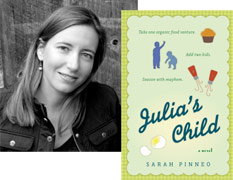

Sarah Pinneo
 
is a novelist, food writer and book publicity specialist. Her most recent book is Julia’s Child. Follow her on twitter at @SarahPinneo.

Wednesday, February 16, 2011

Your Author Photo: General Tips

Most people shy away from having their portraits taken. Why? Because we’ve had bad experiences, and end up with pictures that make us cringe (or maybe we were cringing in the photo to begin with).

©Stina Lindenblatt
As an author, you can occasionally you get away with skipping the author picture (for example, if you’re a male who writes steamy romances under a pen name), but for the most part, you’ll have to provide your publisher with a picture (of you, not your beloved pet) for promotional purposes. And you might want to include one on your website and blog so that you are real to your followers and fans.
The following pointers will help make the process less painful, and help ensure you end up with photos you’ll love:

  • See if you have a talented photographer friend who would be thrilled to take the pictures for you. The advantage of this is you already have a great relationship. You’ll end up looking relaxed in the photos, instead of looking like you’d rather be anywhere but there.
  • If you aren’t lucky enough to know someone in the above category, ask your friends for recommendations. The photos highlighted on a photographer’s website aren’t always representative of their usual work. And a great photographer will know how to make you shine. They know the tricks of the trade.

©Stina Lindenblatt

  • Weather permitted, see if the photographer can take the photos outside (or a place you feel comfortable). People tend to feel (and look) more uptight in a studio setting. The added benefit is that there are more interesting things to look at than in a studio. This, too, will help you relax.
  • Let the photographer know if there’s anything you feel self-conscious about. They may be able to pose you a certain way to overcome the problem. But remember, chances are great only you notice whatever’s bugging you.

                                                                      ©Carolyn Kaufman


  • If you see a photo, including in a magazine, of a pose you like, bring it with you to show the photographer. Most will welcome suggestions.
  • Dress comfortably and for the weather. If you’re shivering because it’s freezing out and you’re wearing a t-shirt, it’s going to affect the outcome. Sure, models might be posing in summer clothing during the winter months, but you don’t have to.


©Carolyn Kaufman
  • Keep your clothing simple and avoid bright patterns and stripes. They are too distracting. And if you’re in a group shoot (i.e. family picture), try to coordinate the clothing. Don’t have half the group in casual clothing while the other half is dressed up. And don’t have half the group in pastels while the other half is wearing dark colors. You get the general idea?


©Stina Lindenblatt

  • Bring several items of clothing or props with you. That will give you a variety of looks to choose from. And the props give you something to do with your hands.

Tomorrow, we’ll give you some tips on posing, which will help you look great in your photo.

Stina Lindenblatt writes romantic suspense and young adults novels. In her spare time, she’s a photographer and blogging addict, and can be found hanging out on her blog, Seeing Creative.


Carolyn Kaufman, PsyD's book, THE WRITER'S GUIDE TO PSYCHOLOGY: How to Write Accurately About Psychological Disorders, Clinical Treatment, and Human Behavior helps writers avoid common misconceptions and inaccuracies and "get the psych right" in their stories. You can learn more about The Writer's Guide to Psychology, check out Dr. K's blog on Psychology Today, or follow her on Facebook!

Wednesday, May 26, 2010

Branding: Not Just For Livestock Anymore

Today's post is brought to you by Sheralyn Pratt, PR Manager at Cedar Fort Publishing and author of the Rhea Jensen series. She lives in Salt Lake City, Utah, where she spends entirely too much time in front of a computer. (Who doesn't??)

Take it away, Sheralyn!

Branding. We could argue that it originally started with livestock when owners wanted to prove an animal was theirs. From there the differentiation grew to: my sheep is better than your sheep. Convincing the consumer of that then created disparate prices and, well, everything escalated from there.

While this approach to branding still happens today, the branding concept has also adjusted to modern lifestyle with the unique evolvement of making humans pay to brand themselves or anything else they value. Sure, we could make our own pants, but if we want pants with a designer’s brand, we need to pay for it.

Businesses invest a huge amount of money in branding because they know that they succeed or fail based on “fan” support. Harley Davidson, iPod, Twizzlers, Dr Pepper… if we truly believed that the generic versions of these products held a candle to the branded version, the branded products with their higher prices would be out of business in months.

As an author, without your own personal brand, the same applies to you. Twenty, fifty, a hundred years ago, maybe you could have gotten away with just writing a good book and leaving it at that, but in the current climate where the average attention span is conditioned to focus a max of 5 seconds, you definitely need to be memorable to survive.

So what’s an author’s brand? And how do you design your own?

Looking around, we recognize the branding of authors, even if we don’t call it that. We may use words like genre, niche, audience, cover art, autograph, and so forth, but we are still identifying branding that helps audiences find the books they like.

Example: Harry Potter. You know the covers, the font, the jargon and even recognize the lightning bolt. This entire series is a model example of brilliant branding. I have a first-year Gryffindor scarf that was hand knitted by a friend. When I go out, do you think people recognize it on sight without having to be told what it is? You bet. Whenever I wear that scarf, I am advertising for J.K. Rowling. Immediately a stranger and I know that we have something in common, just as Twilight mom’s know they share a certain passion when one of them walks by wearing a shirt or official Twilight jewelry.

The result: insta-friends, pulled together more quickly than any microwave meal. All brought to you by branding.

“You like Edward?!? I like Edward!!! OMG!”

“You like Jacob?!? WHAT’S WRONG WITH YOU?!? CAN’T YOU SEE HOW PERFECT BELLA AND EDWARD ARE FOR EACH OTHER???”

Like that. On first sight we know something about other fans and have an immediate connection—a friend we haven’t met yet.

In weekly acquisition meetings, the first thing I ask the editors who are pitching books is: “Who is the audience and how does this book/author reach them?” How that question is answered is HUGE as to whether I want a closer look at the book.

As authors, you need to put thought into what exactly that brand is before you push your way out into the world. Just like a clothing designer, you must be known for doing one thing exceptionally before you can branch out and do it all. Evening wear? Swim wear? Casual? Urban? Pick your strongest genre and specialize before you expand.

Much of this is intuitive, which is why few people actually sit down and define their personal brand. “I write romance,” they say, and incorporate pink and flowers into their website. After all, flowers and pink are romantic. They are not, however, images people can immediately associate with you (i.e. a lightning bolt). Branding is the very specific way fans know they have found YOU and you alone. Not some imposter.

Below is a logo I saw on the back of a Barnes & Noble CRM’s black Escalade:


To many, this image means nothing, but it is actually a declaration of fan-dom, and lovers of the Dark Hunters will immediately see it for what it is (and likely seek this CRM out for a fun coversation). Another CRM I spoke to was actually considering tattooing this image on the back of her neck. Both women are both HUGE fans of the same series. They work for a massive corporation at different locations, but do you want to take a guess at whether or not they’re friends?

Of course they are.

That is branding. And in the case of the tattoo, it is branding at it’s most fundamental.

Whether you are published or looking to be, one sure way to be noticed is to know your brand. It will save you and publishers a lot of time, and help you get right where you want to go much quicker. Know where you fit in your genre, who your neighbors are on the shelf, and how you should be marketed. You hand all that to a publisher/agent and they will be very tempted to hit the ground running.

So, approach branding yourself the same way any business would: Who are you? Who do you write for? What does your audience read? Where do they hang out? What do people value who hang out there? How do they accessorize? And how, exactly, do you fit in there?

Answer those questions, and you are good way along the road of having a publisher perk up and pay attention as you hand them a package they know they can work with. Because in the end, what a publisher is looking for from you is for you and your books to add value to their own brand/imprint, so they can attract more high-quality authors and expand their brand.

And so it goes…

Monday, February 22, 2010

Publicity: It's Never Too Early to Think Ahead

Okay, so for today, we're tackling the topic of publicity. No matter where you are along your publishing road, every author needs publicity tips in their arsenal. I asked Lizzy Mason, senior publicist at Simon and Schuster, to help us out with what authors can do now, and what will happen later, when their book sells.

Take it away, Lizzy!

------------------------

While in the thick of it, finding an agent might feel like the hardest thing you’ll ever have to do. But the most important (and, hopefully, best!) moment of your writing career will be when your book finally hits bookstore shelves.

With all the competition for readers’ attention these days, publicity—interviews, features, and reviews in mainstream and alternative media—is hands down the single best way to get your book noticed. Particularly as marketing budgets decrease (meaning smaller, more circumscribed tours and less advertising), publicity has become more important than ever.

All publishing houses make their authors fill out an Author Questionnaire. For publicity purposes, here’s what we’re going to want to know:

  • Media info:
    • The magazines and newspapers to which you’ve contributed. Don’t be nervous if you don’t know people in the media or aren’t a contributor to any newspapers or magazines. We don’t expect it, but it can help secure reviews.
    • Professional/academic journals where review copies should be sent. We’ve got lists of these, yes, but hopefully you know your field far better than we ever will.
    • Media appearances you’ve made.
    • Key people who should receive complimentary copies. Not necessarily people that you know, although that does help, especially to get blurbs.
    • Contacts who could help with reviews or excerpts.
  • What special markets does your book have? Would people in one particular region take a special interest? Is your book geared towards a specialized group of people?
  • Other books that are competition to yours. Again, you know your book better than anyone else, so use it to your advantage by checking out your true competition.
  • Do you have a website? Where else can we link to the book? If you don’t have a website, think about creating one. A web presence is key these days. Consider writing a blog or, even better, contributing to an established one.


I recommend that you not ask for a meeting/phone call with the publicist assigned to your book until around six months before pub date because there’s just not that much to say that far ahead (and a publicist may not even be assigned yet). But here are a few things you can be doing even a year before your pub date:

  • Start paying attention to the journalists, radio/TV hosts, and bloggers who write/talk about the subject of your book. Even if you write fiction, is there something your main character does or where it’s set that makes it stand out? Take note. (But please, do your future publicist a favor: if you don’t know a journalist personally, discuss with him/her who should do the outreach. And take heed: "Why authors shouldn't contact journalists directly.")
  • Get to know the bloggers who write about books and subjects like yours. Be supportive, comment on their posts, get to know their tastes. Because, unlike journalists, bloggers don’t usually get paid for writing, so they’d be doing you a favor by reviewing your book, interviewing you, or doing a giveaway. And they’ll be more willing to do you a favor if you’ve been supportive of them for awhile.
  • Get to know the bookstores in your local area. Don’t plan to do events at every bookstore in your neighborhood, but go to a couple of events and see which stores do it best. Especially for debut authors. (And maybe buy the book while you’re at it!) Check out my thoughts on what makes a great book event here.
  • Find out when annual book festivals are in your region. There might be more than you think and they’re a great way to meet other local authors and fellow book lovers!
  • Prepare lists of email and snail mail addresses for friends and family that would come out to see you at an event. Bookstores will often send out email or postcard invitations for you and it’s much easier to this now when you’re not pressed for time.


So with all that hard work you’re doing, what will your publicist do for you?
  • Send the seasonal catalog to producers, editors, reviewers, and bookstores and other event locations to encourage early interest
  • Set up bookstore events, usually collaborating with sales to find the best stores for your book
  • Create press materials (press release, pitch letter, Q&A, talking points, etc.)
  • Send the book out for reviews and features
  • Pitch radio/TV/print/web interviews


It’s your publicist’s job to know who to send your book to and how to reach them, but don’t be afraid to make suggestions and get involved. Your publicist will work hard on your book no matter how hands-on you are, but it helps to have an enthusiastic author. There’s a lot of competition out there and you only get one shot at coming out of the gate strong, so make it count!


Lizzy Mason is a senior publicist at Simon & Schuster. In her off-hours, she writes fantasy and science fiction for young adults. And blogs about it here.