QueryTracker Blog

Helping Authors Find Literary Agents

Friday, June 14, 2013

Publishing Pulse: June 14, 2013

This Week at Query Tracker
The profiles of several agents were updated this week. Please make sure you double-check every agent's website or Publisher's Marketplace page before querying.
 

Success!

Congratulations to a writer who recently signed with an agent… Danielle L. Jensen!

And to the writers who are thisclose to signing: keep up the hard work. We look forward to seeing your success stories.

Ready to write your own success story?
Remember--you'll reach success when you find the agent who is perfect for your work. Be sure to read each agent's profile carefully and visit other links such as company websites and blogs. Follow them on social media sites and get a feeling for what they really want. The better you know the agent, the better you will know if they are the right representative for your work. Blindly querying agents without regard for their guidelines or repped genres only delay the process--not only for you but for other writers.

Using QueryTracker.net will help you become a well-informed querying writer. Use the resources to your advantage and seek the fastest, straightest path to finding your ideal agent today.

This week in publishing…
Porter Anderson provided a peek into the evolving world of writing: publishing is becoming a bigger, faster, more! world and authors are pressured to keep up with it—and may be at risk of putting out work before it’s ready.

The Creative Penn’s Joanna Penn can help you answer that essential question: who is your target audience?

Does your story need better suspense? Make the ordinary things menacing.

Writing Quote of the Week:
“Good writers who pitch beat out great writers who don’t.” —Linda Formichelli, author

Need to work on your pitch? Look at some past posts from the Query Tracker Blog:


Have a fantastic weekend!


Ash Krafton is a speculative fiction writer who, despite having a Time Turner under her couch and three different sonic screwdrivers in her purse, still encounters difficulty with time management. Visit Ash's blog at www.ash-krafton.blogspot.com for news on her urban fantasy series The Books of the Demimonde (Pink Narcissus Press). Book Two "Blood Rush" was released May 2013. Currently, her urban fantasy novella "Stranger at the Hell Gate" (The Wild Rose Press) is available on Amazon's KDP Select.


Wednesday, June 12, 2013

Is Your Work Ready for an Agent?


Base image: DragonTash
One of the biggest mistakes writers make is approaching agents before they’re really ready.

Hard love: Just because you’ve finished a book and you’re happy with it doesn’t mean it’s good. And just because your dog, your significant other, your best friend, and your parents love it also doesn’t mean it’s good. Assuming you want strangers to read your work and think it’s good, you need to have some more objective eyes take a look. And you don’t want to assume that an agent will do the editing for you if there are problems. Many agents will work with you on polishing a manuscript that’s already in great shape, but major flaws are a good way to get a rejection.

Beta readers, who are usually other writers who will read and comment on your work in exchange for you reading and commenting on theirs, will see things you can’t. (If you're not sure how to go about finding betas, check out the QueryTracker forum. Make some friends and you're likely to find betas!)

I’ll never forget how one of my novels began with a heroine who was literally on the run for her life, and she was wearing the wrong shoes. Dramatically, it made sense to me to put her in heels—after all, she had gone to work that morning, and it’s harder to run in heels. But as betas pointed out to me, if she’d felt threatened for days by the people who ended up chasing her, she’d have had to be kind of dumb to keep wearing heels. And that was a turnoff—a heroine who made obviously stupid mistakes.

These days, she’s wearing sneakers.

We all make silly mistakes like that. Not because we’re dumb, but because we’re so wrapped up in the story that logic sometimes escapes us. Especially if we’ve rewritten something multiple times. Sometimes we change something in one place that necessitates a change elsewhere, and we don’t notice that the other change needs to be made.

Once your betas have worked your story over, you may also want to consider a freelance editor—someone you pay to correct problems in your novel before you begin submitting.

Editors usually have a more advanced skill set than beta readers. They may also edit on multiple levels, depending on what you need. If you need developmental or structural edits (i.e. you need the entire book checked for any and all structural problems, including plot, pacing, characterization, and theme), they will cost you more than line edits (i.e. comments and suggestions at the sentence level, including sentences that don’t flow well or make sense), which will cost you more than copy edits (typos, missed words, inconsistencies).

Not all freelance editors are equal, so make sure to shop around and ask writerly friends who they’ve used and liked, and why. Also be sure to check Preditors and Editors for warnings before hiring anyone. Also realize that a good editor will probably cost you a lot more than pocket change.

Some people want to bypass the beta reader stage and jump right to a freelance editor. Though I’m sure there are exceptions, typically this will end up costing you more money than if you'd used betas first because the editor is also doing the work of the betas. You will also get a more helpful edit from a freelancer if betas have helped you out. When there are big things wrong with a novel (major inconsistencies, poor writing, etc.), the editor has to focus on those. Big problems hide the details. Think about it like this: If you broke your leg, and especially if you had an open fracture, that’s what everyone would be worried about—not any less extreme cuts elsewhere on your body.

Once your manuscript is as polished as you can possibly get it and your betas (and/or editor) can't find much to complain about, you're ready for the next step—querying. More on finding and dealing with agents in future posts!*

So—what are your tips? How do you know when you’re ready for an agent?

*I’ve gotten several questions via email recently asking me about dealing with agents, so this is the second part of a series of posts on figuring out whether you need an agent, whether you’re ready to start querying, finding a reputable agent, and choosing someone who really “gets” your work. Of course, QueryTracker.net will help you through all of the stages, and fellow QT blogger Jane Lebak recently wrote a great post on How to Use the QueryTracker Site.


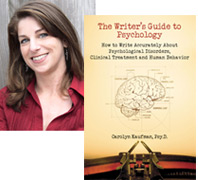
Carolyn Kaufman, PsyD's book, THE WRITER'S GUIDE TO PSYCHOLOGY: How to Write Accurately About Psychological Disorders, Clinical Treatment, and Human Behavior helps writers avoid common misconceptions and inaccuracies and "get the psych right" in their stories. You can learn more about The Writer's Guide to Psychology, check out Dr. K's blog on Psychology Today, or follow her on Facebook! 

Monday, June 10, 2013

Setting, Reaction, Interaction

It was a dark and stormy night, or so the author told you. There were clouds, puddles, trees torn by the wind, and at the end of a long road, the character saw a castle.

Are you bored yet? Good. Let's try that again.

On the second take, a character hunches as the wind gusts against him, shivering because he's not wearing a jacket. He squints because the rain has made his glasses next to useless. While he's walking, he splashes into a puddle he didn't see, soaking through his beaten-up sneakers. The only light he sees is at the end of the road, at a building so huge that at first he stops in his tracks, sure they'll never take him in. But as the rain intensifies, he heads straight for that light.

What's different? Character.

We need setting because our stories have to take place somewhere, and somewhere usually has things like objects in it and some kind of ambiance. It's important, and we know it. But do we always leverage it to its best effect?

Setting matters, but you can make it matter double if it gives a boost to character.

In the above, we get the same setting details in both the first and second examples, but in the second, they're filtered through the experiences of a character. Is it cold? Yes, because he shivers. Is it raining? Yes, because it's messing up his glasses and it's soaked through his sneakers. Wait, the sneakers are all beat-up, so that tells us something about this character being either poor or just unprepared for this trip. We get a sense of distance instead of just location, since the castle is at the end of the road but still feels huge. And then we get the character's response to this situation.

When you're writing, don't stop the story to give us the setting. The setting needs to filter to us through the experiences of the character: the character's perception, but also the character's reaction to what he perceives. I've recently read two stories in which the authors included amazing detail, and yet the details felt superfluous because the main character in no way reacted to those details.

And if reaction is good, interaction is even better.

It's fine to tell us the sidewalk is cracked. It's better to have the character respond to the cracked sidewalks: maybe wistful that his childhood home is going to ruins; maybe glad that his ex-girlfriend lives in this lousy place; maybe angry that his tax money goes for, apparently, no maintenance of the infrastructure.

But best of all is to have the character interact with the setting. Show us how the character stumbled over that crack in the sidewalk, and maybe he swore, or maybe he looked around hoping no one saw him do that. Maybe he jammed his toe and just held his breath until the pain subsided. Maybe the character picked his way over the uneven pavement. 

The character's response to his setting is going to tell us more about the character...and in some ways, it's going to tell us more about the setting as well. Two jobs for the price of one. Plus, when the character is interacting with the details, we won't wonder why you included them. It feels more seamless.

Finally, if you can weave the setting into the plot so they're inextricable from one another, then you can see even more how setting would bolster everything. Ask yourself what the setting you choose has to offer the story, the characters, the subtext, the theme. Ask what the season you've chosen will evoke in the characters. 

Bring to bear your setting's unique details in order to tell us not only about the character's world, but why it's important to the character. Once they're enmeshed that way, every detail is going to be doing double duty, and the character will fully inhabit the space of your story.


---
Jane Lebak is the author of The Wrong Enemy. She has four kids, three cats, two books in print, and one husband. She lives in the Swamp and spends her time either writing books or knitting socks. At Seven Angels, Four Kids, One Family, she blogs about what happens when a distracted daydreamer and a gamer geek attempt to raise four kids. If you want to make her rich and famous, please contact the riveting Roseanne Wells of the Jennifer DeChiara Literary Agency. 

Friday, June 7, 2013

Publishing Pulse for Friday June 7th 2013

Around the Internet


Book Expo America (which the cool kids simply call BEA) is over. The Atlantic, The New York Times and The New York Post are just three publications covering the mood there, which was hopeful! Go, publishing! Also, agents and editors are sitting down at their desks for the first time in a week. If you haven't received a response, blame BEA.

Here's a fun Publishers' Weekly story about which states have the highest per capita count of bookstores. I was not at all surprised to see Vermont at slot #3. (Because we rock out up here in northern New England.) New York is in 49th place? That's so wrong.

Random House has made another excellent infographic which helps describe the book buying public's habits. Source data is from Bowker Market Research.

Interested in hearing how a few top notch cover designers approach the process? See the video here.


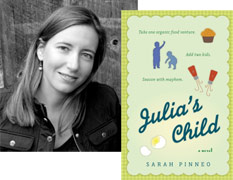
Sarah Pinneo
 
 is a novelist, food writer and book publicity specialist. Her most recent book is Julia’s Child. Follow her on twitter at @SarahPinneo.

Wednesday, June 5, 2013

Should You Use Real Life Tragedies in Your Writing?

by Rosie Genova

I didn’t grow up at the Jersey shore, but I’ve had a one-sided love affair with it my whole life, and it seemed natural to set my books there. While the seaside town in my mystery series is fictional, there are references to real places like Ocean Grove and the Seaside boardwalk to help ground the books in reality. But as I built my fictional world, I didn’t take into account another reality of shore life—hurricanes.

In October 2012, I was wrapping up the manuscript for the first book in the series, Murder and Marinara, just as Hurricane Sandy was making its way up the eastern seaboard. I hit send on October 29, only hours before I lost power for eight days. As the weather worsened, I was feeling that uneasy excitement that comes with a threatening storm. And I couldn’t help but think about how I might work a hurricane into my books. It was a perfect plot device, and my writer’s imagination teemed with fictional scenarios that involved a hurricane.

But once the wind died down,  the reality of Sandy struck with as much devastation as the storm itself. The loss of life and destruction of property in my home state were beyond expectation, and the shore communities were especially hard hit. Thousands were left homeless, businesses were destroyed, and numberless icons of the Jersey shore boardwalks and beaches were lost forever. What happened to my beloved coastline wasn’t the stuff of fiction; it was all too real.

The Seaside Heights boardwalk, its pier ripped away by Hurricane Sandy.
The wreckage of the roller coaster remained in the ocean for months.
Photo courtesy of Wikimedia Commons.
During revisions on the book, I talked with my editor about whether I should include the storm. In some ways, it seemed disingenuous not to mention such an all-encompassing event. In the end, however, we decided to leave it out. Cozy mysteries are meant to provide escape, and give readers a sense of comfort and closure when the culprit is caught and the cozy world is restored. This culprit—a  superstorm of historic proportions—had wreaked a kind of havoc that can’t be resolved in 80,000 words.

So when it came time for the cover conference, I suggested an image that specifically evoked those comforting, pre-storm memories of the Jersey shore.  The icon of the Ferris wheel reminded me of days on the boardwalk, of salt water taffy and games of chance, of long ago summers that felt never-ending. And it’s the one image on my cover that everyone remarks upon.

Ferris wheel detail from cover of 
Murder and Marinara
But these days, that Ferris wheel brings to mind another image—the now iconic picture of Seaside Height’s bent and twisted roller coaster, claimed by the ocean during the storm.

At this year’s Malice Domestic conference, I was lucky enough to meet Louise Penny, the Canadian author of the Inspector Gamache series. After exchanging cards, she praised my book’s cover art; in the next breath, she asked if I had addressed the hurricane in my story. Could anyone look at that Ferris wheel, she asked, and not think about the image of the wrecked roller coaster?

That question had me second guessing my original decision. My book’s release date also happens to be close to the one year anniversary of the storm, another reason I didn’t want to thread it into the fabric of the story.  I couldn’t appropriate as a plot device an event that had devastated so many lives. But now I realized I couldn’t ignore it, either.

And then Louise offered a suggestion that turned out to be the perfect solution:  an author’s note. At the end of my story, after the murderer is apprehended and all is well for my characters, I offer a short, simple explanation of why there is no mention of the storm.  In another book perhaps, a hurricane might figure into the story, but I remain conflicted about the intrusion of such a harsh reality into my fiction.

The 2013 Jersey shore season is already underway here. A number of our boardwalks have been repaired, and shore communities are busy with the rebuilding of homes and businesses. The wreckage of the roller coaster is gone, and a series of television commercials proclaims, “We’re stronger than the storm.”  And while that may be true, many of us in New Jersey still mourn for those pre-hurricane days, to a time when the icons of our beach towns stood for magical innocence and not senseless destruction.

Those are the times I try to evoke in my books. In my stories, none of the beach has been washed away. The boardwalk businesses are thriving, and everybody in town has a home. And that old roller coaster is still on its track, speeding through the night to the sound of the waves.

There is still much work to be done in Jersey shore communities. Please visit Restore the Shore to see how you might help.

A Jersey girl born and bred, Rosie Genova left her heart at the shore, which serves as the setting for much of her work. Her new series, the Italian Kitchen Mysteries, is informed by her deep appreciation for good food, her pride in her heritage, and her love of classic mysteries, from Nancy Drew to Miss Marple. Her debut novel, Murder and Marinara, will be released October 1. An English teacher by day and novelist by night, Rosie also writes women’s fiction as Rosemary DiBattista. She lives fifty miles from the nearest ocean  in central New Jersey, with her husband, two of her three sons, and an ill-behaved fox terrier.

Monday, June 3, 2013

Where’s The Fun?

by Stina Lindenblatt @StinaLL


©Stina Lindenblatt

For most writers, we write because we love it. We have fun researching story ideas, creating story worlds, discovering who our characters are, and coming up with ways to make them miserable.  And we enjoy watching our words come to life on the page.

But after a while the fun fades.

We struggle with writer’s block, characters that won’t behave, and plots that have more holes in them than a cheese grater. And no matter how hard we try, we can’t please all our beta readers and critique partners. Then we have to deal with rejections, endless waits, fear that the cybernet monster ate our query/requested material/offer of representation.  We wonder if we picked the right publishing path, the right agent to query, or the right agent who offered representation. We question just about every decision we make, again and again and again.

Eventually our books are made available, either through a traditional publisher or self publishing. We stress over our covers. We stress over our marketing plans. We stress if we have enough Facebook author ‘likes’ or if enough people have subscribed to our newsletter. We stress over our reviews. We stress because what else is there to do? Oh yeah. That’s right. We stress because of looming deadlines.

With everything that is expected of us, it’s often hard to remember why we started writing in the first place.

The remedy? Step away from your desk, and go out and have some fun!

Summer is rapidly approaching. This is the perfect time to see a movie with your friends or family. Have a picnic. Go for a bike ride or hike. Have a chocolate treatment at a spa (because, after all, we are chocolate-loving writers). Try out paragliding or bungee jumping. Run around in circles like you used to do as a kid (though you might want to skip on this if you suffer from motion sickness). Draw pictures on the sidewalk with chalk. Play hopscotch. Go to the zoo. Take up a new hobby. Sign up for an art class. Spend time with your kids (you remember them, right?) Do whatever you need to do, but make fun your number one priority.

When you have fun, your stress hormone levels decrease, which is great for your health. Decreased stress increases your creativity and will make your muse happy. Doesn’t that sound better than sitting in your chair and refreshing your inbox for the thousandth time, in hopes of hearing back from an agent who just went on vacation—and didn’t announce it on Twitter? Your project will still be waiting when you return, but you’ll return a rejuvenated and happier writer. A happier writer who remembers why you started writing in the first place: because it’s fun.

What do you like to do to have fun? When was the last time you took a break to have fun?


Stina Lindenblatt @StinaLL writes young adult and new adult novels. In her spare time, she’s a photographer and blogging addict, and can be found hanging out on her blog.  

Wednesday, May 29, 2013

Interview with Rosie Genova, Author

Today's post is dedicated to author Rosie Genova, whose debut cozy mystery "Murder and Marinara: An Italian Kitchen Mystery" will be released October 2013. Rosie will be hanging out with us here at the Query Tracker blog so let me introduce her to you.

Welcome, Rosie Genova! 

Tell us a little about yourself.
Well, you can take the girl out of Jersey. . .except I never left. I was born here, schooled here (Go RU!) wed here, and work here. And my books are set here.

I grew up in a tiny, working class town that had a cool old library, and I spent hours there. Becoming an English teacher seemed like a natural progression from being a bookworm, and I’ve been in the classroom 23 years. When I was home raising my sons, I wrote for a regional family publication, which provided me my first byline and a valuable way for me to hone my craft.  In 2006, I wrote the draft of my first novel, and have been working steadily as a writer ever since.

You're represented by Kim Lionetti of BookEnds. Any highlights you'd like to share from your querying process?
I had a number of times I came close with well-known agents who represented women’s fiction, and I learned from each of those rejections. I was lucky enough to go to Kim with an endorsement from an editor at Berkley with whom she’d once worked; she liked my query and requested a partial. I still remember the Sunday afternoon I opened my email to find a message from her that read: “Loving this so far. Please send the rest.”

What do you like best about partnering with a literary agent?
She knows the business in ways that I never could, and has access to people I could only dream about contacting. My focus was always traditional publishing, so an agent/author model works best for me—I know it’s not a model everyone embraces, or even needs. But her guidance and advice has been invaluable, and she tells me the truth, even when it’s not what I want to hear. She also laughs at my jokes, which helps a lot.

I remember when you shared pages with me from your "Shakespeare by the Shore" manuscripts. Loved those stories--and deeply distressed that it's not certain when I'll get to read those books. Tell us what happened to those stories--and, subsequently, your publishing focus.
Those stories are still living and breathing. I open them up and still derive pleasure from reading them. I believe in them, and believe they have an audience, but the time isn’t right. I’m considering self-publication, but that’s probably a couple of years away. It’s also possible that if the mysteries do well, I’d have a platform to try to get them published the traditional route. And thanks for the kind words!

How did you react to Kim's suggestion to switch genres?
My romantic comedies circulated among editors for three years. We had several “rejections with regret” but they were perceived by editors as chick lit, end of story. (They are, in fact, “chick lit-erate,” and that’s how I’ll eventually position them.) When Kim called to suggest I try a cozy, I balked at first. Plotting does not come easily to me, as I’m generally a pantser when I work.

Mysteries call for tight, logical plots with no holes, so I was intimidated. But Kim reminded me that she could sell a cozy based on three chapters and a synopsis, so it wouldn’t require the time investment of my women’s fiction.

When I talked it over with my family, my son Adam said he’s always thought I should do a mystery,
and my beloved husband offered me these words of wisdom: “Listen to your agent. She’s sold a lot of books. You haven’t sold any.”

So I worked on the proposal, and had Kim and a couple of trusted readers look over the pages. After another round of edits, Kim submitted to three houses. Within six weeks, all three had offers on the table. I ended up signing with Penguin’s NAL division for three books. Let’s just say I have since taken my hubby’s words to heart.

Tell us about your new writing persona: Rosie Genova. What can we expect from Rosie?
Well, while Rosemary is off spinning romantic tales based on Shakespeare, Rosie is dreaming up ways to knock people off. She’s also coming up with recipes for fabulous Italian food—never let it be said that her victims don’t get a savory last meal. Rosie is the author of the Italian Kitchen Mysteries, a new series of cozies set at the Jersey shore. The first of which is Murder and Marinara, which releases October 1.

From the back jacket:

Hit whodunit writer Victoria Rienzi is getting back to her roots by working at her family’s Italian restaurant. But now in between plating pasta and pouring vino, she’ll have to find the secret ingredient in a murder....

Where can we find you on the web?
You can find me at www.rosiegenova.com, on Facebook, on Goodreads, and occasionally at www.rosemarydibattista.com.

Can we have a sneak peak at a future project?
Absolutely. Book 2 in the Italian Kitchen Mysteries is tentatively titled The Wedding Soup Murder.  Victoria’s grandmother puts her in charge of catering a large wedding reception with a menu featuring the Casa Lido’s famous Italian Wedding Soup. At the reception, Vic tangles with a couple of egocentric chefs, a spoiled bridezilla, and the snooty club president. But by the time the wedding dust settles, one of them is dead, and Victoria once again finds herself on the case.

If you could go back five years and change something, what would it be and why?
You mean besides getting that bad haircut or eating all those cannolis? Assuming you mean in my writing career, not very much. Five years ago I signed with Kim, and that was one of the smartest professional moves I’ve made. I did try my hand at a more serious novel that I have since trunked. If I had to do it over, I would spend those couple of months coming up with better jokes instead.

Do you have a favorite writers’ resource, such as a book, a website, a course, or an association?
I know I’m biased, but I love the Query Tracker community. There are few writers’ forums with the level of support and lack of snobbery found here. Personally, I have found two critique partners here who’ve been invaluable to me.

I also think that it’s important to become part of a writers’ community within your genre through email loops, but I’d suggest lurking for a good long while before posting. It’s important to separate those who provide genuine support from those who are just there to hawk their wares. And if the tone of the group is whiny or complaining, that’s probably not the place for a fledging writer to try her wings.

What's your message to the writers who haven't "made it" yet?
I think there are many definitions of “made it.” It could be the moment you print out that first manuscript. Or the first time an agent asks for a partial. Maybe a dozen people comment on your blog post, and only one of them is your mom! I think the secret is savoring all the small triumphs along the way, and constantly honing your craft.

As a writer, I embrace some words of Hemingway: “It is better to be lucky. But I would rather be exact. Then when the luck comes you are ready.”

If I had to come up with some essential message, it would be pretty simple. Work hard. Be exact in your writing. And be ready for the luck when it comes.

I couldn't agree more. Buona fortuna, Rosie, and welcome to the Query Tracker Blog! We are lucky to have you here.

Be sure to watch for Rosie's book and join us in welcoming her to the QTB!

About Rosie Genova...

A Jersey girl born and bred, Rosie Genova left her heart at the shore, which serves as the setting for much of her work. Her new series, the Italian Kitchen Mysteries, is informed by her deep appreciation for good food, her pride in her heritage, and her love of classic mysteries, from Nancy Drew to Miss Marple. Her debut novel, Murder and Marinara, will be released October 1. An English teacher by day and novelist by night, Rosie also writes women’s fiction as Rosemary DiBattista.  She lives fifty miles from the nearest ocean  in central New Jersey, with her husband, two of her three sons, and an ill-behaved fox terrier.


Ash Krafton is a speculative fiction writer who, despite having a Time Turner under her couch and three different sonic screwdrivers in her purse, still encounters difficulty with time management. Visit Ash's blog at www.ash-krafton.blogspot.com for news on her urban fantasy series The Books of the Demimonde (Pink Narcissus Press). Book Two "Blood Rush" was released May 2013. Currently, her urban fantasy novella "Stranger at the Hell Gate" (The Wild Rose Press) is available on Amazon's KDP Select.