QueryTracker Blog

Helping Authors Find Literary Agents

Monday, March 11, 2013

No Excuses.

Let's talk about that novel that's been in progress for ages, the one you're pretty sure you'll finish someday (especially if it's your first novel but even if it's your twentieth). Let's talk about why it's stalled.

I'm finishing my novel for Lent. For reasons we don't need to get into here (but I did elsewhere, for the curious) I've turned the runup to Easter into my own personal NaNoWriMo. You may remember I said I don't do NaNoWriMo, and I don't -- I've set the word count at a sustainable rate for myself, and I've been able to nail it every day except for the time the school called and said they foresaw an ambulance ride in my son's future. (There wasn't. He's okay.)

What I've realized is not just that I required a swift kick in the pants to get finished, but why I needed it: I was allowing normal problems to derail me. So let's back up a bit. Are you too-easily discouraged?

The problem with being an instinctual writer, the kind of seat-of-the-pants writer who navigates the drafting process via instinct rather than road map, is that sometimes our instincts are wrong. Or rather, as instinctual writers, we believe it should be easy. When it gets hard, we may mistake resignation for a writing pause.

This kind of stall is not just the writer making excuses for not writing. I mean that sometimes we legitimately get derailed, only by something that shouldn't have had that much power over us. Maybe in those cases, it's time to borrow tricks from our more-disciplined outlining and word-counting siblings to clear the hurdles. Maybe that's the time to pull out the yardstick and figure out just how much we should be producing per day. And then produce it. No excuses.

Just after the midpoint of my WIP, the reader needs to know a minor character has realized something vital to the plot. The problem? He's not a POV character. Another problem? He keeps this information to himself. I couldn't figure out how to convey his realization, but I had to because it's going to explain why things start going wrong for my protagonists, and yet no solution I came up with resolved the problem to my satisfaction.

I asked my agent. I ranted at my Patient Husband. I lamented to a friend. I wrote nothing. I wasn't even at that part of the novel, but I stalled.

But once I resolved to write my daily minimum, that scene came up, and when it came up, I had to solve the problem. I had no choice. No more dithering. And while I walked out to get the mail, on the day I needed to solve it -- I found the solution.

It's not just that one scene. I've discovered repeatedly that when I'm forced to solve a problem because the word count demands it and we're at that scene...the solution comes. What's the next scene? I don't know. But that doesn't mean I need to take five weeks to figure it out. It's not going to be any easier to figure it out in May than it is today, right? The pace forces me to settle on a solution and enact it -- today. Otherwise I won't get today's pages done.

That's not to say I haven't revisited those pages the next day to do it better. What I'm saying is that sometimes if you're a SOP writer, the tendency is to say, "The solution will come when it comes."

Maybe instead it's better to get up and stride toward the solution. Because now I'm chugging ahead on the manuscript, and I'm furious at myself for the time I've lost waiting for The Idea Fairy to present the next scene, or a way to convey a third party's information, and so on. 

I still hold to the idea of a literary pause. But not literary laziness. Only the writer can tell the difference.

Here's my suggestion, though. If you've got a work-not-in-progress when it should be, and if your literary pause has lasted longer than a week, pick it up again. Write all the way up to your trouble spot. Force yourself to write through it. If it works, then you're steaming ahead. If it doesn't, then rip out those pages and try another approach. But don't discount the idea of momentum. Sometimes going through the motions does lead to real results.

---
Jane Lebak is the author of The Wrong Enemy. She has four kids, three cats, two books in print, and one husband. She lives in the Swamp and spends her time either writing books or ejecting stink bugs from the house. At Seven Angels, Four Kids, One Family, she blogs about what happens when a distracted daydreamer and a gamer geek attempt to raise four kids. If you want to make her rich and famous, please contact the riveting Roseanne Wells of the Jennifer DeChiara Literary Agency. 

Friday, March 8, 2013

The Publishing Pulse: March 8th, 2013


If you love using the word ‘literally’ in the casual sense, then this post is for you.

Whether you’re planning to self publish your novel or want to increase the chance of an agent or editor falling in love with your book (and writing), a freelance editor is something you’ll want to consider. Joel Friedlander explained how to find the right freelance editor for your project.

The Association of American Publishers criticizes Amazon’s bid for a .book domain name.

The group behind NaNoWriMo (which is usually held in November) is holding a Camp NaNoWriMo Challenge for both April and July. Check out this post for more information. There are some similarities and some changes to the regular one held in November.


Many author websites are linked to the author’s blog. When you visit the website, you’re usually greeted with a static landing page. This same feature is now available to bloggers who use Wordpress and Blogger. This enables you to turn your blog into a website. People who want to check out your blog (also known as dynamic pages) just have to click on the page.


Since conference season is upon us, agent Mary Kole shares some tips to help you get the most out of the next one you attend.

Agent Rachelle Gardner talked about manuscript perfection. She also discussed author rights and responsibilities, and why thinking negative thoughts can be a good thing.


Have a great weekend everyone!


Stina Lindenblatt @StinaLL writes young adult and new adult novels. In her spare time, she’s a photographer and blogging addict, and can be found hanging out on her blog

Wednesday, March 6, 2013

Title Match: Fighting to Stand Out in a Crowded Market

Thanks to the (relative) ease of publishing, the number of new books published each year is increasing at a staggering rate. [Author's note: I wanted to include a small-but-mind-blowing statistic showing the exponential explosion in book titles released each year but, quite frankly, the numbers were much too intimidating] While this may be a boon for readers and writers, it is also part bane: it's getting harder and harder to create a book title that truly stands out.

I encountered this problem when I was seeking publication of my first book. I picked my title during the writing of the first draft--but it wasn't my first choice. My original title made my sister feel so turned off that she begged me to find another (I think her exact words were "I'd NEVER read a book called that." It was all the incentive I needed.) Very begrudgingly, I took her advice to come up with another title, one that was inspiring enough to find itself written into the story. By the time I finished the first draft, I knew "Bleeding Hearts" was the title I'd keep.

When I signed with my publisher, my editor suggested I should try to make the title stand out a bit more, since there were several books in print with that particular title.

My first response was "WHAT? You've got to be kidding me!" I quickly logged on to Amazon where, sure enough, there was a list of books titled "Bleeding Hearts".

That lead to my second response: Why hadn't I done my research?

Title Searches

When I was an aspiring writer, I spent a lot of time plugging my name into search engines. In fact, I would brag that I measured my fame and fortune in Google hits and token payments from online magazines. For as often as I Googled myself, it never once occurred to me that perhaps I should search my proposed title.

Part of that failing was largely because I didn't set out to become a career author when I settled on the title for my book. At that point, it was my project, my comfort zone, my book baby. It didn't matter if there were a million other books with the same title because it was my story and goodness only knew if anyone besides me would ever read it (considering how subjective my own sister could be.) It never occurred to me to search the marketplace because who knew if my book would ever make it that far?

At the very least, I should have done so when I first decided to make a go at publishing. I went through the trouble to join writers groups and community forums and even sought (and signed with, for a short time) an agent--proof that, back then, I was thinking business. That's when I should have paid attention to my title and the impact it would make in the crowded marketplace.

Picking a Winner

The good news is that titles cannot be protected by copyright. If the title you chose is the one you have your heart immovably set upon, then be sure you are ready to work hard to make it your own. One way to make a well-used title sound new and appealing is to couple it with a great series name.

In the case of my book, we added "Book One of the Demimonde" after the original title. It was a logical solution since the book was planned as the first of a series. The word demimonde also alluded to the world of demivampires around which the story is centered, as well as the heroine thinking of herself as a "kept woman". Both the publisher and I were very pleased to come up with such a multi-taker of a word--it made the title much more intriguing.

Goodreads further simplified it as "Demimonde #1", which sounds way too cool for me to have thought up on my own. It also led to my blog taking on the identity of "Ash Krafton's Demimonde". Enhancing my former imitable and unremarkable title has led to good things all around--including a useful platform. It also ensures that when someone looks for my book on Amazon, searching my title and series makes the book pop right up to the top of the list.

Stand-Alone Champions

The old cliched-title-with-a-nifty-series-name trick won't work for a stand alone book. So what's an author to do?

A sub-title might come in handy. A book you are determined to call Unchained Melody can become:
  • Unchained Melody: The Night the Crooning Killer Broke Free
  • Unchained Melody: A Story of Song and Surrender
  • Unchained Melody: Tapping Your Inner Song-Writing Muse
A sub-title makes your well-used title unique and informs readers about the subject of your book.

Sub-titles are commonly used for non-fiction but that doesn't mean they can't be skillfully applied to fiction. It takes good judgment and real skill--of course, a bit of opinion from beta readers wouldn't hurt, either.

And when a sub-title won't do it, think hard about that title you are fighting so hard to keep. What else can you do to make it unique? Can you put a fresh spin on it, a twist to the cliche?

If not, it may be time to go back to the drawing board.

Here is a list of most unusual book titles--guaranteed there isn't much competition for them. (A second list from less-known authors is here.)

Annie Neugebauer presented a list of unique titles that she loves, as well as her thoughts on choosing a title.

The point is that if our book title doesn't stand out in the crowd, how is it going to sell? A title is more than metadata--it's a calling card. It needs to accurately represent the book within the covers. It needs to capture a reader's attention. It needs to stand tall in the crowded marketplace so that it gains its proper attention.

Yes, it's a fight...but it's one you can win.


Ash Krafton is a speculative fiction writer. Visit Ash's blog at www.ash-krafton.blogspot.com for news on her urban fantasy "Bleeding Hearts: Book One of the Demimonde" (Pink Narcissus Press 2012) and the follow-up "Blood Rush" due May 2013.

Monday, March 4, 2013

Cora Carmack and Her (Smokin' Hot) Path to Publication


Last fall, Cora Carmack hit the big time with her debut novel LOSING IT. Hers is one of those stories—the sort that give hope to authors everywhere. It proves that good girls (and good guys) win, and they do so by paying attention, taking risks and working hard. Thank you, Cora, for stopping by Query Tracker today to talk about LOSING IT!

Was LOSING IT the first novel you ever wrote?

It wasn’t. I completed one novel before LOSING IT, and started 3 or 4 others. Some of those books (including the unfinished ones), I poured months and years into only to have them go nowhere. Ironically, LOSING IT took three weeks to write, and caused my life to change dramatically almost overnight.

When did you self publish LOSING IT, and how long did it take before you knew you had something big on your hands?

I published the book in Mid-October 2012. And… Um. A day? It hit #1 on B&N a little over 24 hours after it went live. I dared to hope before I published because I got great feedback from the bloggers on the blog tour, but after I published things went incredibly quickly.

I found out it hit the New York Times bestsellers list and the USA Today list about 10 days after I published (the same day I signed with my agent, actually).

Whoa! Okay, let’s back up a minute. I've read that book bloggers were essential to getting your story out into the world, including a cover reveal which involved 30 or so bloggers. How did you get so many bloggers to care about a cover for a book that didn't exist yet? [Note: the answer may well be that it is simply a smokin' hot cover, end of story.]

Bloggers were. Absolutely. But I actually didn’t even show the bloggers the cover before they signed up for the reveal. The YA Sisterhood blog was vital in organizing it. They contacted bloggers that they knew and had worked with in the past with only the story’s blurb, and bloggers signed up based on that.

I've read that you self published this book because you thought New Adult wasn't selling to editors well. That strikes me as a very confident, informed, bold position to take. (And makes such a great story.) My question is, how did you know?

Well, here’s the thing… Cora Carmack is actually my pseudonym. In my real life, I actually work in publishing. When I started writing LOSING IT, I was an intern (at both a publisher and a literary agency), so I was very familiar with the market and the industry. When I decided to self-publish, I actually already had an agent, and we were preparing to go on submission, but at the last minute, I changed my mind.

I just had a gut feeling that self-publishing was the way to go if I ever wanted my book to make it into actual bookstores (which sounds crazy, I know. But I was hoping, desperately that a strong book with the right marketing at the right time could be very successful through self-publishing, and that hope paid off). I split with my agent shortly after that.

But I really didn’t have any inside info. I was just well informed. I read insatiably, was active in the blogging community, and had a publisher’s marketplace subscription. So, I would have to have been blind to not see the connection between bloggers and popular e-books and self-published books being picked up by traditional publishers. I highly encourage writers to treat their writing like a business, not a hobby. That means doing research and being as knowledgeable as possible.

Did you land your agent as a result of your successful sales?

I did, yes. BUT… in addition to my New Adult contemporary writing, I also write Dark YA fantasy, so it was very important to me that whatever agent I signed with was interested in that side of my career as well.

I talked to a lot of agents once the book started doing well. Most contacted me, but I reached out to two or three myself because I wanted to make sure I was making the best possible choice. I ended up signing with Suzie Townsend of New Leaf Literary. There were multiple agents that I liked and connected well with, but Suzie actually asked to take a look at one of my YA Fantasy WIPs before she offered. Then when she offered me representation, I knew it was because she believed in both sides of my career. That made the decision pretty easy, and I haven’t regretted it a day since.

Did you have to choose an agent and a publisher almost at the same time? (That would have made for a very stressful week or two.)

Oh, it was definitely a stressful time. There was a one week period where I woke up and went to sleep feeling nauseated for no reason other than stress. When I signed with Suzie, I had interest from a few publishers, but I handed that over to her. She went out on submission very quickly after that. There was a slight delay in the process by Hurricane Sandy, but once New York was back to work, things moved very quickly. We went to auction, and I signed with William Morrow/Harper Collins shortly thereafter.

You can find Cora Carmack at her blog, and her book in bookstores.


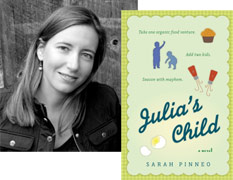
Sarah Pinneo
 
is a novelist, food writer and book publicity specialist at Blurb is a Verb. Her most recent book is Julia’s Child. Follow her on twitter at @SarahPinneo.

Friday, March 1, 2013

Publishing Pulse for March 1, 2013

New At QueryTracker:


This week we've added one agent profile and updated six (two of whom appear to be no longer agenting). Are you querying one of them? Always make sure you double-check every agent's website or Publisher's Marketplace page before sending your query.

If you're a QueryTracker premium member, then you can be notified whenever an agent or publisher profile is added or updated. If you're not a premium member, you can just check for yourself.

Publishing News:

Amazon warned users not to install the 3.6.1 update for the app if they read books on their phone or iPad. (They fixed the registration issues in 3.6.2.)  Apparently a glitch in the software was erasing users' entire libraries from their iOS devices. This sounds like a software engineering nightmare.

Despite what we'd all like to believe about promotion, recommendation by "a trusted friend" is the top reason people seem to choose the books they read.

Barnes & Noble Nook revenue is down 26%.

Around the Blogosphere:

Agent Kristin Nelson wants self-published authors to cozy right up to their copy of Excel.

The five biggest mistakes made by authors writing about the military.

Literary Quote of the Week:

Everything is held together with storeis. That is all that is holding us together, 
stories and compassion. -Barry Lopez

Thanks for stopping by, and keep sending those queries!

---
Jane Lebak is the author of The Wrong Enemy. She has four kids, three cats, two books in print, and one husband. She lives in the Swamp and spends her time either writing books or ejecting stink bugs from the house. At Seven Angels, Four Kids, One Family, she blogs about what happens when a distracted daydreamer and a gamer geek attempt to raise four kids. If you want to make her rich and famous, please contact the riveting Roseanne Wells of the Jennifer DeChiara Literary Agency. 

Wednesday, February 27, 2013

The Heroic Journey of Every Writer: Part Two


By Martina Boone @4YALit
Today, we continue the journey from where we left off on Monday. Following the dreaded rejection.

THE REWARD

But there's a hidden treasure in every rejection, a measure of achievement. We have tried. We have succeeded at putting ourselves out there. And we are learning that being creative requires us to face rejection. We are preparing ourselves for years of rejection yet to come. Rejection by agents. Rejection by editors. Rejection by acquisitions boards. Rejection by reviewers. By readers.

Art is subjective. Not every agent is going to love our work, and when we submit our first book, or our second, or third, or sixth, we may discover that it's still meeting with rejection. But maybe, maybe, instead of a form rejection, if we keep battling, we glean a piece of knowledge that points us in the right direction. We learn what we are good at writing. Do we have a great voice? A way with description? A facility with rhythm? Plot? Characterization? And we learn what work we have yet to do, all the elements of writing where we need improvement. We discover that rejection can be energizing, and we realize that we stand on the brink of a landscape that is only just opening up before us.

THE ROAD BACK

Having come through the initial battle, we must now regroup. We pull out the craft books. We dig deeper. We seek more experienced mentors. We attend different kinds of writing conferences—conferences focused on craft instead of sales. We read more fiction than we have ever read before, and we begin to read it in a different way, critically, not to find fault, but to peer beyond the curtain of story to examine the motions and machinations of the wizard. Now we are determined to complete the journey and come home with an agent and a book deal. We can smell success… Our mentors can smell it on us. (And yes, this is often the point where we do find ourselves wearing the same pajamas the entire weekend and feeding our families cold, leftover pizza for breakfast on Sunday morning.)

THE RESURRECTION 

The faster we race toward that finish line, the more painful it is to trip and fall. And we will go splat at some point. Getting a Revise and Resubmit on a manuscript may make us believe we are almost there. Or at least that the next manuscript will surely be an easy sell. After all, this time, we've done everything right. We've plotted. We've schemed and themed. We know (and like) our characters better than our siblings and in-laws. (At least some of them.) We would like to move out of our current homes and take up residence in our storybook settings. And yet. And yet. When it comes down to it, we may be close and still not close enough.

At the climax of our writer's journey, we are going to be tested again, usually when we think we can see a champagne bottle set out on the table. That's the moment when we stumble and go down. We fail. Again.

At that moment, while we're lying curled in a fetal position on the cold cobblestones and whimpering for chocolate, the thought of picking ourselves up and trying again seems like more heartbreak than we can bear. Another round of revisions? Another unagented manuscript? Another unsold book? Or one that's published but undersells or underperforms our hopes? It's all useless anyway. What's the point? We can't DO this anymore. We can't keep spending a year or more writing a manuscript, pouring ourselves into the pages, only to fail again.

But wait. This—yes, THIS—this exact moment, is our defining moment! Our darkest moment. Our long night of the soul.

Everything we create comes from within us. By sharing it with the world, we lay ourselves naked for judgment and ridicule. That's painful. It's hard. It's our battle. Sometimes it can feel as if death would be easier. Certainly, it's easier to give up.

As Walter Smith put it, "Writing is easy. You just sit down at the typewriter, open a vein, and bleed it out drop by drop."

It is also worth remembering that writing fiction is both a selfish and selfless endeavor. We write to communicate. The human spirit aches to share experiences. There are readers out there hungry to escape or enhance their own lives. And they may be struggling with a problem they will solve through or during the reading of a book. They may be searching for just the thought, the sentence, or idea, or emotion that we have labored over within the pages of the book we've written.

The moments of communion when a reader feels a book was written just for them—we've all felt like this when reading, right?—is what lets a book live on and grow beyond us. It's the elixir we are all hoping to find and bring back. The writer's holy grail. The lucky few writers who achieve a communion like that leave behind a legacy. And doesn’t that deserve a battle? Aren't we willing to fight for it? Aren't we willing to keep learning to achieve it, fighting to achieve it—because, yes, we will have to keep fighting, fighting harder, with every new manuscript we begin.

If we want, need, that elixir, we will pick ourselves up after that long night of the soul.

We will be reborn into a world that's very much bigger even than the one that we believed we had found. We finally know how very little we actually know, and we see the breadth of what we have yet to learn. That in itself is staggering. But we are committed to a lifetime of learning, experimenting, reaching. We are strengthened by our successes and our failures, and in the act of pushing past our dark moment, we finally break through that dark veil of doubt that held us back from writing in the first place. The turmoil in which we began is finally resolved, our wound is healed at last.

RETURN WITH THE ELIXIR

We return to our families and jobs at peace with ourselves, prepared to continue the journey of the writer. Whether we have achieved the first stage of publication or finally broken through with a novel that takes us to the next step, or anything in between, we carry success within us. Because we no longer feel like we're in a hurry to get "there." We can let ourselves fall in love with the process. We can love the writing, the current book, the next book, knowing that there is an endless well of creativity inside us. Not every book will sell. Not every book will sell well. But every book will teach us something, about ourselves, about our world.

Every book is a brand new journey.

FOLLOW YOUR BLISS

"If you do follow your bliss you put yourself on a kind of track that has been there all the while, waiting for you, and the life that you ought to be living is the one you are living. Follow your bliss and don't be afraid, and doors will open where you didn't know they were going to be." ~ Joseph Campbell

Can you relate to the writer’s journey?


ABOUT MARTINA BOONE

Martina loves reading and writing books about beautiful, vicious, magical worlds that intersect our own, and about the monsters of myth and folklore that sometimes show more humanity than we do. She's the founding member of the Adventures in YA Publishing blog and runs the monthly First Five Pages Workshop. Follow her on twitter as @4YALit [http://www.twitter.com/4YALit] or visit her website.

Monday, February 25, 2013

The Heroic Journey of Every Writer: Part One


By Martina Boone @4YALit
“If you can see your path laid out in front of you step by step, you know it's not your path. Your own path you make with every step you take. That's why it's your path.” ~ Joseph Campbell

When I decided to write a novel, I didn't stop to think where I was going or how long the journey was going to be. I simply wrote. And then I discovered that the novel needed—deserved—more than that. It needed me to have a clue about what I was doing, inconsequential things, you know, like structure and story elements.
As writers, we can try to reinvent the wheel, sure, but we will get farther faster if we start with a working wheel and then concentrate on making a different or, hopefully, better one. Maybe a few of us are lucky enough to have taken English or Literature or Creative Writing. For the rest of us, learning the basics of crafting fiction is a do-it-yourself MFA program. These days, many of us are doing that program together, making the same journey and blogging about it en route. Of course, some of us are on foot and some are in race cars. But that's okay. I honestly believe we are all going to get there at the pace we need to set.
My pace? Think turtle crawl.
One of the first books of wisdom I encountered on the road was The Hero with a Thousand Faces, the Collected Works of Joseph Campbell. From there, I devoured Chris Vogler's The Writer's Journey. And as I was searching for a way to tighten up the framework of my manuscript, I began to correlate all the brilliant insight from these teachers and various other sources into something I called the Complications Worksheet. I go back to that worksheet each time I start a new project, and the other day while I was on the phone with the brilliant Angela Ackerman (co-author of The Emotion Thesaurus and The Bookshelf Muse blog, I had a revelation. The journey the hero takes in our manuscripts is essentially the same journey many of us take as writers.
THE ORDINARY WORLD

Here we are, bumbling through our careers and family lives, vaguely uneasy and unfulfilled but maybe not even aware that there's a void inside us, a gaping wound. Why haven't we written yet? It could be that we tried and failed, or that we had to get on with the business of making a living, or raising kids, or maybe we have a family who has always dismissed writing as a pointless pursuit—something everyone wants to try but only a chosen few achieve. Implying, of course, that we're not good enough. So we shelve our illicit hopes, paint on a smile, and get on with our lives not realizing that something inside is tugging us in a different direction than the path we are still trudging down.

THE CALL TO ADVENTURE

But then . . . Then we have a dream, or read a book, or see a movie, or witness an event that shakes us. Something stirs inside us, an elusive wisp of an idea scented with adventure. It begins to rise and pull us with it, beckoning us to come along, to put our own spin on the wheel of inspiration.

REFUSAL OF THE CALL

Of course we refuse. We're human. We're afraid. We don't have time, we don't have money, we don’t have the knowledge to pursue something as overwhelming as writing an actual book.

Or maybe we don't refuse. Maybe we take those first tentative stops, only to hear someone else, someone who means well, who doesn't want to see us hurt or disillusioned, make the refusal for us. For our own good. Because really, the idea of writing for publication is absurd, and we shouldn't have any expectations.

MEETING WITH THE MENTOR

Still, someone, somewhere, gives us a few words of encouragement. Maybe it's something as small as a sentence in the Author's Note of a book that resonates, or something we read in an interview or on a blog, or maybe we're lucky enough to know a writer. It could even be that someone reads our first hesitant scribblings and has the kindness not to laugh. These encounters give us our first supplies for the long trek, the first guideposts to set our feet on the long and rocky road. We reach deep and dig out some hidden spring of courage and take that initial, hesitant step.

CROSSING THE THRESHOLD

At the end of Act One, we've committed to venturing beyond the Ordinary World of 8 to 5, diapers, homework, cooking dinner, cleaning house. We step into a mist-shrouded swamp, someplace new and different filled with rules we don't know and emotions we're not prepared to feel. 

TESTS, ALLIES AND ENEMIES

We don't exist in isolation. Suddenly, we encounter all sorts of other people with feelings and opinions about us and the journey we're undertaking. Some of them help us and some make us wish we'd never even thought of writing. Some aren't actual people at all; our manuscripts themselves serve every one of the roles a hero encounters in his travels: heralds, allies, mentors, threshold guardians, villains and enemies, shapeshifters, and tricksters. They all serve a role, testing us in some way while we sort out who they are to us and how we have to deal with them. Some we're happy to leave behind; they criticize us to make themselves feel better; they hold us back. Some we have to reluctantly leave behind; they present so much drama we're worn down trying to help them instead of helping ourselves. Some we follow and some we lead. All of them teach us about ourselves, all of them help us settle into the voice that will shape our themes and writing.

APPROACH 

We approach the biggest obstacle. At the time, we probably don't even know it's going to be that hard. We've got the manuscript written. Rewritten. Edited. Refined. Polished. We think the story is solid, plenty of conflict, no plot holes, no sagging middle, no weak Peggy-Sue characters. The writing shines. We've gathered our critique partners, our beta readers, and they have trained with us, cheered for us, pushed us until we know that we are ready to battle through to submission. And make no mistake, querying the marketplace is the biggest battle we will face.

THE ORDEAL

We prepare the list agents or publishers to query, and we think that puts us almost at the end of our journey. In truth, we have barely reached the midpoint. But it is the most crucial point, the initial test. Did we do more than write a book? Did we write a saleable book, a book that's unique, a book that's the right marriage of story and writing craft? One that readers will eventually hold in their hands and make greater by bringing their own experiences and ideas into the reading? We face our greatest fear, the question of worthiness. Have we spent months, years, writing something no one will ever read? We die a little each time we obsessively check the inbox and read another rejection letter.

Not to leave you hanging about what happens after a rejection (other than drowning our sorrows with chocolate), but part two of your writing journey continues on Wednesday.

Do you relate to any of the steps on the journey so far?


ABOUT MARTINA BOONE

Martina loves reading and writing books about beautiful, vicious, magical worlds that intersect our own, and about the monsters of myth and folklore that sometimes show more humanity than we do. She's the founding member of the Adventures in YA Publishing blog and runs the monthly First Five Pages Workshop. Follow her on twitter as @4YALit or visit her website.