QueryTracker Blog

Helping Authors Find Literary Agents

Monday, April 15, 2013

"You Should Do a Book Trailer"


I love this post from author Keith Cronin, because it demonstrates both the variety of pressures new authors face, but also the harnessing of some very personal strengths found underneath his own roof. Making a book trailer is not for everyone, but here's how one author turned his publicity effort into a creative work of love.  And then saw results.
—Sarah P.


By Keith Cronin

As the date of my book launch approached, I kept hearing this advice:

"You should do a book trailer."

Great, now authors are supposed to be movie directors, too? Wonderful. We'll just add that to our constantly growing to-do list, along with blogging, Facebooking, tweeting, chirping, and various other animal noises. Oh, and we'll do this even though there still isn't quantifiable data proving that all this stuff actually helps sell books.


Still, I'd been planning to take a shot at creating a homegrown book trailer. After all, my life partner Luna Jade is a multimedia artist with solid video editing chops, so at least I could probably get this done on the cheap. And I like to think I'm a pretty creative guy, with a good eye. How hard could making a two-minute video be?

Answer: pretty freaking hard.

When I tried to storyboard it, I kept hitting a brick wall. Everything I came up with made my book seem like either a medical thriller or some movie-of-the-week tearjerker. This is not surprising, since my book is about two young stroke victims, and is set mostly in a hospital. But my book is actually pretty funny. So how do I capture that aspect, while showing images of hospital corridors and physical therapy sessions? Finally I gave up, consoling myself that nobody had proven that book trailers actually work.

"You should do a book trailer."

This time it was Luna talking to me, while we were eating dinner. I explained that I had tried, but kept getting nowhere. And that given the number of truly awful book trailers out there (which could be the topic of a whole 'nother article), I didn't want to put out something I wasn't genuinely excited about.

"What if I wrote a song for it?" she asked. Now, this was interesting. Among her many talents, Luna is a professional singer/songwriter, and has a pretty sweet home recording studio. And she had read and loved my book, so she "got" what the book was about. Who better to capture my story?

As I began to mull this over, she started ad-libbing some lyric ideas, and immediately captured one of the metaphors I'd used in the book. I loved the initial couplet she had just reeled off, which ultimately became the first two lines of the finished song. Sitting at the table we started brainstorming about the mood and lyrical content of the song, and agreed that it might be cool to try to find a climactic place in the song to include the phrase "me again" (the title of my book), as long as it didn't seem forced or corny.

Inspired, she wrote the words and melody in a single day, and I have to say, the song sounded great. And her inspiration was contagious: suddenly I had a rush of ideas for how the video could flow.

I had storyboarded some corporate training videos, so I had some experience in combining images and timed narration. And during my abortive earlier attempts at brainstorming the trailer, I had at least isolated the three things I wanted the video to accomplish: I wanted to show that my book was funny, that it was emotional, and that there was a sense of hope to the story.

This last part was important to me, because I was finding that when I described my novel to people, they'd often say, "Wow, that sounds depressing." While there are some powerfully sad moments in the book, there is also a steadfast humor and underlying optimism. But in early drafts of my storyboards, between all the medical imagery and ominous phrases describing the problems my characters faced, I could see how the book seemed like a downer.

Having identified those goals, it was time to figure out how to achieve them. To capture the humor, I decided to start the video with the opening passage of the book, which has a nice punch line to it. The emotional part was easier to capture: we simply began listing the problems the characters faced, while the slow, plaintive beginning of Luna's song played underneath the onscreen captions. Finally, the third part: showing some hope. If you study many movie trailers, you'll notice that they often show another dimension of the story by abruptly changing the mood of the music. So that's what we did: I specifically asked Luna to try to develop a song with a slow opening, that would suddenly transition into something more upbeat. I gotta say, she knocked it out of the park. You can see and hear the final result below.

Yeah, but will it sell books?

I have no idea. But the initial feedback I've received has been compelling:


  • It changed some bloggers' minds. Several literary bloggers have publicly commented that while they usually feel "meh" about trailers, this one actually made them want to read the book.
  • It got at least one member of my publishing house's sales force fired up about the book. She wrote to me after seeing the trailer, raving about it and promising to read the book right away, which was quite a compliment given the size of the catalog she represents. A sales rep who has actually read the book she's pitching is a powerful ally indeed.
  • It secured me at least one review. I started including a link to the trailer in my pitch letters to the big review sites, and one reviewer wrote back right away, saying, "The book trailer definitely has me interested, and I'd like to read this for review." Score!


Based on that, the trailer has already provided ample return on my investment. True, we did put a lot of time into it, but the only real cost was for the two pieces of stock video footage used in the first half of the video. And hey, even if it never sells a single book, I still ended up with a theme song for my novel, which is pretty darn cool.

But at a personal level, this was also an extremely rewarding experience. After Luna's initial offer to write a song, the two of us fell into a collaborative back-and-forth that was thrilling to experience. Luna and I are each other's biggest supporters, and we've made music together before. But we had never before collaborated in this way, and together we really did achieve something that felt greater than the sum of its parts. It was a real lesson in how inspiration can snowball when you put two minds (and hearts) together.

So if you can analyze and identify which aspects of your book you want to capture in a promotional video, and have the time and resources to find and assemble images and music (or some artistic acquaintances to assist in that task), who knows? Maybe all this is telling you something:

You should do a book trailer.
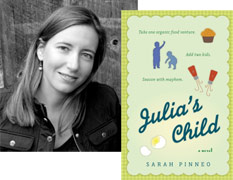


Sarah Pinneo
 
is a novelist, food writer and book publicity specialist. Her most recent book is Julia’s Child. Follow her on twitter at @SarahPinneo.

Friday, April 12, 2013

Publishing Pulse: 4/12/2013


Over on Adventures in Children's Publishing is a wonderful post by Lynn Joseph on including diversity in your novels. She writes about the fears many writers have of telling stories about people who are different than them, and provides some tips on writing authentically about other cultures.

Nebula Award-winning author Nancy Kress talks about her days in the slush pile, and gives you some tips to get out in How to Get Out of the Slush Pile!

If your Muse has gone on Spring Break, Novel Rocket has a few helpful tips. One of them involves chocolate!

Jane Friedman gives you some advice on How to  Use Pinterest as a Writer. I also have to include this slightly-older post by Erin MacPherson: Don't Think of Pinterest as Social Media.

What are agents really looking for when they check out an unsolicited manuscript? Here's an agent roundup that tells you!

When is the best time to get your novel critiqued? Jody Hedlund helps you figure out who you should have take a look, and when.

And finally--when it's time to launch your book, you want to make a big splash. Check out this article on Making Your Book Launch Stand Out.

Have a great weekend and we'll see you next week!


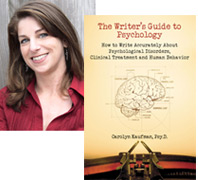
Carolyn Kaufman, PsyD's book, THE WRITER'S GUIDE TO PSYCHOLOGY: How to Write Accurately About Psychological Disorders, Clinical Treatment, and Human Behavior helps writers avoid common misconceptions and inaccuracies and "get the psych right" in their stories. You can learn more about The Writer's Guide to Psychology, check out Dr. K's blog on Psychology Today, or follow her on Facebook

Wednesday, April 10, 2013

How to use the QueryTracker site

It's been a while since we talked about the nuts and bolts of the QueryTracker website, so let's go over that again. 

When you first being querying, it seems there are a million-zillion literary agents, and you're not sure how to handle it (other than preparing yourself to query a hundred.)


But you're armed. You've written your book and edited it. You've got a sparkling query letter that's been critiqued to a high shine over at the QueryTracker forum. In anticipation of following the directions, you've got a synopsis at the ready. Now all you need to do is query some agents.

Right, all million-zillion of them. Or maybe slightly fewer. Where to start?

Well, since I'm blogging for QueryTracker...you use QueryTracker. Login to your free account over at http://querytracker.net and check out how this works. 

Under the "agents" menu it says "Search for agents." Click there. Presumably you know your genre, so that's the best place to start. Select your genre from the pull-down menu and click to search.

I picked Women's Fiction for my search criteria, and the database gave me 325 agents, listed in alphabetical order by agency name. Since you don't intend to query all of them today, this needs to be narrowed down a bit. Fortunately, you can narrow them down right off the bat: the ones who aren't open to queries have a red circle-slash in the information visible on the search results. You can check the box to remove those from your search results ("only show agents who are open to queries") and now we're down to 272 agents. That's still too many.

The data displays for you how agents prefer to be queried: email? snail mail? both? Look through the list for names you recognize and agencies you recognize. You can save as many agents as you want to your list of agents to query by clicking the box in the first column. These have now been saved to "my list" (er, your list.) You can come back to them later, and the names will all be saved in one place.

Now go under "reports" and look at the "top 10 reports."  You'll see the names of the ten most requesting agents, the ten most queried agents, and so on. When you're just starting out, the idea is to familiarize yourself with the names. Pick an agent and click on her name to view her report.

On the first page of the agent's report is a link to the agent's website, if the agent has one. Click on that and read the website (it will open in a new window). Do you like the agent? Good. Keep that window open so you'll know how the agent prefers to be queried, but also go back to the agent's QT report. On the left you'll see a box with the name of your project,a nd beneath that, "Add the agent to my query list."  Check the box.

Click on the "genres" tab to find out what genres the agent represents.

Go to "reports." The default report is "queries sent" and "all time." If you pull down the report type option, you'll get "query replies." Click on "generate report" and see what comes up. This report tells you how many QT users have queried this particular agent and what sort of responses they've received: a full request, a partial request, a rejection, or no response. This information tells you how actively this agent is looking for clients. It also tells you whether you should expect a rejection from this agent or whether no response means no.

The other reports will give you information about how quickly an agent responds, whether they typically request fulls or partials, how quickly they respond to requested submissions, and will even break down the agent's responses by genre. How cool is that?

How is QT obtaining this information? When a QT user decides to query this agent, she clicks on the box to put the agent on her query list. She indicates when she queried the agent. When she gets a response, she marks it off. And the site compiles more data every time someone uses it.

Over time, with all your queries compiled on "My Query List," you'll be able to keep track of whom you queried, when you queried them, and how they responded. Moreover, your data will be concatenated with everyone else's in order to detect trends.

Also, with the information on the agent's profile all in one place, it's easy to find the agent's website, the agent's twitter account, the agent's Publisher's Marketplace page, what genres they represent, and in many cases, other writers have pasted the text of their form letter query into the comments so you can verify that the personal-seeming rejection letter is really their form.

Effective querying means knowing which agents you want to query and making sure you get to all of the ones on your list. Having all the information in one place was the best help in finding my own agent.


---
Jane Lebak is the author of The Wrong Enemy. She has four kids, three cats, two books in print, and one husband. She lives in the Swamp and spends her time either writing books or knitting socks. At Seven Angels, Four Kids, One Family, she blogs about what happens when a distracted daydreamer and a gamer geek attempt to raise four kids. If you want to make her rich and famous, please contact the riveting Roseanne Wells of the Jennifer DeChiara Literary Agency. 

Monday, April 8, 2013

Stalking the Muse

Sounds ominous, doesn’t it? It should. My muse is evading me and I’m beginning to wonder if it has assumed an alias and a disguise and maybe even moved away. Who knows. Lucky for me, I have no compunction against stalking. It’s a skill I developed, like most females, in junior high. Most females get over it. I, however, am more frugal and maintain that no skill is a bad skill.

I haven’t had to stalk any one for more than two decades now but I try to keep in practice. Never know when a good stalking is in order. Sadly, there are few opportunities to put it into use these days. Real stalking is technically harassment and often leads to charges being pressed. Something like that would be bad.

I’ve decided to put my stalking skills to good use once more. I’ve begun focusing on a most elusive quarry: my muse.

I’ve read all sorts of blogs and articles loaded with advice on where to find inspiration. However, nobody does work for no good reason. It’s nice to find inspiration but it is essential to know why we seek it in the first place.

What drives us to look for the muse? What makes a writer sit down and write? We’ve read tales of writers who have burning voices inside them, clamoring to be heard. People who have experienced amazing things and have a burning need to share it with the world. So many inspirational and uplifting reasons. Many of us hope to relate to those admirable writers and assume their reasons for writing are similar to our own.

Not me. I’ll admit it. My driving forces are more practical and much less professional but nonetheless effective:

1)     Envy. That’s right. Envy of the success of others is a wonderful source of inspiration for writers. Back when I started and I was still humbled and amazed that I could even be considered worthy of publication, I used to Google myself as a way to congratulate myself on the work I’ve done. That’s not enough anymore. Now, I Google other writers. I compare how many more pages of Google hits they have. I see which markets have accepted them and I push myself to produce work worthy of being accepted there as well. Envy helps me to focus on getting my own work out on submission. You can’t succeed if you don’t try. Jealousy makes you try harder.
 
2)   Praise. Hunger for praise is another excellent driving force. I’m a mom and a pharmacist. Praise doesn’t go too far in either job. Good job on the laundry, mom. I love the way you vacuumed the living room. Or: Way to go counting those pills, miss. Thanks for billing my insurance. See how limp that is? Who can thrive on that drivel? My German Shepherd gets more praise than I do (and cookies. She gets cookies.) I’m a writer. I need affirmation. It’s what pushes me to enter contests. I have over a dozen entries out at the moment, with at least a dozen more planned. Will I win them all? Heck, no. I’m not delusional. But those contest judges give feedback and more often than not, it’s positive. When a judge comments “lol” on my manuscript, I get shivers. They are just feeding my addiction and my need to be loved. God bless them all.

3)     Bills. Boy, do I got ‘em. Mortgage, car, a crazy cable bill thanks to my DVR and my loyalty to HBO’s True Blood and Game of Thrones. I tried getting rid of the things that don’t seem as important but the husband says phone and sewer and electric are things we absolutely have to keep. Likewise, my children insist on food and clothing. Whatever. Since the bills don’t want to go away, I must keep writing. Someday I’ll actually earn enough to pay a bill with it. As long as there is hope, there is reason to persevere.

4)     Conceit. Yep, I said it. Every writer feels it. It is what makes us sit down and write: the unwavering belief that we can tell it better than anyone else. If we set out to write under the conviction that we sucked, we wouldn’t waste our time. Our belief in ourselves drives us to go out and face new challenges and take on new quests. Writers just tend to be stuck-up about it.

5)     Opportunity to vent. Self-explanatory. I’m a speculative fiction writer. This reason also includes the area of cheap therapy. I once had a poem accepted that I wrote about a panic attack I had the day before. Thank you, day job, for making me a nervous wreck and for giving me another Google hit. And thank you, wonderful world of retail, for inspiring me to be a better writer of horror. My customers have no idea what I day-dream about when I’m ringing out their toothpaste. Mu-hahahahaha.

The list could probably go on but, honestly, my husband will kill me if he knew my reasons for writing were so petty. He thinks I derive a deep sense of personal satisfaction by expressive my innate creativity. What a loveable goofball. I suppose as long as he doesn’t have to post bail, he’ll be okay with me stalking my muse. Worst case, I use it as a human shield when the critics come after me.

Seek out your own reasons to be inspired and may your muse go along with you willingly. Stalking can be such an extreme measure.


Ash Krafton is a speculative fiction writer who occasionally does track down her muse. Visit Ash's blog at www.ash-krafton.blogspot.com for news on her urban fantasy series The Books of the Demimonde (Pink Narcissus Press). Book Two "Blood Rush" will be released May 14, 2013. Also, her urban fantasy novella "Stranger at the Hell Gate (The Wild Rose Press) is available on Amazon.

Friday, April 5, 2013

The Publishing Pulse: April 5th, 2013


This week, New Adult was added to the Querytracker database. It’s currently a work in progress since New Adult has only recently been accepted as a genre. Agents are slowly getting onboard as editors eagerly tell them what they’re looking for. 

If you’re unsure what New Adult is, please read this post. And if you hear of an agent looking for NA and who isn’t on the database, please let Pat know so he can update the list. Thanks!


Around the Internet

Author and film critic Roger Ebert dies at 70 after a long battle with cancer. He will be greatly missed.

How to ethically find images for your author site.

Agent Janet Reid shares three things not to do in a query. And here are four more things to avoid.


Agent Mary Kole talked about putting the cart before the horse in queries.

Agent Kristin Nelson shared her thoughts on indie-agent partners.

Givecustomers what they want? (via agent Rachelle Gardner)

The foolish writer and the wise. Which are you? (via Writer Unboxed)


You’ve signed with an agent, now what? (via author Natalie Whipple)

Have a great weekend!


Stina Lindenblatt @StinaLL writes young adult and new adult novels. In her spare time, she’s a photographer and blogging addict, and can be found hanging out on her blog.  


Wednesday, April 3, 2013

My Kindergartener Teaches Me A Lesson In Productivity

Prolific Fiction Writers at Work

I have two little boys, 6 and 8.  When they’re not busy at school, they spend the whole day pretending.  My husband and I have shared many a loaded glance over the ridiculousness of their results.  Yesterday, for example, they were half turtle, half man. This was inspired when one of them threw a towel over the other one, and the pretending didn’t let up for more than thirty minutes.  The low point was when they nearly came to blows over who had the better towel / shell, until one of them remarked “you know, turtles can visit other turtles inside their shells. It’s like a play date.”

Meanwhile, on those rare occasions when the house is quiet, I sit fuming at my laptop trying to put out a few hundred words of fiction. When perfectly formed dialog and drama don’t flow readily through the keyboard, I get twitchy.

I’ve never transcribed my children before, but I’m guessing they produce several thousand words of fiction an hour. Compare and contrast to my skimpy birthed-by-fire paragraphs. So which of us is wiser?

When I hit the biggest roadblocks to producing fiction, it’s always when I’ve misplaced the best writing advice I’ve ever read—Anne Lamott’s concept of shitty first drafts. Chapter Three of her classic Bird by Bird is the only text on writing that I ever force into anyone’s path.  Not only does Lamott give you permission to write shitty first drafts, she actually manages to prove that it’s an essential part of the writing process.

This is how it’s supposed to work: sit back down in front of that blank page, and go ahead and write a scene that feels as lively and realistic as a couple of Barbie dolls talking to one another in plastic dolly voices.

Take several deep breaths and remind yourself that it’s okay.

Once you shove your characters around like a couple of action figures, you’ll be able to see the scene for what it is. Slowly and at great personal cost, those bits of dialog and suggestion will be combed and fluffed into a living, breathing moment that will not sound ridiculous. It will be free of half-terrapin-half-kindergartener moments.

But this magic can only happen if you free yourself to sound ridiculous, to spit clichés onto the page like so many crumbs under my young son’s chair, and clean it up later.

As I type this, I can hear that the game in the other room has changed. My younger son has just declared “I’m half squid, half dolphin, half jaguar and half horse.” The fiction is still going strong, but someone should really teach that child about fractions.


Sarah Pinneo
 
is a novelist, food writer and book publicity specialist. Her most recent book is Julia’s Child. Follow her on twitter at @SarahPinneo.

Monday, April 1, 2013

Cloud Storage for Writers: Comparison & Caveats

It’s been a couple of years since I’ve written about backing up your writing files, and I have two words to define the revolution since then: cloud storage.

What Is Cloud Storage and Why Would I Want It?

You probably keep a folder filled with manuscript/s on whichever computer you do the most writing. But if something happens to that computer (or that folder), recovering the data may be difficult or even impossible. So most writers back up their writing in some way—some keep a copy of things on a flash drive, for example, while others regularly email their manuscripts to themselves.

But these days there’s an additional alternative called cloud storage, which refers to online file storage.  (The “cloud” is basically the internet.) And not only does cloud storage back your documents up on a regular basis, it gives you access to your files from any computer or device on which you install the company’s software. In other words, your files exist in a location you will always be able to access barring an inability to get online or the collapse of the internet.

Some cloud storage services also offer features like:

  • Version Tracking: This allows you to recover an older version of a file if you accidentally write over it or delete it.
  • Collaboration: This collaboration option allows more than one person to contribute to the same document (without sharing the same password and identity).
  • Public File Sharing: If for some reason you want to share particular files with the public, some services have this option.

How Much Does Cloud Storage Cost?

Most cloud storage providers offer 2GB – 5GB worth of free storage, which is plenty for most writers, even if they’re prolific. (Pictures and videos take up a lot of space; written files take up very little.) Of course, if you want more storage than that, it’s available from all of the services for a variety of monthly fees.

Security and Privacy

This is where things get tough.  If your stuff isn’t just on your computer, how much control do you really have over it?

The answer is, writer beware. It varies widely from cloud storage service to cloud storage service.

On the scary end the mega brand-name clouds, such as Google Drive, Apple iCloud, Dropbox, and Microsoft SkyDrive, have privacy policies that basically give the companies the right to use your material in any way they deem appropriate. Though all of them claim that they will only do this to support their Services, there’s enough wiggle room to make some legal nitpickers very nervous. (Note: These services may work fine for for people who wish to back up things besides original creative works. I use both Dropbox and Google Drive for day job purposes.)

For most cloud services, though, the privacy policy extends as far as the law will allow. That is, if there’s a reasonable cause to believe you’re infringing on someone’s copyright (including DMCA) or otherwise breaking the law, the company will comply with authorities. Now, assuming you’re not planning to break the law (please don’t), that shouldn’t be an issue.

The real potential problem in these situations that employees may be able to sift through your stuff at will. Dropbox in particular has been criticized for this. In other words, if a Dropbox employee decides to look at your stuff, there are no rules in the company to prevent it.

Mozy, on the other hand, has a privacy commitment that no one will ever access your files for any reason other than legal purposes.

Finally, there are companies that offer individual private encryption keys.  This is a special key that only you (and, of course, anyone you share it with) can use. A private encryption key means that nobody can get into your account for any reason, including subpoena, except you. SpiderOak is particularly known for their “zero knowledge” policy, which means they neither know what’s in your account nor have any way to access it, including under subpoena. SpiderOak accounts are automatically protected by private encryption keys.

Services like iDriveSync and Mozy also offer optional private encryption keys, which gives them the same level of security as SpiderOak accounts.

The only problem with private encryption keys is that if you lose your password (i.e. your key), nobody can reset it for you. The account cannot be opened, ever, by anyone. The account is that secure.*  So this approach is great for paranoid folks…as long as they have really reliable memories.

Writing Software Cloud Integration

Writing software like Scrivener and yWriter create a folder on your hard drive that contains all the different parts of your project. If you keep your project in the cloud storage application that sits on your computer/s, your Scrivener files will also be synced on each computer you’re using.

The only thing to be careful of (as Scrivener warns in its documentation), is if you start working on a project that isn’t yet fully synced from another computer.  So you just have to be sure your cloud service’s automatic syncing to the current computer is done before you start working on your project on a new computer. That also means that while it’s okay to have different people collaborating on a writing software project, it’s crucial that only one person edits at a time. That person must then close the writing software on their end for the other person to be able to use it.

Operating Systems and Apps

Most if not all cloud services are accessible not only through a web page, but also on both Windows and OS X (for Macintosh) computers. However, some services can also run on Android, iOS (iPad and iPhone), and—rarely—Linux.

Comparison Chart

Finally, I’ve created a chart below to compare nine of the big cloud storage services. (There are certainly others out there, like Wuala (another highly rated zero knowledge provider) and Cubby, but my chart was getting too big. However, you can always check out the comparison chart of thirteen different services that The Verge put together in April of 2012.)

Though for creative works I would probably steer away from the big-name services (Apple iCloud, Google Drive, Microsoft SkyDrive) for the security reasons noted above, services like Mozy, SpiderOak, and iDriveSync offer nice privacy options as well as other useful features for writers.

* Please note that this information is current to the best of my knowledge as of the date of this post. 

Box Dropbox Google Drive Apple iCloud iDriveSync Mozy Microsoft Skydrive SpiderOak SugarSync
Free Storage 5 GB 2 GB 5 GB 5 GB 10 GB 2 GB 7 GB 2 GB 5 GB
Version tracking 11 versions 30 days 30 days No 30 versions 30 days 25 versions No 5 versions
Public file share Yes Yes Yes No Yes No Yes No Yes
Collaboration Yes Yes Yes No No No Yes Yes Yes
Private key No No No No Yes Yes No Yes Developers only
When can someone look at your files? DMCA; Legal reasons Employees can access; DMCA; Legal reasons Google can use your files any way they want Apple can use your files any way they want Their discretion for legal issues; Never if you use private key They "never use [access] to sift through customer data"; Never if you use private key Microsoft can use your files any way they want Never; Zero knowledge Any info “required by law”
Windows Yes Yes Yes Yes Yes Yes Yes Yes Yes
OS X Yes Yes Yes Yes Yes Yes Yes Yes Yes
Linux No Yes No No No No No Yes No
Android Yes Yes Yes No Yes Yes Yes Yes Yes
iOS Yes Yes No Yes Yes Yes Yes Yes Yes
Web Yes Yes Yes Yes Yes Yes Yes Yes Yes
Other problems Weaker encryption for personal accts Hacked July 2012 Errors with Mountain Lion; Syncing issues Users report backup errors

Do you use a cloud storage service? Which one? What are its pros and cons?

* Many people store extra-sensitive information like master password lists, social security numbers, and credit card information in the cloud, which is why some hackers target cloud storage services. As you can see from the post above, storing sensitive personal data in the cloud usually isn't a good idea unless you have a private encryption key. While many of the cloud services boast the same level of encryption as banks and secure online password managers, and while a private key offers you an extra level of security, you should still be aware that regardless of how secure your cloud is, anything accessible via the internet has the potential to be hacked.


Carolyn Kaufman, PsyD's book, THE WRITER'S GUIDE TO PSYCHOLOGY: How to Write Accurately About Psychological Disorders, Clinical Treatment, and Human Behavior helps writers avoid common misconceptions and inaccuracies and "get the psych right" in their stories. You can learn more about The Writer's Guide to Psychology, check out Dr. K's blog on Psychology Today, or follow her on Facebook