QueryTracker Blog

Helping Authors Find Literary Agents

Friday, April 20, 2012

The Publishing Pulse: April 20, 2012


The Pulitzer Prizes were announced, but alas no fiction books were award a prize.

According to author Cory Doctorow, the problem isn’t piracy. It’s obscurity.

Lawsuits alleging an ebook-pricingconspiracy, like in the US, have been filed in Canada.

If you’re considering exploring the self-publishing path, agent Natalie Lakosil has put together a Q & A that might address some of the questions you have.

Publisher Liz Pelletier explained the journey a book takes from query to stores’ bookshelves.

Social media is important for writers. But please check out this post by agent Rachelle Gardner to make sure you are not these serious mistakes. Your writing career will thank you for it.


Here is a letter from Norman Maclean to a publisher that had previously passed him over, when they had the chutzpah to ask him for an early look at his next manuscript. 


Have a great weekend everyone!


Stina Lindenblatt writes young adult novels. In her spare time, she’s a photographer and blogging addict, and can be found hanging out on her blog, Seeing Creative.  


Wednesday, April 18, 2012

Figuring Out Your Writing Style

Courtesy of typofi
One of the most important things a writer can learn is what type of writer they are and how they work best.

Writers, like any artist, have their own way of doing things. One way is not *better* than another, just different.

We all have the same tools, but learning how to apply them--and which ones we work best with--can make all the difference.

There really is no One Right Way to do it.

Think of all the water colorists, photographers, or sculptors we'd be missing out on if we insisted that 'real' art or paintings that are worth anything can only be done in oils. Or pastels. Or pencils.

Some writers know how they work from the start, while others have to move around a bit to get a feel for each different technique. The key is to keep learning and trying new things until you find what works best for you. (And even then, it never hurts to try something new, just in case. :))

The following are different techniques for how and when to get the writing done, and are by no means an exhaustive list.

The two groups of writers most often discussed are the outliners and the pansters. There are many shades and subgroups for each type, but for simplicity's sake, I'll be referring to each in their most general role.

Outliner
Outlining can be strict and detailed or light and loose or anything in between. It can be plotting out a scene, a chapter, a novel, or the entire series. It can be a few sentences to give a flavor or create a mood, or it can catch all the fine details and turnings of the stories. It can even be a work of art in its own right.

Outliners thrive in knowing what comes next. It helps them shape each part of the story if they can see what the overall design is supposed to look like. Seeing the beginning through to the end can also keep the writer from making unnecessary detours or wrong turns. On the other hand, adhering to a plan when the characters and story have grown in a different direction can stifle the spark of magic in the story.

Panster
A panster can have a loose plan or a vague idea of where they want to end up, or they can have a blank piece of paper that's just waiting for them to populate a new world. Sometimes they know how the story is going to end, and sometimes they just wing it.

Pansters thrive in getting to know their characters and world as they go along. It's not about the destination so much as it's about the journey. Letting your characters map the story can lead to new and exciting discoveries. On the other hand, allowing your characters to exist without purpose can damage the structure and meaning of your story over all.

Like anything else, it's all about finding the right balance, for both outliners and pansters.

Another useful thing to know about yourself is if you're a day writer or a night writer or a snatch-the-time-whenever-I-can writer.

My right brain is my writing brain, and my left brain is my editing brain. I've found that I write better at night and edit better during the day. Once I figured this out, I had a lot less frustration, because I could plan my writing and editing around when the different parts of my brain are most alert. My writing and editing flow smoother when I do them at my peak times instead of trying to force my brain to accommodate my to-do list.

When we consider what type of writer we are, sometimes we get so caught up in the outliner/panster debate, that we forget there is another subset type: sprinters and marathon writers.

Sprinter
A sprinter does short bursts of writing at a time. They can do a number of repetitions--say, writing 100-500 words at a time or in ten minute increments--but the actual writing time is in small, contained phases.

When I'm tired or just not feeling the writing fire in my veins, I do sprints. Timing myself stresses me out and blocks the words, so I do my sprints in 500-word increments. (Or 250 if I'm *really* distracted.) After I reach 500 words, I get to check my email, a few forums, and anything else I want for about five minutes. Then I go back and do another round. Rinse and repeat until I hit the word count for the day I was aiming for.

Marthon Writer
These are the writers that can sit down and write for as long as they're able. The people that can do 5,000 or 10,000 or 15,000 words in one day. People who can finish novels in a week or so.

Pacing yourself, being well rested, and minimizing your distractions can help. Some marathon writers do short marathons (5k) on a regular basis, while others go for the bigger word counts a little less frequently.

And then there's a whole world in between sprinting and writing by marathon method. The key here is knowing what your limits are and stretching yourself without breaking your brain. For example, right now I can write at least 2k a day, 6 days a week. When I first started writing professionally, I struggled to get down 500 words a day. My goal is to one day be able to do 4k a day, but it's something I'm having to work toward.

Like any muscle, your creative endurance can grow if you work it out regularly within a range that will challenge you without burning yourself out.

Another way to determine how you work as a writer is to examine how your brain works in your creative process. How you get your ideas and how they connect to each other.

Flypaper
Some people have minds like flypaper. Their brains are sticky and have no trouble catching every idea that comes near them. These are the writers that have more ideas than they'll ever be able to write, because there just aren't enough hours in the day.

The problem with this is that it can lead to a lack of focus. A thousand novel beginnings without any middles or ends. Something you can do to combat this is keep an idea journal. When a new idea comes, write it down in as much detail as you have and then go back to the novel you're working on. This allows you to keep all your ideas without distracting you from finishing what you're working on, because you can always come back to it later.

Fisher
Other writers are more like fishers. Ideas might be harder to come by and/or require more patience to suss out.

This can lead to frustration if you're a fisher, but surrounded by writers who have flypaper brains. The important thing to remember is that it doesn't matter whether you have one idea or a hundred. What matters is what you end up with in the end, and a polished, professional-grade novel requires hard work no matter how you get your ideas. Knowing that it takes you a little longer to find that perfect idea can lessen your frustration with yourself and your story.

Because that's what matters most in the end: the story. Knowing how *you* best get from 'Once upon a time' to 'And they all lived happily ever after' can only deepen the joy of the process.

What kind of writer are you? Any I missed?


Danyelle Leafty| @danyelleleafty writes YA and MG fantasy. She is the author of The Fairy Godmother Dilemma series (Catspell, Firespell, andApplespell) and can be found on her blog.


Monday, April 16, 2012

The Breaking Point...and Beyond

Have you ever seen the TV show nip/tuck (2003 - 2010)?  It's an unusual show, because you're watching along, and they imply that something really edgy is going to happen.  A main character is feeling kind of turned on by the super-expensive sex doll modeled after his business partner's ex-girlfriend. A plastic surgery patient character has threatened to perform her own mastectomy.

Most writers would turn away, getting their characters out just in the nick of time. Of the few writers who decided to go all the way, most of them would never show the actual event. In nip/tuck, they Go There. All the way. And they show all of it. The sex with the doll. The woman who does the mastectomy on herself with an electric carving knife in the doctors' waiting room. And then they show the fallout. These characters never get a break.

Going There is what intrigues me. Not what happens when the hero gets there in the nick of time, but when the worst the hero can possibly imagine happens. And then sometimes...that's not all. Next come a few things the hero couldn't possibly have imagined in his worst nightmares.  And then, of course, there's the fallout.  Shattered relationships. Grief. Nightmares. Depression. Post-traumatic stress disorder.  Suicidality. And the humiliation of having had all those reactions in front of other people.

Maybe it's having been on the frontlines and counseled people who have had things worse than they could ever imagine happen to them. Maybe it's just having lived through a few things in my own life.  But I Go There in my fiction. A lot.

I don't see it as torturing my characters. I see it like this: Life can really, truly be that ugly.  Human beings do horrible things to other human beings, and sometimes they even do them intentionally.  I don't pretend otherwise when I tell a story.

One of the best ways to learn about the dark side of life is to be willing to be open, and to listen. Everyone has suffered indignities, and some have suffered horrors.  But those things are invisible unless you're open and willing to other people, including the really nasty, awful bits.  Like Mary Lindsey once said to me, the people who seem the most benign are often the ones who hide the most.  Because they've had to learn to seem benign to be accepted by a world too horrified by the realities of their lives.

The same thing is true with your characters.  You have to be willing to really listen to them, and if they have to Go There, you need to be brave enough to go with them. Carl Jung talked about how we all have a dark side to our personalities (which he called the Shadow), but only a few of us are willing to confront that side and integrate it into the Self.  I've always believed that part of what makes Stephen King so great is that he faces his own Shadow and then writes about what he finds.

So how do you do that , avoid giving in to the urge to look away from the dark stuff? 

The most important word in your story is NO. Whatever your character wants or needs, the answer must always be NO. Once in a while, it may seem that the character is getting a yes, but in reality that yes must ultimately drive them farther from what they want or need. I believe strongly in the NO.  It always leads to a better story.

Have you ever seen Cool Hand Luke?  No matter how many times they drag Luke back to the chain gang, he always takes off again. He can't seem to help it. After the second time he escapes, the boss makes him dig a trench.  Then fill the trench.  Then dig the trench.  Then fill the trench. Over and over and over, until Luke finally breaks down, half dead, and begs to be allowed to stop.  But they keep pushing him. The other inmates turn away, horrified by what's left of this free spirit they all admired.

Still, later in the film, Luke escapes again, this time with another inmate.  The friend laughs, crowing that Luke's groveling was so convincing that "They didn't know you was foolin!"  And Luke says "Foolin, huh? You can't fool them about somethin like that.  They broke me."

So forget a little spilled milk, a few broken eggs. For me the real question is...what does it take to break your character, and what happens to him after he's broken?

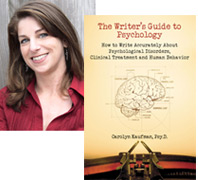
Carolyn Kaufman, PsyD's book, THE WRITER'S GUIDE TO PSYCHOLOGY: How to Write Accurately About Psychological Disorders, Clinical Treatment, and Human Behavior helps writers avoid common misconceptions and inaccuracies and "get the psych right" in their stories. You can learn more about The Writer's Guide to Psychology, check out Dr. K's blog on Psychology Today, or follow her on Facebook or Google+! 

Friday, April 13, 2012

Publishing Pulse: 4/13/2012

Success Stories

Congratulations to our fellow QueryTracker's newest success stories:

Michelle Krys and Julie Murphy

Also, congrats to Pat for QueryTracker making Writer's Digest's 101 best websites for writers!

Publishing News and Around the Web

From Publishers Weekly, a good overview of the Hatchette, HarperCollins, and S&S Price-Fixing Settlement. In related news, an open letter about the lawsuit from Macmillan's John Sargent.

From The Bookseller, a few of the major US publishers are refusing to renew their contracts with Amazon.

New details on J. K. Rowling's new book via Galleycat. Also from Galleycat, Smashwords is going to keep its agency pricing model.

Author Nathan Bransford has an awesome post on the Ten Commandments for Editing Someone's Work.

From Writer Beware, Poetry.com is making its comeback and the reasons why some small publishers fail.

Author Patricia C. Wrede has some great ideas on what to do when you run out of ideas.

Have a great weekend!

Danyelle Leafty| @danyelleleafty writes YA and MG fantasy. She is the author of The Fairy Godmother Dilemma series (Catspell, Firespell, and Applespell) and can be found on her blog.

Wednesday, April 11, 2012

Taming the Dreaded Synopsis

We'd all like to live in denial that this thing exists at all, but you need one if you're querying. The synopsis. The 800-word summary of your 95,000 word novel.

(Nonfiction writers, you may breathe easier: you do not need to produce one of these monsters.)

The query and the synopsis are different animals. Your query needs to entice and leave tantalizing questions. Your synopsis needs to tell a story and provide us with answers.  And despite the three-times-greater word count, your synopsis has more than three times as much work to do, so you still need to write tight.

Like the query, the synopsis is primarily a selling tool. It will give a quick overview of your entire novel from soup to nuts, proving to the agents and editors that you understand story structure, that your story has both a plot arc and a character arc, and that you know how to pull together a satisfying ending. Your synopsis will also need to show how the stakes increase during the course of the story. It will need to hit all the major plot changes and introduce the major characters and their issues. Readers of your synopsis will need to care about your character and root for the character to succeed. For SF/Fantasy writers, you'll need to include world-building as well.

Many of the techniques you use for writing fiction will have to come to bear in the synopsis. Powerful verbs, sentence rhythm, saying a thing once and not needing to repeat it. And other techniques will just have to go by the wayside.

The synopsis should run between 500 and 1000 words, unless the agent or editor requests a different length. (I've seen several who want a one-page synopsis. Give them what they want.)

A synopsis is not a chapter-by-chapter outline of what happens. I've tried that, and it's a mess. Instead you need to focus on the frame of your story and give us the "story beats," (as Blake Snyder would say in Save The Cat) and give us only what we need.

1) Your main character's inciting incident, with a description of your main character worked into that description.

2) What your main character decides to do about that.

3) Descriptions of other main characters as necessary, but worked into the story.

This is how I opened the synopsis for the revised edition of my first novel, The Guardian.
The Guardian opens as a guardian angel stands trial for murder. Although the other angels, and even Tabris himself, expect God to send him to Hell, God inexplicably grants Tabris mercy and a second chance. On probation, Tabris is deployed as an assistant guardian to a ten-year-old girl named Elizabeth.
Where does this fall flat? I didn't give any description of Tabris. I could have said everyone was shocked because Tabris was considered one of the most conscientious angels until this happened. I could have said Tabris was a former commander in Michael's army. I felt the setup here was compelling enough that the description could wait.

You'll need also to establish the stakes.
Although Tabris tries to fit into the new routine with the family's other guardian angels, he's torn by grief and guilt. His new companions don't want him around, speculating that he must have hated his previous charge and wondering if he might harm Elizabeth--or the other family members. Tabris still loves God but can't bring himself to pray, convinced that when he does, God will refuse him. The only one who does seem to want Tabris is, unfortunately, Zeffar, a demon who changes names every time they meet but always presses for the same thing: he wants Tabris to join him in rebellion so he'll fall forever.
So we've got stakes (both internal and external), we've got both internal and external opposition, and we've got an antagonist. 

And after that, I set out to follow the threads of the A-story (how Tabris adjusts to guarding Elizabeth, and what Elizabeth's guardian does about his presence) and the B-story (how Zeffar begins seducing Tabris in order to assure his fall.)

As you go through your synopsis, think broad strokes. Your novel is the Mona Lisa, but your synopsis is going to be a coloring book rendering of the Mona Lisa. Give us the outlines. The novel will have to provide the shading and the contours.


Make sure your synopsis mentions the midpoint of the novel (where the plot probably takes a major turn, along with the false-high or a low,) the point where "the bad guys close in" (or the situation takes a sharp turn for the worse,) the main character's darkest hour, the "help from outside" (or however your character manages to get his groove back) and then the climax. Make sure to mention how both the A-plot and the B-plot are resolved.

If you're not sure what I'm talking about with some of these "story beats," here's a brief summary of Save The Cat.

While in a query you must not answer all the questions (all the better to tantalize) you must do so in your synopsis. If there's a secret ending, for the synopsis it should not be secret anymore. All the major plot twists and turns must be included. Yes, Luke, I am your father, and all that stuff no one suspects while they're going through the book? It'll have to be in there.

In eight hundred words or thereabouts.

It's not fun, but it's doable. Good luck!

---

Jane Lebak's novel The Guardian will be re-released this September by MuseItUp Publishing! She is also the author of Seven Archangels: Annihilation (Double-Edged Publishing, 2008) and The Boys Upstairs (MuseItUp, 2010). At Seven Angels, Four Kids, One Family, she blogs about what happens when a distracted daydreamer and a gamer geek attempt to raise four children. She is represented by the riveting Roseanne Wells.

Monday, April 9, 2012

Being Subtle With Subtext


Fiction is like an iceberg. Only twenty-five percent of it is visible (the words on the page). The other seventy-five percent is known as subtext. Subtext enables your reader to see that more is going on than what is in the text. It enables you to create a richer, more emotion packed story. It’s the part that is tricky to convey, but when you do it right, it makes for a compelling story. 

There are numerous ways to show subtext, this post will cover three of them.

Action and Dialogue

Imagine your character has an issue with his car. The door has a major design flaw that the automaker knew about, but while the character’s car was under warranty, he was never warned it might be an issue later on. Naturally, the door’s status deteriorates after the warranty expires, and he’s left with a hefty repair bill. He goes back to the dealership and asks if anyone during his regular service appointments checked the status of the doors while the car was under warranty.

The last thing the service guy wants to do is answer the question. He’s been coached on how to approach it. He keeps avoiding a direct answer. Meanwhile, he’s shifting nervously on his feet and shooting panicked looks at his co-workers while they pretended he doesn’t exist. He knows he’s failing miserably at keeping to the script, and this makes him more nervous. 

When you write dialogue, ask yourself what is really happening that the character isn’t saying. Then show it. Have your main character interpret the other character’s actions and body language. Occasionally have your character misinterpret them to misdirect the reader. But make sure it’s believable. If your reader can guess the truth behind the subtext, your misdirection will come off as contrived and your character will sound like an idiot. Nothing irks a reader more than when he feels manipulated.

Symbolism

One way to create a richer story is by weaving symbolic subtext into it. This is also a great way to reveal the story’s theme. It’s not hard to do when you consider how many things in our world have been assigned different meanings. For example, we associate red with passion, anger, embarrassment, danger, power. 

Subtext works both at a conscious and unconscious level. When we read a book or watch a movie, some symbols will jump out at us, especially if the creators have done a good job drawing your attention to it. With other symbols, you won’t stop to analyze it. For example, if the scene takes place in a room with green walls, you won’t be thinking that the director wanted to reveal the subtext of life. But you can guarantee someone behind the scenes purposely picked that color because of what it symbolized and not because it was her favorite color. 

In the book Where the Heart Lies, Billie Letts used a tree to represent life and growth. Pregnant seventeen-year-old Novalee is abandoned by her boyfriend at a Walmart store. With nowhere to go, she secretly moves into the store. A woman mistakes her for a young girl she once knew and gives Novalee a Welcome Wagon gift of a buckeye tree. When the tree starts dying, Novalee tries to return it to the woman, who suggests they plant it in her garden, but only if Novalee comes by regularly to take care of it. This is the turning point in Novalee’s life. Ruth Ann’s actions are the first act of kindness Novalee has experienced in a while, and under the mothering of Ruth Ann, Novalee turns her life around. And of course (during the movie), we are reminded this with regular shots of the growing tree. 

Imagery

The use of imagery, such as a metaphor or simile, can enrich your story by adding subtext. For example (Whispers by Dean Koontz): 

“ . . . Mr. Frye believed that his mother—I think her name was Katherine—had come back from the dead in someone else’s body and was plotting to kill him. He hoped that the Marsden journal would give him a clue about how to deal with her.”

Joshua felt as if a large dose of ice-cold water had been injected into his veins. “Bruno never mentioned such a thing to me.”

If Joshua had said, “Hey man, you’re spooking me here,” the scene would not have been as powerful. He doesn’t want the other person to know just how unnerved his is about the situation. But the reader needs to know this.


It isn’t always necessary to spell out the subtext for your readers. Often it’s more satisfying for the reader if you let him figure it out for himself. That’s the beauty of fiction. It exercises our brains. However, if the subtext is confusing and is going to frustrate the reader, then definitely have a character spell it out. 

Do you enjoy writing subtext? Is it something your focus on when editing a draft?


Stina Lindenblatt writes young adult novels. In her spare time, she’s a photographer and blogging addict, and can be found hanging out on her blog, Seeing Creative.  

Monday, April 2, 2012

Interview with Ash Krafton: Approaching Publishers Directly

Today we're talking with our own Ash Krafton about her journey with getting her debut novel, Bleeding Hearts! Read on to learn more about approaching publishers directly, being a great social networker, and researching Egyptian mythology!

Though your first novel, Bleeding Hearts: Book One of the Demimonde is being published this month by Pink Narcissus Press, you’ve also written a lot of short stories and poetry (and won a lot of awards for them)!  How did you start writing?

I began writing as a form of cheap therapy (*grin*). I have a high-pressure medical job that was becoming increasingly stressful…so I did the sane thing and retreated inwardly. I've always had a literary soul (my mom has a stack of my writing from when I was in school.) Going back to writing was a natural thing and it really helped me to focus and enjoy my time off.

I ended up writing passages and scenes from a fantasy that eventually became a novel-in-progress. But it wasn't serious. It was, like I said, cheap therapy. Then I got the idea for Bleeding Hearts—and the whole game changed. I was serious about this project and, with the support of my family, I worked on that project until it was a candidate for publication.

The "short stuff" as I call it, is the result of a mishmash of things—some of it I wrote to combat writer's block, other things I wrote to express ideas that didn't fit into my novel writing. I also began to explore traditional forms of poetry—sestinas, villanelles, ghazals—because the mixture of meter and cadence and line count and rhyme is a decidedly scientific thing. It helps keep my left brain happy.
That the short stuff has ever been worthy of recognition still blows my mind.

Did you have an agent or go directly to a publisher? If the latter –writers are often curious about books that were sold directly to a publisher, without the help of an agent go-between. How did you decide to submit directly, rather than using an agent? How did you find publishers to submit to? 

I queried Bleeding Hearts and eventually signed with an agent. However, our work together didn't result in a fairy tale ending. There were a lot of challenges and, after about nine months, we ended our contract.
I was in a bad place then—I had no idea what to do next. The agent had submitted the proposal to just about every big house so there wasn't anything left for another agent to do. Honestly, I felt like my chances were completely blown…

My QueryTracker friends were very supportive and helped me to find my way through the fog. (Hug, ladies, and my unending gratitude!) I decided to tread water for a while and went back to entering novel-writing contests. I couldn't let my project die just because of a failed agent episode.

Then I learned about the small press market.

My greatest resource became Duotrope (http://duotrope.com), which is a free resource for writers that primarily offers an extensive, searchable database of over 4000 current fiction and poetry markets. They also offer a submissions tracker for registered users that not only organizes my work and the markets to which I've submitted, but also uses the data to calculate stats (QueryTracker fans LOVE stats.)

Up until then, I only used Duotrope to find poetry and short fiction markets for my work. However, the site has a growing database of small presses looking for novel and novella-length work.

I went back to querying—and, by this time, I was a pro—and started knocking on the doors of the little houses.

My world completely opened up. The contests I entered started announcing results—and  in a short period of time I found out I'd made finals in several RWA contests. That is BIG TIME publicity for a writer. I was absolutely floating on air…then I got the first offer of publication.

Okay. Game time.

At the time I got the first offer, I had about a dozen queries out to other small presses. Some had already asked for a partial or a full, others I hadn't heard back from at all. I sent everyone an email with the subject "Offer on the Table for Bleeding Hearts" and explained I had an offer and wanted to know if they'd had a chance to read my submission or if they were interested in making an offer.

I got three non-responses, one "best wishes, we're backlogged and can't get to your sub and don't want to hold you up," and five more offers.

It really came down to two of them. (I can make my decision-making process a post in itself.) I couldn't have made a wrong choice…and I am head-over-five-inch-heels for my publisher. (If I could do cartwheels in these things I would.)

You do an amazing job of networking and building buzz for your work.  What were some of the things you did to make people aware of Bleeding Hearts? If you were going to give other writers one tip for building buzz, what would it be?

Don't be shy.

Self-promotion is a scary thing for writers but you have to approach this thing as a business. A network is essential. How many readers are there in the world that might like your book? Do you honestly think you can reach them all on your own? Social media is the Technology God's gift to authors. We can send our messages out to our peers, who may repeat the information to THEIR peers, and so on. Promotion is a pass-it-on deal. Be confident, reach out, and let the world know you have a message worth sharing.

As for me, I'm just a grown-up kid who loves playing with her computer. I got my first real PC  and Internet service in '93 when I was in college. I remember how angry my mom used to get because she'd try to call and get a busy signal because I was on-line. So, for a nerd like me, this isn't really work. Networking was tough in the beginning because I was shy and had no confidence and knew nothing about publishing. However, with time and a lot of reading and fooling around at Query Tracker's forum, I learned the ropes, made writer friends, and decided it was time to do what everyone else was already doing: building my social network.

My husband accuses me of fooling around on-line. When will he learn that I'm really *working*?

Anyone else interested in *working* with me? I'm on Facebook, Twitter, and Goodreads.  I also blog at http://ash-krafton.blogspot.com and call http://ashkrafton.com home.

In Bleeding Hearts, you focus on the Egyptian god Horus. What kinds of research did you do?

Studies of Egyptology have been my hobby as far back as I can remember. I love museums and my family indulges me by accompanying me to every exhibit we find. I got to see the huge King Tut exhibit that came through the Franklin Institute a few years ago (although my son drew the line at the Mummy exhibit. Chicken. Scooby Doo ruined my kid on mummies forever.).

I also own a lovely translation of the Book of the Dead. Although I didn't have it for the writing of this book (I used what I could find on-line) I have found some amazing stuff that is inspiring passages for the sequels, which are in-progress.

I'm not an expert. I'm just someone who loves the study of Ancient Egypt and that love somehow found its way into my story.

(No mummies in Bleeding Hearts, though…at least not yet.)

Tell us a little bit about Bleeding Hearts and how we can get it!

BLEEDING HEARTS: Book One of the Demimonde

Saving the world one damned person at a time—shy advice columnist-turned-oracle must find a way to save her dangerous demivampire lover from the fate that threatens each of his race: evolution and the destruction of his soul.

(Note:this is a log-line that I wrote using tips from the Query Tracker Blog…and it even got a mention in an agent-run contest on another site!)

When advice columnist Sophie meets dark and alluring Marek, she learns life-changing secrets about them both—he’s a demivampire struggling to avoid evolution and she’s an empathic oracle destined to save him. Sophie possesses the rare ability to reduce the spiritual damage that causes a demivamp to Fall, making her the only thing that stands between a DV and evolution. However, as Marek's dangerous past propels him toward his desperate fate, his enemies make darker plans for him: once vampire, powerful Marek would be second only to the Master himself. The vamps want to cause Marek's Fall and they intend to use Sophie to do it....

Join the Demimonde!