QueryTracker Blog

Helping Authors Find Literary Agents
Showing posts with label new adult. Show all posts

Monday, March 25, 2013

A Character By Any Other Name

New moms are forgiven for choosing awkward or overly popular baby names. Until you stand on that playground, you really have no idea that your child will not be able to pronounce "Ellison" until well after his fifth birthday, or predict that little Ava will share her name with two others in her class. After kid #1, we wise up.

Repetitive authors, what is your excuse? I have seen the name Gray or Grayson in ten different novels this month. (That is, unfortunately, no exaggeration.) There can only be two possible explanations: either authors are subconsciously imbued with 50 Shades sales figure envy, or worse--the imitation is intentional.

Granted, naming characters is not easy. Every time I name one, the new name jumps off the page like a counterfeit interloper until I've typed it at least a hundred times.

One way to make a character unique is to invent a name. But that's risky too.

My kids' recent obsession with Star Wars has brought a host of unpronounceable names to the family dinner table. It's difficult to say Count Dooku with a straight face. Ditto Qui-Gon Jinn. Not only are those characters' names awkward on the tongue, but both spellings violate English language expectations. For example, "ook" in English usually rhymes with "book" not "puke." And "Gon" leaves us similarly guessing as to whether the O should be a short or long vowel.

Yet some authors have perfect pitch. J.K. Rowling is a naming master. When we first meet Harry Potter, we learn that "his hair simply grew that way--all over the place." She's subtly merged a homonym physical characteristic of her hero with his appearance, and all before we get a sense of him. She loves using adjective suggestions in naming. The Dursleys live in Little Whinging (whining). Professor Snape seems to blend "snap" and "snake" and "cape" into one offensive bundle. Flitwick. Hufflepuff. Muggle. So colorful! How does the lady do it?

And what, if anything, can we learn from our favorite literary naming masters, without copying them? For the truly flummoxed, consider these two time-tested ideas:

1. Action is Good

When a verb or adjective is used as a name, the character takes on a gleam of action immediately. Luke Skywalker, for example, is a very memorable and actionable name. Write down some attributes of your character, and then squint at the things you've written. Is there a name in there somewhere? There are a surprising number of verb names out there in the ether, even in common names. Lance. Walker. Harper. Chase. And that's just for starters.

In Colleen Hoover's very successful book HOPELESS, the perfect boyfriend's name is Holder. And it is the perfect descriptor of his character. (Although I should point out that Ms. Hoover is another Grayson offender, but at least she gives it to a secondary character.)

2. Keep Looking, Seek Help

If you're just stuck for inspiration, there are two websites I find invaluable. Nymbler is meant for parents-to-be to brainstorm baby names. But unlike other baby naming websites, this one will generate a bunch of "similar" names from those you type in.  So if you're tempted by an over-popular name, put it into their algorithm and see if something just as wonderful pops out.

Also, if you just need to be realistic, and aren't sure which baby names were popular in, say, 1996, the social security administration is happy to help you. During my birth year (not 1996, unfortunately), Sarah was the 58th most popular girl's name. Jennifer / Michelle / Lisa were the top 3 that year.

Let us feel, authors, that your hero and heroine are unique yet believable. Go forth and name well!
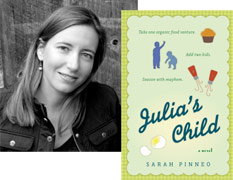


Sarah Pinneo
 
is a novelist, food writer and book publicity specialist. Her most recent book is Julia’s Child. Follow her on twitter at @SarahPinneo.

Monday, February 11, 2013

Losing Sight of the Target


by Stina Lindenblatt @StinaLL

 ©Stina Lindenblatt

The choice of genre that we chose to write is based on many things, but the most important driving force is passion. You need to feel passionate about what you write if you want your readers to experience it, too. If they feel your passion, chances are good they’ll love your story. The downside of writing about what makes you passionate is that it might cause you to lose sight of your target.

When I refer to target, I’m talking about the true target audience you’re writing for. If you write middle grade stories, you’re writing for nine to twelve year olds. If you write young adult stories, you’re writing for twelve to seventeen year olds. And when you write new adult stories, you’re writing for seventeen to twenty-five year olds. Those examples are categories, but if I were to ask you who your target audience is for your given genre (e.g. romantic suspense, medical thrillers, cozy mysteries, etc), are you able to identify it?

It’s important to know who your target audience is, but it goes beyond knowing where to direct your promotional effort. Don’t get me wrong. It’s vital that you target the right individuals if you want to see maximum sales. But your marketing efforts might not necessarily focus on your true target audience. Take middle grade fiction, for example. Most middle grade readers between nine and twelve years old aren’t reading book blogs. Most aren’t reading blogs, period. It’s the adults with the purchasing power (parents, teachers, librarians) who read the blogs. The majority of young adult books are bought and read by adults. That’s not to say teens aren’t reading them. They are. But they don’t have the disposable income to buy them. They tend to borrow books from their friends and from the library.

It’s important to know who your target audience is, but it goes beyond knowing where to direct your marketing effort. In traditionally published books, there are checks and balances. The publishers have determined what is acceptable within a given category or genre. Graphic sex in young adult novels will be edited to fit the guidelines (in other words, it won’t exist). The stories and voice will be authentic to the true target audience. If it isn’t, it won’t be published.

These checks and balances don’t exist in self publishing. Which means it’s easy to write young adult books for the wrong target audience (i.e. for adults who love YA stories instead for teens). It’s easy to lose sight of what’s important to teens and write a non-authentic story. It’s easy to write a book and forget who your true target is, but due to pressure from reviewers, you are forced to re-label its genre (from YA contemporary to adult romance). It’s easy to write a book that becomes controversial, for the wrong reasons.

Is this necessarily a bad thing? Often controversy leads to increased sales, which can push a book into bestselling status, because readers love to know why a particular book is controversial.  If becoming a bestselling author is the only reason you write stories, well lucky you. But if you write stories to touch the heart of your target audience, your true target audience, please don’t lose sight of who they are when you write your stories. They’ll thank you for it.

Do you know who your true target audience is? Do you write for them, or do you write the books you crave, even though you’re not part of the true demographic (i.e. a male writing romance)? Or do you try to aim for both?


Stina Lindenblatt @StinaLL writes young adult and new adult novels. In her spare time, she’s a photographer and blogging addict, and can be found hanging out on her blog.