


QUESTION: I am writing a novel in which I've given the main character Dissociative Amnesia. My understanding is that the condition usually develops after a stressful or traumatic event. My character has been abducted by her stalker of three years and held prisoner for several days. She is eventually shot and left for dead. She is rescued but it is discovered she has amnesia. I need the character to remember events in her past but only up to a certain age/point. My questions are:
- Is there a certain sequence or specific event that needs to take place in order for the condition to develop?
- Is it possible for a victim of Dissociative Amnesia to lose three years worth of memory? More specifically, is it logical for my character to only remember events up to a certain age (let's say age 30), forgetting everything else beyond that (even the trauma), and believe she is age 30 when she's really age 35?
- How would a doctor handle my character's condition?
ANSWER: I'll answer your questions one at a time below in more detail, but it sounds like what you actually need may not be dissociative amnesia but a dissociative fugue.
Dissociative amnesia is essentially amnesia for a particular event or set of events that are, as you note, traumatic in nature. It would be perfect if you just needed your MC to have amnesia for what happened when she is stabbed and flung from the van. A fugue is basically when someone has a dissociative split in identity, i.e. they develop amnesia for all events after a certain point (though they can make new memories) and travel away from home. During a fugue the person may (or may not) take on a new identity. When they eventually come out of the fugue (which can happen with help from therapy, or spontaneously) they may or may not remember what happened during the fugue. During a fugue, the person usually seems completely normal to others. They don't act bizarre.
1. Is there a certain sequence or specific event that needs to take place in order for the condition to develop?
Just because it may be helpful, let me quickly summarize the difference between dissociative amnesia and organic amnesia. There are 2 types of amnesia—psychological (dissociative, in which the mind is thought to split off a traumatic event to protect the psyche) and organic (physical, in which the brain is affected). A really good example of organic anterograde amnesia is in the movie Memento (or 50 First Dates). In both movies, the MC's hippocampus (the brain structure which makes new memories) is damaged beyond repair, and the character is unable to make new memories.
Then let's differentiate between dissociative amnesia and a dissociative fugue. They're essentially the same thing except that in a fugue the individual travels away from home (or wherever she normally is) and the amnesia can be more extensive. So let's say someone walks in on her partner in bed with someone else. Dissociative amnesia might be that she completely forgets walking in on them, but all other memories are the same; someone with a dissociative fugue will walk out the door, get in the car, and travel away, possibly while taking on a new identity. It seems that people with fugues are actually fleeing physically as well as psychologically from a traumatic event. Years ago actress Anne Heche went through a breakup (from Ellen DeGeneres) and went wandering in the desert claiming to be someone named Celestina. She later said she had dissociative identity disorder (multiple personality disorder), but what she was actually describing was a fugue. If you want to do a little more movie research, The Long Kiss Goodnight with Geena Davis portrays a fugue.
For either amnesia or a fugue, there has to be an event traumatic enough that the mind decides to wall it off (dissociate it) so the individual doesn't have to deal with it.
2. Is it possible for a victim of Dissociative Amnesia to lose three years worth of memory? More specifically, is it logical for my character to only remember events up to a certain age (let's say age 30), forgetting everything else beyond that (even the trauma), and believe she is age 30 when she's really age 35?
It would be rare for either someone with amnesia OR a fugue to lose 3 years prior to the traumatic event, but you could pull it off better with a fugue. You could argue that the identity the character having the fugue is taking on is that of a younger self.
The hard part about pulling off a fugue for your character may be the travel—the person has to travel. Though I suppose she could travel away from where she is living as a 35-year-old and make her way back to a "safer time," ie when she was 30.
3. How would a doctor handle my character's condition?
Who brings the character into treatment? Theoretically, if she is dissociating, she is not going to realize she has a problem.
A doctor would probably screen for organic problems (such as concussion; damage to the hippocampus, frontal lobes, and temporal lobes) as well as for drug and alcohol use and abuse (prescription and nonprescription)—for things that could cause memory problems, in other words. If nobody can find any physical cause, the character would be referred to a psychologist.
The psychologist would probably be someone who specializes in trauma (e.g. PTSD) and/or dissociative disorders. Her goal would be to help your character come to terms with the trauma that triggered the fugue. She would probably encourage your character to remember what happened, though if she's a good therapist, she definitely wouldn't hypnotize her to remember. (Hypnosis just puts you into a natural dissociative state, and makes you more suggestible. As a result, it's super easy to influence people who are hypnotized and cause them to create false memories, which certainly would not be helpful—especially if your MC ever wanted to take her stalker to court.) There would also be work on helping your MC develop coping mechanisms besides dissociation. If your therapist was someone who used EMDR (a treatment some people find helpful for PTSD), she might also use EMDR.
The therapist would also use cognitive therapy, including dealing with irrational and upsetting thoughts by changing self talk; and behavioral therapy, probably including exposure therapy of some kind. To pull those things together, the therapist would have your MC talk, and listen for ways she might be unintentionally self-sabotaging (everybody does it to some extent) due to cognitive distortions (there's a list of the ones we usually listen for at PsychCentral). Then the therapist teaches the client to think more realistically. (She doesn't whitewash things, just helps the client stop blowing things out of proportion).
Exposure therapy involves exposing oneself to the things that are associated with the traumatic event while practicing new coping and relaxation skills. You can do imaginal exposure, where the client imagines going through things again, or you could even take her back to the place the trauma happened with the therapist.
EMDR is a treatment that combines cognitive and behavioral therapies with a particular pattern of eye movement. Some people swear by it, and some people will tell you it's garbage.
If you want more detailed information on portraying these therapies, including EMDR, I go into more detail in my book, The Writer's Guide to Psychology. I also talk more about why you don't want to hypnotize someone who has a dissociative condition, and talk more about the differences between psychologists and psychiatrists.
Finally, while there are no medications for dissociative disorders, if the character is struggling with depression or PTSD symptoms, there are medications for those things.
Remember, if YOU have a psychology in fiction question you want to see answered here, use the Q&A form on the Archetype site or send an email using my QueryTracker email address to the right. (Please use Q&A in your Subject Line!).
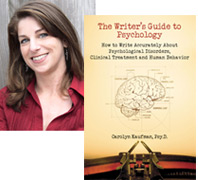 Carolyn Kaufman, PsyD's book, THE WRITER'S GUIDE TO PSYCHOLOGY: How to Write Accurately About Psychological Disorders, Clinical Treatment, and Human Behavior helps writers avoid common misconceptions and inaccuracies and "get the psych right" in their stories. You can learn more about The Writer's Guide to Psychology, check out Dr. K's blog on Psychology Today, or follow her on Facebook or Google+!
Dissociative amnesia is essentially amnesia for a particular event or set of events that are, as you note, traumatic in nature. It would be perfect if you just needed your MC to have amnesia for what happened when she is stabbed and flung from the van. A fugue is basically when someone has a dissociative split in identity, i.e. they develop amnesia for all events after a certain point (though they can make new memories) and travel away from home. During a fugue the person may (or may not) take on a new identity. When they eventually come out of the fugue (which can happen with help from therapy, or spontaneously) they may or may not remember what happened during the fugue. During a fugue, the person usually seems completely normal to others. They don't act bizarre.
1. Is there a certain sequence or specific event that needs to take place in order for the condition to develop?
Just because it may be helpful, let me quickly summarize the difference between dissociative amnesia and organic amnesia. There are 2 types of amnesia—psychological (dissociative, in which the mind is thought to split off a traumatic event to protect the psyche) and organic (physical, in which the brain is affected). A really good example of organic anterograde amnesia is in the movie Memento (or 50 First Dates). In both movies, the MC's hippocampus (the brain structure which makes new memories) is damaged beyond repair, and the character is unable to make new memories.
Then let's differentiate between dissociative amnesia and a dissociative fugue. They're essentially the same thing except that in a fugue the individual travels away from home (or wherever she normally is) and the amnesia can be more extensive. So let's say someone walks in on her partner in bed with someone else. Dissociative amnesia might be that she completely forgets walking in on them, but all other memories are the same; someone with a dissociative fugue will walk out the door, get in the car, and travel away, possibly while taking on a new identity. It seems that people with fugues are actually fleeing physically as well as psychologically from a traumatic event. Years ago actress Anne Heche went through a breakup (from Ellen DeGeneres) and went wandering in the desert claiming to be someone named Celestina. She later said she had dissociative identity disorder (multiple personality disorder), but what she was actually describing was a fugue. If you want to do a little more movie research, The Long Kiss Goodnight with Geena Davis portrays a fugue.
For either amnesia or a fugue, there has to be an event traumatic enough that the mind decides to wall it off (dissociate it) so the individual doesn't have to deal with it.
2. Is it possible for a victim of Dissociative Amnesia to lose three years worth of memory? More specifically, is it logical for my character to only remember events up to a certain age (let's say age 30), forgetting everything else beyond that (even the trauma), and believe she is age 30 when she's really age 35?
It would be rare for either someone with amnesia OR a fugue to lose 3 years prior to the traumatic event, but you could pull it off better with a fugue. You could argue that the identity the character having the fugue is taking on is that of a younger self.
The hard part about pulling off a fugue for your character may be the travel—the person has to travel. Though I suppose she could travel away from where she is living as a 35-year-old and make her way back to a "safer time," ie when she was 30.
3. How would a doctor handle my character's condition?
Who brings the character into treatment? Theoretically, if she is dissociating, she is not going to realize she has a problem.
A doctor would probably screen for organic problems (such as concussion; damage to the hippocampus, frontal lobes, and temporal lobes) as well as for drug and alcohol use and abuse (prescription and nonprescription)—for things that could cause memory problems, in other words. If nobody can find any physical cause, the character would be referred to a psychologist.
The psychologist would probably be someone who specializes in trauma (e.g. PTSD) and/or dissociative disorders. Her goal would be to help your character come to terms with the trauma that triggered the fugue. She would probably encourage your character to remember what happened, though if she's a good therapist, she definitely wouldn't hypnotize her to remember. (Hypnosis just puts you into a natural dissociative state, and makes you more suggestible. As a result, it's super easy to influence people who are hypnotized and cause them to create false memories, which certainly would not be helpful—especially if your MC ever wanted to take her stalker to court.) There would also be work on helping your MC develop coping mechanisms besides dissociation. If your therapist was someone who used EMDR (a treatment some people find helpful for PTSD), she might also use EMDR.
The therapist would also use cognitive therapy, including dealing with irrational and upsetting thoughts by changing self talk; and behavioral therapy, probably including exposure therapy of some kind. To pull those things together, the therapist would have your MC talk, and listen for ways she might be unintentionally self-sabotaging (everybody does it to some extent) due to cognitive distortions (there's a list of the ones we usually listen for at PsychCentral). Then the therapist teaches the client to think more realistically. (She doesn't whitewash things, just helps the client stop blowing things out of proportion).
Exposure therapy involves exposing oneself to the things that are associated with the traumatic event while practicing new coping and relaxation skills. You can do imaginal exposure, where the client imagines going through things again, or you could even take her back to the place the trauma happened with the therapist.
EMDR is a treatment that combines cognitive and behavioral therapies with a particular pattern of eye movement. Some people swear by it, and some people will tell you it's garbage.
If you want more detailed information on portraying these therapies, including EMDR, I go into more detail in my book, The Writer's Guide to Psychology. I also talk more about why you don't want to hypnotize someone who has a dissociative condition, and talk more about the differences between psychologists and psychiatrists.
Finally, while there are no medications for dissociative disorders, if the character is struggling with depression or PTSD symptoms, there are medications for those things.
Remember, if YOU have a psychology in fiction question you want to see answered here, use the Q&A form on the Archetype site or send an email using my QueryTracker email address to the right. (Please use Q&A in your Subject Line!).
Carolyn Kaufman, PsyD's book, THE WRITER'S GUIDE TO PSYCHOLOGY: How to Write Accurately About Psychological Disorders, Clinical Treatment, and Human Behavior helps writers avoid common misconceptions and inaccuracies and "get the psych right" in their stories. You can learn more about The Writer's Guide to Psychology, check out Dr. K's blog on Psychology Today, or follow her on Facebook or Google+! 
