If you missed entering the contest, you are welcome to query Anna Webman in the traditional fashion. You can tell her that the QTblog sent you.
Tuesday, November 10, 2009
The Contest is Now Closed
Thank you so much for entering! Keep your eye on the blog for contest updates, and watch for more contests in the future.
If you missed entering the contest, you are welcome to query Anna Webman in the traditional fashion. You can tell her that the QTblog sent you.
Ready... Set... Go!
The QueryTracker Blog's Young Adult fiction contest is now open.
You can find the entry form here: http://querytracker.net/contest.php
Entries are limited to seventy, and slots will fill quickly, so enter early.
Please see this morning's post for all the details.
Good luck!
You can find the entry form here: http://querytracker.net/contest.php
Entries are limited to seventy, and slots will fill quickly, so enter early.
Please see this morning's post for all the details.
Good luck!
YA Contest - How to Enter
ENTRIES WILL BE ACCEPTED VIA A SPECIAL ENTRY FROM ON QUERYTRACKER.NET ONLY!!! Do not email the agent with your entry. Do not call the agent. There is only one way to enter!
Tonight's the night! Our YA contest opens this evening at 9 p.m. Eastern Time (6 p.m. Pacific) so here's everything you need to know:
The entry form will not be visible until 9 p.m. Eastern Time (6 p.m. Pacific.) Be sure to submit early, as the slots will fill up quickly. And if you do not make it into this contest, don't feel bad - we have more contests scheduled in the near future!
To see some of the questions and answers about this contest, view the comments in last week's announcement post.
I'd like to shout out a big THANK YOU to Anna Webman of Curtis Brown Ltd. for juding our contest. Anna has graciously agreed to award the grand prize winner with a full submission, and partial submissions for runners-up. I'm lucky to have worked with Anna on a couple of different occasions, and can honestly say anyone who is represented by her is one lucky writer indeed.
Keep an eye on the blog for contest updates. Anna will need a couple of weeks to judge the entries (she'll have a lot of material to read!) Watch for an interview next week with last May's contest winner, Cameron Jacobs. She'll be giving us the scoop about her journey from winning the grand prize in our contest to signing with the agent who judged the contest. Cameron's book is now on submission.
Feel free to ask any questions in the comments of this post, or send me a message, my email address is to the right of this post. Best of luck!
Suzy

Tonight's the night! Our YA contest opens this evening at 9 p.m. Eastern Time (6 p.m. Pacific) so here's everything you need to know:
- Entries will be accepted on a special entry form on QueryTracker.net ONLY. The form will not be visible until the contest opens. This is a link to where the form will be: http://querytracker.net/contest.phpSo bookmark it for easy clicking tonight!
- This contest is for completed Young Adult novels only. (All the genres that fall under the YA umbrella.)
- You must have a QueryTracker.net membership to participate. (It's free!) If you do not have one yet, click here to sign up.
- You will need to submit the following: Your first five pages AND a one-page synopsis. (Only one entry per person will be accepted.)
- Due to the high word count of the materials being submitted, we will be capping the number of entries at 70.
- You will need to CUT AND PASTE YOUR ENTRY into the submission form.
The entry form will not be visible until 9 p.m. Eastern Time (6 p.m. Pacific.) Be sure to submit early, as the slots will fill up quickly. And if you do not make it into this contest, don't feel bad - we have more contests scheduled in the near future!
To see some of the questions and answers about this contest, view the comments in last week's announcement post.
I'd like to shout out a big THANK YOU to Anna Webman of Curtis Brown Ltd. for juding our contest. Anna has graciously agreed to award the grand prize winner with a full submission, and partial submissions for runners-up. I'm lucky to have worked with Anna on a couple of different occasions, and can honestly say anyone who is represented by her is one lucky writer indeed.
Keep an eye on the blog for contest updates. Anna will need a couple of weeks to judge the entries (she'll have a lot of material to read!) Watch for an interview next week with last May's contest winner, Cameron Jacobs. She'll be giving us the scoop about her journey from winning the grand prize in our contest to signing with the agent who judged the contest. Cameron's book is now on submission.
Feel free to ask any questions in the comments of this post, or send me a message, my email address is to the right of this post. Best of luck!
Suzy
Monday, November 9, 2009
Don't Use That Voice With Me!
Today, I'm going to talk about the voice of a novel, which is the literary term used to describe the individual writing style of an author. Voice was generally considered to be a combination of a writer's use of syntax, diction, punctuation, character development, dialogue, etc., within a given body of text (or across several works)... One author may have a voice that is light and fast paced while another may have a dark voice. (Source: Wikipedia: Writer's Voice)
So, how do you establish the voice of your novel? I've read it around a lot of publishing blogs. The voice of your novel is a deal breaker. Meaning, you need to have one. A strong one.
Most of us have a natural writing voice. It comes through in our blog posts, our informal emails, even out loud when we speak. You can write a novel in "your" voice. But what happens if you've A) already done that? or B) your voice doesn't match your character's story?
Let's explore.
Picture this: You sit down to write. You proceed to stare. Because you can't find your character's voice. Or your voice. Or any voice. This happened to me. I had a main character. He was in my head, talking away. He had a story. But he was vanilla. And while I like vanilla, I like it better with caramel and pecans and some of those peanut-butter-filled footballs. A lot better.
So how do you capture a new voice, one that isn't as familiar to you? Here are a few tips and tricks I learned as I went through this exact same problem.
What I Did: I imagined my MC in a high-stress situation, like he's been dating his best friend's sister, and his buddy just found out. I didn't worry about backstory, because I can imagine a situation like that. I simply wrote DIALOGUE my character would have with his bff. (Or do girls only have bff's?) The scene was mostly dialogue with some physical clues thrown in for emotional impact.
This showed me A) how my MC reacts in a tense scene and B) how he talks.
Then I imagined a completely different scenario. One where my character would have to convey information to the reader. Since I had just learned how he talked, I transferred that to narration. This second piece contained no dialogue whatsoever. Only narration. Establishing setting with sight, smell, taste, etc.
This showed me A) what details he might notice and B) how to move the unique voice most of us can establish in DIALOGUE into NARRATION.
What I Did: In my first novel, my character starts a lot of her sentences with "Yeah". (ex: Yeah, that doesn't work for me. If you read my personal blog at all, you'll notice that I do the same thing.) So I certainly couldn't do that again. As I was free-writing, I seized on a word that my MC said, and now it's his "thing." He uses it in dialogue and in narration. It's not something I would've chosen on my own, but something I was looking for during the free-write session.
But how much baking soda do you put in? Not as much as the flour. Think about it.
So watch yourself. Sprinkle it in consistently, but don't take off the lid and dump it on us.
I might be back with another post on voice. How do you find the voice you write with?
So, how do you establish the voice of your novel? I've read it around a lot of publishing blogs. The voice of your novel is a deal breaker. Meaning, you need to have one. A strong one.
Most of us have a natural writing voice. It comes through in our blog posts, our informal emails, even out loud when we speak. You can write a novel in "your" voice. But what happens if you've A) already done that? or B) your voice doesn't match your character's story?
Let's explore.
Picture this: You sit down to write. You proceed to stare. Because you can't find your character's voice. Or your voice. Or any voice. This happened to me. I had a main character. He was in my head, talking away. He had a story. But he was vanilla. And while I like vanilla, I like it better with caramel and pecans and some of those peanut-butter-filled footballs. A lot better.
So how do you capture a new voice, one that isn't as familiar to you? Here are a few tips and tricks I learned as I went through this exact same problem.
Tip #1: Voice can't be forced, but it can be found.
If you're having trouble finding your characters voice, sit down to free-write from the point of view of that character. But don't write your novel. What I Did: I imagined my MC in a high-stress situation, like he's been dating his best friend's sister, and his buddy just found out. I didn't worry about backstory, because I can imagine a situation like that. I simply wrote DIALOGUE my character would have with his bff. (Or do girls only have bff's?) The scene was mostly dialogue with some physical clues thrown in for emotional impact.
This showed me A) how my MC reacts in a tense scene and B) how he talks.
Then I imagined a completely different scenario. One where my character would have to convey information to the reader. Since I had just learned how he talked, I transferred that to narration. This second piece contained no dialogue whatsoever. Only narration. Establishing setting with sight, smell, taste, etc.
This showed me A) what details he might notice and B) how to move the unique voice most of us can establish in DIALOGUE into NARRATION.
Trick #2: Choose something unique and have your character use it consistently.
This is done to develop character, which is one of the parts of voice in a piece of writing. In Scott Westerfeld's PEEPS, one of the characters calls everyone "Dude." In Stephanie Meyer's TWILIGHT saga, Jacob always says, "Sure, sure." In Kristin Cashore's GRACELING, her narrating character begins a lot of sentences -- both in narration and in dialogue -- with "Well".What I Did: In my first novel, my character starts a lot of her sentences with "Yeah". (ex: Yeah, that doesn't work for me. If you read my personal blog at all, you'll notice that I do the same thing.) So I certainly couldn't do that again. As I was free-writing, I seized on a word that my MC said, and now it's his "thing." He uses it in dialogue and in narration. It's not something I would've chosen on my own, but something I was looking for during the free-write session.
Tip #3: Don't go overboard.
Don't get me wrong. Voice is essential in a piece of writing. But it's essential the same way baking soda is in cookies. No baking soda = flat cookies. No voice = flat writing.But how much baking soda do you put in? Not as much as the flour. Think about it.
So watch yourself. Sprinkle it in consistently, but don't take off the lid and dump it on us.
I might be back with another post on voice. How do you find the voice you write with?
Friday, November 6, 2009
Publishing Pulse 11/6/09

The New QueryTracker Success Stories
Click on the names below to read the most recent success story interviews from QueryTracker members. Congratulations to these newly agented writers.
Tabitha Olson
Justina Ireland
Bethany Wiggins
Natalie Bahm
Coylenna Bain
Jamie Harrington
Shawntelle Madison
Stephanie Feldstein
New Agents Added to the QueryTracker Database
Several new agents and publishers were added to the QT database in the month of October. Check out the box labeled "New and Updated Listings" on the front page of the main QueryTracker.Net site and view their profiles for website links and genres they represent.
QT News and Congrats
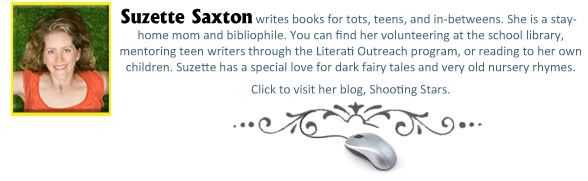
Congratulations again to our own QT Blogger, Suzette Saxton, for her recent acceptance of an offer of representation from Brendan Deneen of the FinePrint Literary Management.
If you write YA, don't forget to enter our upcoming contest with literary agent, Anna Webman of Curtis Brown Ltd.
Tips, News & Other Interesting Info from Around the 'Net
Serendipity Literary Agency, in collaboration with Sourcebooks and Gotham Writer's Workshop is hosting its first Young Adult Discovery Competition.
Literary Agent Sara Crowe reveals what kind of YA submissions she's seeking and gives some examples of winning queries in her blog post, Call for Submissions.
Rachelle Gardner's post on How to Avoid Getting an Agent is a must-read for aspiring authors.
My favorite post of the week was a pep talk by Neil Gaiman for writers participating in NaNoWriMo.
Wishing everyone a fabulous weekend.
Mary
Wednesday, November 4, 2009
Agent-Judged Contest Announced!
Some of you may remember the series of agent-judged contests we hosted on the QTblog earlier this year. Great news - one of our contest winners went on to sign with the agent who judged the contest, and his book is now on submission. Contests are a great way to get your work noticed!
We are pleased to announce yet another contest. Literary agent Anna Webman of Curtis Brown Ltd. wants to see your stuff! She has generously agreed to peruse the first five pages plus a synopsis of your YA novel. What a great opportunity! Here are all the details:
So now you're probably thinking (gasp!) not the dreaded synopsis! Never fear, Heather has two fantastic posts that will help you make yours shine:
We are pleased to announce yet another contest. Literary agent Anna Webman of Curtis Brown Ltd. wants to see your stuff! She has generously agreed to peruse the first five pages plus a synopsis of your YA novel. What a great opportunity! Here are all the details:
- This contest is for completed Young Adult novels only. (All the genres that fall under the YA umbrella.)
- The contest will open this Tuesday, November 10th, at 9:00 p.m. Eastern Standard Time. (That's 6:00 p.m. Pacific Standard Time.)
- You will need to submit the following: Your first five pages AND a single-spaced one-page synopsis.
- A free membership on the QueryTracker main site is required.
- Submissions will be accepted through the official form on the QT main site ONLY.
- Only one entry per person will be accepted.
- Due to the high word count of the materials being submitted, we will be capping the number of entries at 70.
So now you're probably thinking (gasp!) not the dreaded synopsis! Never fear, Heather has two fantastic posts that will help you make yours shine:
Watch for a special post Tuesday morning with a link to the submission page, and then a post Tuesday evening announcing the contest's opening.
Let me know if you have any questions in the comments of this post. Good luck!
Suzy
Monday, November 2, 2009
Do I Feel a Draft?: The Wordcount Obsession of NaNoWriMo
So yesterday marked the beginning of this year's NaNoWriMo event. Which brings the point of the mega-wordcount exercise up for discussion.
The point of NaNoWriMo (besides having a whale of time writing with abandon), if your ultimate goal is to publish, is not to write a novel in one month (despite what the website catchphrases would have you believe) but rather to write a draft.
Now, to some of you, that might seem like semantics, but it's an important distinction, I think. For two reasons:
First, to succeed at NaNoWriMo (or similar high-paced writing speed goals), you really need to accept the fact that your WIP is not going to be perfect. In all likelihood, your results will be the sort of prose you'll read later on, after you've edited or rewritten, and feel the urge to delete the original file from your computer completely. Or better yet, remove the contaminated harddrive and smash it to smithereens. And then torch the smithereens. And bury the ashes. At the North Pole.
The point of high-speed wordcount generation is simply to create a starting point. A virtual scaffolding. If you do not give yourself permission to let your writing stink at least a smidge, you will neither succeed nor have fun trying.
Second, when you're riding that high from typing those two heady words, "The End," don't let yourself get swept up in the intoxicating notion that you are done with your novel. That first draft is only the first step. Sure, you've given birth and naturally your book-baby is beautiful, but it's not ready to go out and find a job yet. You're going to want to nurture and shape it first.
I can't say enough about the importance of incubation and taking your time. If there is a single mistake that represents the most common downfall of a given project, it is rushing to the marketplace too soon.
So, NaNo or NaNo-No, get out there and churn out some brand-spanking new words, but recognize them for what they are: great raw material for the fabulous novel you will soon be polishing!
Those of you who have NaNo-ed before... what became of your previous projects? How many times did you edit your manuscript after the fact, and how much did they change along the way? And, those of you who are currently NaNo-ing, how's it going? Off with a bang? Or a whimper?
Myself, I wrote The Edge of Memory during NaNo '07 (well, most of it... I banged out 65K during NaNo and finished the draft in December). I let it sit for a month or so before I started editing and I edited it several times before it became the manuscript I submitted to my agent. I didn't get to play along with NaNo last year, but I'm hoping I'll have the chance this year (once I finish up this stinking 28-hour shift and get home to my beloved laptop. ;) ).
Subscribe to:
Posts (Atom)