QueryTracker Blog

Helping Authors Find Literary Agents
Showing posts with label book reviews. Show all posts

Tuesday, August 30, 2016

The Art of Giving and Accepting Critiques

"Be kind and considerate with your criticism. It's just as hard to write a bad book as it is to write a good book." 

Writers' stories are essentially their children. Sometimes they are incredibly proud of their offspring, other times they find them cringeworthy, and yet, when someone else dares to point out their flaws, the author/parent feels compelled to leap to their defense.  It's hard not to take it personally when someone doesn't "get" your protagonist, or reacts with a "meh" to a scene you agonized over for hours. Giving and accepting critical opinions is a tool that should be in every writers' arsenal.

There is a point in your own writing career where you become more comfortable offering advice to people just starting their publishing journey. Maybe you've obtained an agent, or a publishing contract, or have found an indie niche. You realize that you do have answers to many newbie questions (never send attachments with a query- don't nudge after a week, etc.)  The writing community in general is supportive and kind. Writers understand the special pain of pouring your heart and soul into something only to have it ridiculed or dismissed. Yet, sometimes a writer who is just starting out is making some basic, rookie mistakes, or perhaps the writing is just... bad. It's easy to tap out an anonymous one-star review with snarky gifs. It's quite another to offer constructive comments with suggestions for improvement. So, if a writer asks for input, remember this:

Be Nice. You serve no purpose being snide, condescending or rude. And don't kid yourself that you're just a "straight shooter" who is "blunt, but fair" or whatever phrase people use to justify being a jerk. It's a tough enough business when writers get form rejections on full requests from unpaid interns and twitter hashtags exist only to ridicule unpublished writers. Don't contribute to an already demoralizing process by picking on the new kid.

Be Specific. Maybe the story in question is full of Mary Sues, assorted tropes, hackneyed dialogue or stereotypes. It's easy to just say, "This is a cliche-ridden story with boring characters and no plot."  But the writer can only improve if he understands the root problem.  Identify the plot hole, the character who needs fleshing out, or the well-worn plot device that holds back the story from reaching its full potential. If it can be identified, it can be fixed.

But be nice.

Find Something Positive to Say. Yes, even if it's just, "Hey, you wrote a book! Congratulations on that achievement." Often, an otherwise solid theme (jealousy, love, loss) is simply not well-executed. But acknowledge if the author has the bones of a good story, or if she used a particularly lovely phrase or had a piece of dialogue that made you laugh. 

Offer Advice on How to Improve. "Write it better" is not advice. Remember all those form rejections you got that said something like, "I just didn't fall in love with the story" or "Ultimately, I didn't engage with the characters"? Give the author something to work on. "If you're writing historical fiction, the characters shouldn't speak like 1980's valley girls." That's advice. And it's direct, but polite.

And on the flip side, you've asked for a critique and now you've got it. And it stings. A lot. What to do? Here's your checklist.

Put It Aside For At Least 24 Hours. Early on in my career, a mentor told me that whenever he was tempted to write a nasty letter, he'd write it, put it in the drawer overnight, and if he was still mad the next morning, he'd consider sending it. Alas, the advent of email and the instant gratification of typing whatever pops into your head makes this system a bit of a dinosaur.  Let the initial hurt subside a bit so you can look at the critique more objectively.

Don't Tell The Reviewer She Is Wrong. Don't bother arguing, complaining or justifying. You asked for feedback and you got it. Thank the person for their time and move on.

Be Nice.

Take Off Your Writer Hat and Put On Your Reader Hat. These characters are your babies. You know them. You know why you made them, and how they evolved as you wrote the story. But a reader has no skin in your game. He either likes the story, doesn't like it, or is a bit indifferent.  You don't love everything you read. It doesn't mean the writer didn't agonize over every single word.

Make a List of The Most Critical Comments. Assuming they are constructive (see above) ponder them carefully. Have you fallen into a writing cliche? There is a fine line between an archetype and a trope. You might not decide to gut and rewrite the whole manuscript, but you may find that you do need to make some changes.

Categorize The Problem Areas: Characters, Plot, Conflict and Writing. You can fix things like using crutch words or having overly flowery descriptions. You can tighten up plot holes or issues with world-building. You can round out flat characters. You can raise the stakes or make them clearer. But you can't write someone else's book, SO,

Go With Your Gut. This is your story. And, as we so often hear, this is a subjective business. You have one person's opinion. Do with it, or not, as you wish. We can all think of a bestseller that we hated. Am I wrong to think Pride and Prejudice is overrated? Maybe. But I stand by my opinion. And at the end of the day, it's your name on the cover so write the book you want.

But remember. Be Nice.


Kim English - is the author of the Coriander Jones series and the award winning picture book 'A Home for Kayla.' Her latest picture book, 'Rolly and Mac' will be released in 2016. Her website is Kim-English.com. She is represented by Gina Panettieri.

Wednesday, April 30, 2014

Authors' New Amazon Headache

This shady character is causing all the trouble
This week the author loops I follow are all abuzz about a new Amazon policy. (Or a newly enforced Amazon policy.)

Beginning in 2012, Amazon began to crack down on fake reviews. The company removed thousands of reviews from its website. How did they choose which to ax? Only Amazon knows for sure. But if you think about the web of data they have at their disposal, it's easy enough to guess where they'd start. A reviewer who only gives out 5-star reviews, and reviews ten items a day, is probably getting paid to hand out shining reviews.

If you search "Amazon review" over at Fiverr.com right now, you will get 10,000 hits, most of them offering to write you a glowing endorsement.

Reviews are essential to Amazon's business strategy, but only if those reviews are not seen as worthless. So the policing continues. If Amazon knows you're an author (because you've used your Amazon account email to register at Author Central) it may disallow your reviews of books. And Amazon might use other data to discover that your relatives are writing reviews for you. (Do you have your reviewer's "wish list" saved under your account?)

The latest flap is about gift cards, though. In celebration of a new release, many authors do a giveaway. And some of those giveaways include Amazon Gift Cards. And why not, right? Dollars at Amazon are practically a universal currency. The recipient could use that money to buy a box of spaghetti or a tee shirt.

However.

If the winner of your gift card reviews your book whether or not they used the gift card to buy it, that review may be taken down. And if you "gift" an ebook to anyone for any reason the subsequent review also may be taken down.

Hence the freakout. Because Amazon admits that, in the time honored review tradition, the gift of a book / galley / ARC for reviewing purposes is not an ethical lapse. Paying any remuneration above the cost of the book is where the trouble lies.

Okay, fine. But web data is a blunt instrument, apparently, since disappearing reviews don't seem to discriminate between $25 gift cards and $2.99 ebook gifts. Authors who have pressed Amazon to explain their actions have come away frustrated.

Hopefully, market forces will do their thing. Because Amazon doesn't really want authors to give away copies only on, say, Kobo. And simply emailing book files to potential reviewers causes its own headaches. In the daily struggle against ebook piracy, Amazon's DRM is viewed by some as a helpful tool.

Let's hope the big brains at the Amazon mothership will come up with some clearer guidelines. Soon.


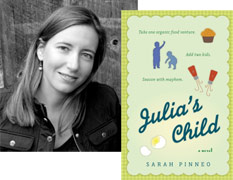
Sarah Pinneo
 
is a novelist, food writer and book publicity specialist. Her most recent book is Julia’s Child. Follow her on twitter at @SarahPinneo.

Monday, March 3, 2014

The Rites of Feedback


It doesn’t matter where you are in the publication pathway, feedback is something we all deal with in one form or another.

Critique Partners and Groups

This is the essential first step when it comes to feedback. Most often, it takes place with the exchange of material between critique partners or within a group. Often the writer will send a chapter or several chapters to her partner for detailed feedback (including line edits). Some writers attend monthly meetings and read their chapter to the group. The firing squad individuals will then provide constructive criticism. Your goals, writing level (both yours and those providing the feedback), time frame in which you want to finish the story, and how you respond to feedback will determine which method is best for you. Some people thrive on face-to-face feedback. Other people would rather have their teeth extracted without sedation. For them, online feedback is the ideal choice.

When you receive feedback, it’s best that you zip your mouth shut before you say something you’ll regret. You need time to digest the information. You might not agree with the person now, but 24 hours later you might decide they’re the most intelligent person to walk this planet, because they pointed out something you missed. Now, if you didn’t keep your mouth shut and you ranted on about how the individuals are idiots, you might not be invited back to the group. Or worst yet, your poor behavior will become common knowledge.

Contests

Some contests provide feedback via blogs. Other writers, and possibly an agent or editor, do drive-by critiques. Sometimes the agent or editor will request partials and fulls. The feedback can be as simple as ‘Loved this!’ which does nothing to help you improve the piece if it’s lacking. Or it can be more helpful, by pointing out what you excelled at and what left the reader confused. Sometimes it can be misguided in an attempt to make your entry look weak so the judge will select another one—most likely the one belonging to the person who cut yours to pieces. This usually doesn’t have the effect the individual was looking for, but it doesn’t help you, either, if you’re looking for constructive feedback. The other issue that can happen is similar to the ‘Emperor’s New Clothes’ scenario. One person finds fault with something (that might not even be a real problem), and everyone jumps on it and echoes the same sentiment. This is often the result of lazy critiquing. The writers involved in the contest have to critique five to ten other entries, and this is the easiest way to do it with minimum effort.

The best thing to do with contests is say nothing when you get feedback. And please don’t waste your time justifying why you did something or waste time answering questions left by an individual (which were most likely rhetorical anyway). You will only come off as defensive. Take what you need from the feedback and ignore everything else. Do, though, pay attention to what the industry expert says. I’ve seen agents love an excerpt that everyone tore apart. Trust what the expert has to say.

Querying

Yes, querying, the word so many writers dread—and for good reason. Unfortunately, there are a lot of writers who believe querying is a fancy word for feedback. But alas, this is not so. These days you’re lucky if you even get a form rejection. The benefit of this is you now know your  query or requested material wasn’t lost in cyberspace. Sometimes an agent or editor will reject your material, but with a kindly worded explanation as to why the story or writing didn’t work for them. Remember, it is subjective. Just because one agent didn’t connect with your characters, it doesn’t mean you need to rewrite the book. However, if your query or requested material continues to be rejected because agents and editors didn’t connect with your characters, that is a warning you need to do some serious rethinking about your characters, your story, and possibly your writing.

No matter how the agent or editor responds to your query, DO NOT email back and tell her that she is a moron for not seeing how brilliant your book is and how you will be the next JK Rowling. I can guarantee that won’t change her mind. And if you keep harassing her with your tirades, news will get around to other agents and editors. I don’t think I need to spell out what that potentially means to your career.

Reviews

After all the feedback and rejections you’ve dealt with along the way, your skin might be a little thicker, but the ultimate test comes now, once your book is published. Your baby has been released into the world, but that doesn’t mean everyone is going to love it. There will be people who dislike your book because they don’t like your trope, they don’t like your characters, they don’t like that your heroine’s favorite color is indigo. But that’s okay because you haven’t love every book you’ve read, right? Now, there will be people who thrive on cutting books down and thrive on calling authors names that should never be spoken in public. No one knows why these people are bullies, and it doesn’t matter the reason. The main thing is you IGNORE THEM. Never feed the trolls. And while you’re at it, don’t let your friends and family feed them, either. The trolls could retaliate, and you’ll be the victim not them.

And it’s not just the trolls you need to ignore. It’s best for everyone concern that you don’t respond to reviews, especially when you don’t agree with them. Remember, reviews aren’t for the author; they’re for the reader. Let readers do their thing, and you do yours—writing the next book.

Where are you on the ‘rites of feedback’ pathway?


Stina Lindenblatt @StinaLL writes Young Adult and New Adult novels. In her spare time, she’s a photographer and can be found at her blog/website.   She is represented by Marisa Corvisiero, and finds it weird talking about herself in third person. Her debut New Adult contemporary romance TELL ME WHEN (Carina Press, HQN) is now available.


Wednesday, October 23, 2013

How To Score That Book Review


If you want people to read your books, you need the get the right individuals to review them. I don’t mean your friends and family. I’m referring to book blog reviewers. I recently interviewed Laura Carter of Bookish Treasures to gain insight on how to increase the odds that your book will be reviewed on a blog. While not everyone will buy your book based on these reviews alone, it will get them thinking about your book.

Laura, what are some of your pet peeves for when authors approach you to review their book?

When people start with “Dear Reviewer.” It may be a bit petty but I really don’t like that as it seems a little like they can’t be bothered to find out my name.

What increases the chance that you will agree to review a book on your blog?

First of all, it actually being a book that I would be interested in. I get quite a few review requests for books that are nothing like what I feature on my blog and sometimes even are genres that I specifically state I won’t review.

A little extra explanation helps too as sometimes the synopsis may not cover the aspects of the book that makes it the sort of thing I read.

[Remember, querying a book reviewer is much like querying an agent or editor. The same etiquette that is expected when querying an agent or editor applies to book reviewers.]

What advice would you give to authors whose book is reviewed on a blog? Is it okay to respond to a positive review, or is it better not to comment at all?

As a reviewer when I give a positive review I really like it when the author comments thanking me for the review, especially if they requested it. If you didn’t request the review I think most people wouldn’t have a problem with you commenting.

If you ever plan to comment on a negative review be very careful. I personally wouldn’t have any problem with an author saying something along the lines of “thank you for your honest thoughts.”

What is the scariest thing that has happened to you (or that you’ve heard happening  to another blogger) when you’ve turned down a request for a review or gave a negative review?

Luckily I have never had anything bad happen over turning down a review request but I remember not too long ago a reviewer replied to a review request with a link to her review policy which stated that she was closed to review. The author then replies with a link to some sort of website or discussion which was about ways to commit suicide. I can’t remember who this happened to but she did write a blog post which you can probably find if you care to search. You also often hear about authors who verbally attack people who gave them negative reviews and often get their fans to do the same. Luckily that has never happened to me so far.

What can a self-published author do to increase the odds of her book being reviewed?

Make sure your synopsis sounds amazing. The majority of reviewers only accept a small amount of requests they receive so the better you sell your book with the request the more likely you are to get acceptances. Make sure the reviewer knows why you think they will like your book, if you have researched the people you plan on sending requests to this shouldn’t be too much of a problem.

Some authors use PR companies that organize blog tours. How have you found it working with these groups?

As a blogger I love working with PR companies though I am not more likely to accept a request if it has come through a PR company. In fact it is harder to say no directly to the author so I am more likely to accept direct requests.

You’re also an administer for a Goodreads New Adult Book Club. Do authors approach you to be included or is it something you choose on your own (or a combination of both)?

We set up a discussion thread where people suggest the books that they want to read. We then create a poll that has all the books that were suggested (unless they aren't NA or have already been a group read) and the group members then vote on which books they want to read.


When we created the group we decided that would be the fairest way to do it :)

[I’ve heard of authors trying to spam in these groups and being kicked out. This is not the best way to promote your book. It’s a great way to damage your reputation.]


If you decide to approach book blogs for reviews, remember that you won’t be the only one. A lot of other authors will be doing the same, especially with the most popular blogs. This means the sooner you contact the reviewers the better. Don’t wait until the week before your book is released and hope the reviewer can fit you in.

Have you tried querying book bloggers for a review?


Laura is a university student from the UK who loves books and anything related to them. She loves to lose herself in great stories that stay with you long after you have finished the last page. Whilst her current obsession is New Adult, her tastes in books are varied and she believes great books can be found in any genre. When she is not reading or studying Laura can usually be found spreading her love of books through blogging, helping authors and managing the Goodreads New Adult book club.  Laura is currently looking forwards to finishing her degree when she will then hopefully manage to fight her way into a career in publishing.