QueryTracker Blog

Helping Authors Find Literary Agents

Monday, April 2, 2012

Interview with Ash Krafton: Approaching Publishers Directly

Today we're talking with our own Ash Krafton about her journey with getting her debut novel, Bleeding Hearts! Read on to learn more about approaching publishers directly, being a great social networker, and researching Egyptian mythology!

Though your first novel, Bleeding Hearts: Book One of the Demimonde is being published this month by Pink Narcissus Press, you’ve also written a lot of short stories and poetry (and won a lot of awards for them)!  How did you start writing?

I began writing as a form of cheap therapy (*grin*). I have a high-pressure medical job that was becoming increasingly stressful…so I did the sane thing and retreated inwardly. I've always had a literary soul (my mom has a stack of my writing from when I was in school.) Going back to writing was a natural thing and it really helped me to focus and enjoy my time off.

I ended up writing passages and scenes from a fantasy that eventually became a novel-in-progress. But it wasn't serious. It was, like I said, cheap therapy. Then I got the idea for Bleeding Hearts—and the whole game changed. I was serious about this project and, with the support of my family, I worked on that project until it was a candidate for publication.

The "short stuff" as I call it, is the result of a mishmash of things—some of it I wrote to combat writer's block, other things I wrote to express ideas that didn't fit into my novel writing. I also began to explore traditional forms of poetry—sestinas, villanelles, ghazals—because the mixture of meter and cadence and line count and rhyme is a decidedly scientific thing. It helps keep my left brain happy.
That the short stuff has ever been worthy of recognition still blows my mind.

Did you have an agent or go directly to a publisher? If the latter –writers are often curious about books that were sold directly to a publisher, without the help of an agent go-between. How did you decide to submit directly, rather than using an agent? How did you find publishers to submit to? 

I queried Bleeding Hearts and eventually signed with an agent. However, our work together didn't result in a fairy tale ending. There were a lot of challenges and, after about nine months, we ended our contract.
I was in a bad place then—I had no idea what to do next. The agent had submitted the proposal to just about every big house so there wasn't anything left for another agent to do. Honestly, I felt like my chances were completely blown…

My QueryTracker friends were very supportive and helped me to find my way through the fog. (Hug, ladies, and my unending gratitude!) I decided to tread water for a while and went back to entering novel-writing contests. I couldn't let my project die just because of a failed agent episode.

Then I learned about the small press market.

My greatest resource became Duotrope (http://duotrope.com), which is a free resource for writers that primarily offers an extensive, searchable database of over 4000 current fiction and poetry markets. They also offer a submissions tracker for registered users that not only organizes my work and the markets to which I've submitted, but also uses the data to calculate stats (QueryTracker fans LOVE stats.)

Up until then, I only used Duotrope to find poetry and short fiction markets for my work. However, the site has a growing database of small presses looking for novel and novella-length work.

I went back to querying—and, by this time, I was a pro—and started knocking on the doors of the little houses.

My world completely opened up. The contests I entered started announcing results—and  in a short period of time I found out I'd made finals in several RWA contests. That is BIG TIME publicity for a writer. I was absolutely floating on air…then I got the first offer of publication.

Okay. Game time.

At the time I got the first offer, I had about a dozen queries out to other small presses. Some had already asked for a partial or a full, others I hadn't heard back from at all. I sent everyone an email with the subject "Offer on the Table for Bleeding Hearts" and explained I had an offer and wanted to know if they'd had a chance to read my submission or if they were interested in making an offer.

I got three non-responses, one "best wishes, we're backlogged and can't get to your sub and don't want to hold you up," and five more offers.

It really came down to two of them. (I can make my decision-making process a post in itself.) I couldn't have made a wrong choice…and I am head-over-five-inch-heels for my publisher. (If I could do cartwheels in these things I would.)

You do an amazing job of networking and building buzz for your work.  What were some of the things you did to make people aware of Bleeding Hearts? If you were going to give other writers one tip for building buzz, what would it be?

Don't be shy.

Self-promotion is a scary thing for writers but you have to approach this thing as a business. A network is essential. How many readers are there in the world that might like your book? Do you honestly think you can reach them all on your own? Social media is the Technology God's gift to authors. We can send our messages out to our peers, who may repeat the information to THEIR peers, and so on. Promotion is a pass-it-on deal. Be confident, reach out, and let the world know you have a message worth sharing.

As for me, I'm just a grown-up kid who loves playing with her computer. I got my first real PC  and Internet service in '93 when I was in college. I remember how angry my mom used to get because she'd try to call and get a busy signal because I was on-line. So, for a nerd like me, this isn't really work. Networking was tough in the beginning because I was shy and had no confidence and knew nothing about publishing. However, with time and a lot of reading and fooling around at Query Tracker's forum, I learned the ropes, made writer friends, and decided it was time to do what everyone else was already doing: building my social network.

My husband accuses me of fooling around on-line. When will he learn that I'm really *working*?

Anyone else interested in *working* with me? I'm on FacebookTwitter, and Goodreads.  I also blog at http://ash-krafton.blogspot.com and call http://ashkrafton.com home.

In Bleeding Hearts, you focus on the Egyptian god Horus. What kinds of research did you do?

Studies of Egyptology have been my hobby as far back as I can remember. I love museums and my family indulges me by accompanying me to every exhibit we find. I got to see the huge King Tut exhibit that came through the Franklin Institute a few years ago (although my son drew the line at the Mummy exhibit. Chicken. Scooby Doo ruined my kid on mummies forever.).

I also own a lovely translation of the Book of the Dead. Although I didn't have it for the writing of this book (I used what I could find on-line) I have found some amazing stuff that is inspiring passages for the sequels, which are in-progress.

I'm not an expert. I'm just someone who loves the study of Ancient Egypt and that love somehow found its way into my story.

(No mummies in Bleeding Hearts, though…at least not yet.)

Tell us a little bit about Bleeding Hearts and how we can get it!

BLEEDING HEARTS: Book One of the Demimonde

Saving the world one damned person at a time—shy advice columnist-turned-oracle must find a way to save her dangerous demivampire lover from the fate that threatens each of his race: evolution and the destruction of his soul.

(Note:this is a log-line that I wrote using tips from the Query Tracker Blog…and it even got a mention in an agent-run contest on another site!)

When advice columnist Sophie meets dark and alluring Marek, she learns life-changing secrets about them both—he’s a demivampire struggling to avoid evolution and she’s an empathic oracle destined to save him. Sophie possesses the rare ability to reduce the spiritual damage that causes a demivamp to Fall, making her the only thing that stands between a DV and evolution. However, as Marek's dangerous past propels him toward his desperate fate, his enemies make darker plans for him: once vampire, powerful Marek would be second only to the Master himself. The vamps want to cause Marek's Fall and they intend to use Sophie to do it....

Join the Demimonde!


Friday, March 30, 2012

Publishing Pulse: 3/30/2012

Success Stories

Congratulations to our latest success story, Krista Van Dolzer!

If you've never checked out one of our success stories, they're a great way to learn about how other writers found agents on their way to publication. And, success stories like Krista's usually include the author's successful query, so you can learn from those who did it right!

Around the Internet

Danyelle Leafty's Kindles for Kids is winding down, but you have until 12:01 am on Saturday to enter a contest to win some great prizes! Get over there to check it out before it's too late!

Some writers get bogged down in showing every last thing that happens in the story, and that can make them lose forward momentum. Adventures in YA and Children's Publishing teaches you how to use effective transitions and keep your forward momentum.

Writing Books is A Lot Like Competing in American Idol: some advice on dealing with all the things others tell you to do to change your story!

A great post on Showing Character Motivations, packed with questions you need to ask yourself depending on the type of motivation you're using.

Baby Got Backstory: A step-by-step guide to figuring out when and how to use backstory.

Have you ever thought about how things like culture affect naming trends? In other words, if you are creating a culture, your characters' names should probably show some patterns. The Name Game--Keeping Character Names Consistent will help you with this.


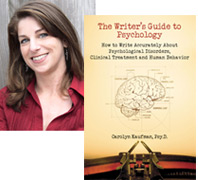
Carolyn Kaufman, PsyD's book, THE WRITER'S GUIDE TO PSYCHOLOGY: How to Write Accurately About Psychological Disorders, Clinical Treatment, and Human Behavior helps writers avoid common misconceptions and inaccuracies and "get the psych right" in their stories. You can learn more about The Writer's Guide to Psychology, check out Dr. K's blog on Psychology Today, or follow her on Facebook or Google+

Wednesday, March 28, 2012

Publishing Lessons From The Investment Industry


What do the investment and publishing industries have in common (other than the desire to make money)? My husband works in the investment industry, and it recently dawned on me, while listening to him, how many lessons we can learn about publishing based on insights from the investment industry.

Diversify

In investing, this means not owning shares in only one company (see Get Rich Quick to learn the dangers of that). You want to consider your financial goals (which are partly based on how close to retirement you are, as well as numerous other factors beyond the scope of this post), and plan your investments accordingly.

In writing, diversify can refer to many things: 

You’ve written a book and have started querying it. But instead of working on a new project, you tweak the manuscript while waiting to hear back from agents. You get feedback and tweak it some more. You take an online course. Another person beta reads it. And it each time you get the feedback, you keep tweaking your manuscript. There’s nothing wrong with this, except all your hopes are clinging to this one story. If you continue to get rejections, tweaking it isn’t going to save it. There may be deeper structural problems or issues with characterizations that you’re ignoring. Often we don’t realize these things until we put the book aside and work on something else. Most authors’ first books are never published, and there’s a good reason for that. But they realized it was time to move on and work on a second or third or fourth book. If they hadn’t done that, they probably never would have been published.

This term also applies to querying only your dream agent. I’ve seen this mentioned a number of times on the writer forums. The writer only queries his dream agent. Great, except the writer’s book might not be the agent’s dream book and she rejects it. The smart writer hasn’t put all his hopes on the one individual. He’s queried other agents who he thinks might love his book. This increases his chances of landing an agent who turns out to be a better match than the so-called dream agent. 

Diversify can also mean writing short stories, novellas, and novels, instead of focusing solely on writing novels. It can mean writing young adult and middle grade stories, or it can mean writing several different subgenres under the umbrella of romance. It’s okay, while you’re trying to become published, to experiment with different genres. You might have your heart set at becoming the next Margaret Atwood, but it might be that you’re the next Dean Koontz. However, be careful with spreading yourself too thin once you’re published, unless you’re a prolific writer. If it’s takes you two years to write a book, you might want to keep to one genre so that you can build your author brand (and thus your fan base). 

Long Term Investing

The wise investor chooses stocks that will continue to earn income over the long term. You don’t want to invest in today’s hot stock, which you bought at an outrageous price, only for it to tank tomorrow and leave you with nothing. The same deal with your writing career. For most authors, it takes time for their fan base to grow. And for most authors, it takes several books before they are finally published. Overnight successes are rare.

Think of everything you do as part of investing in your writing career. This might be buying that writing-craft book everyone’s talking about, joining a writing association, taking an online writing course, attending a conference. Everything you do is an investment in your career. Your long term writing career.

Trends

You’ve heard company XYZ is issuing shares and it is being touted as the next big thing. Naturally, you have to buy shares. You’d be an idiot not to. 

Wrong. By the time you buy them, the price is ridiculously high and you’re already too late. Sound familiar? It’s the same thing with publishing. When Twilight became the next big thing, writers rushed to write vampire stories, and by then it was too late. Agents and editors already had all the vampire stories they could handle (unless something really stood out from the crowd). The same thing happened with YA dystopian, angel stories . . . .

The best thing to do is write what you love to read and be the creator of the next trend, not the follower. 

Get Rich Quick

Does anyone remember Bre-X? It was a Canadian mining company that claimed to be sitting on a massive gold deposit in Asia. It was a hoax that cost many investors their life savings. They ignored the wise saying: “If it sounds too good to be true, it usually is.” Unfortunately, they jumped in without taking the time to do the research and without taking the time to make sure they were doing what was right for their financial security.

With the growing popularity of self-publishing, it’s easy to be lured into it. You don’t have to wait for the publishing industry to realize you’re a writing genius. You don’t have to put up with nothing by rejections from agents and editors. You love your story. Your mother loved your story. Why not self publish it and become the next J.K Rowling?

If you’re not looking for a long term writing career, go ahead and jump in. But if you are hoping to develop a fan base that will grow with each book you publish, take the time to do things right. Take the time to understand the pros and cons of self publishing. Take the time to understand what you’ll need to do to self-publish your book (e.g. obtaining the ISBN). Take the time to get a great cover and have the book professionally edited. And take the time to research how you’re going to promote the book and come up with a plan of action (this is also true if you are traditionally publishing your book). While you don’t have to wait as longer as traditionally published authors to see you book in print (so to speak), don’t rush the process and end up like so many Bre-X investors—regretting your decision. 

Have you learned anything as an investor that makes you a smarter writer? Or, have you learned anything from other investors’ mistakes that you can apply to publishing?

Stina Lindenblatt writes young adult novels. In her spare time, she’s a photographer and blogging addict, and can be found hanging out on her blog, Seeing Creative.  

Monday, March 26, 2012

Authors and Social Networking

Courtesy of svilen001

You're getting published and have a book coming out. Congratulations!

Now what?

As the publishing industry evolves, it's becoming increasingly common for authors to help market their books. (Mileage will vary on this.) And with the explosion of social networking, what more could an author need? From all I've been able to glean, word-of-mouth is the most effective way to get your name out there, and what better way to do that than through social networking?

Social networking is a tool like any other, so it's important to understand what it does and how best to use it. No point in using a hammer to remove a doorknob. (Unless you want to replace the door as well. ;-))

First off, it would behoove authors everywhere to look at things like Twitter and Facebook from their readers' perspectives. (To keep things simple, I'm going to focus on Twitter, but all of this can be applied in general terms over all the social networks.)

As a reader I:
  • am a person, not a wallet
  • tune out commercials
  • want to interact socially
  • want to feel like I'm a part of things
  • don't want to have to jump through hoops
As an author I:
  • am a person, not an institution
  • want to increase my readership
  • want to interact socially
  • want to succeed
  • want to write the next book
See where the two intersect? Social networking is aptly named. The average person is tweeting to connect with others. For myself, I've met a lot of wonderful people I wouldn't have been able to otherwise. I find people of like interests to talk to and discuss things with.

So where can this go wrong?

I think part of the problem is the pressure put on the author to do well. To succeed. Especially when basically the only thing that is within the author's complete control is writing the best book they can.

So we use things like Twitter to get our names out there. That, in and of itself, is not a bad thing. In fact, done right, it's a very good thing. Never has it been so easy to interact with authors before. And never has it been so easy to interact with readers and potential readers before.

And that's awesome.

But it has a dark side:
  • Automatic DMs to new followers advertising your book. For me, this is a major turnoff. As a reader, this makes me feel like a wallet, not a person. If I follow you long enough, I'll see your tweets and be able to find your books if I'm interested in reading them.
  • Cliques. The point of social networking is to be social. If I, as a reader, notice that the Author of Awesomeness that I've followed *never* replies to me and only to a select few of his or her Fellow Authors of Awesomeness, well, all that Awesomeness crowds me right out and I stop following. We're all busy, and no one can reasonably expect a reply to every tweet they send out, but cliques should have no place on social networks.
  • Tweeting about your book and only your book 24/7. When I get new followers, the first thing I do is look at a sample of their feed. If all of the tweets, or nearly all of them, are nothing but non-stop advertisements for their books, I don't follow them back. I'm not saying authors should never talk about their books, because they should. They just shouldn't turn into commercials in my Twitter feed. O:)
  • Follow then unfollow. Sometimes, in an effort to boost their numbers, authors will follow people, wait until they follow them back, and then unfollow them. I think such a practice speaks for itself. Social networking isn't meant to be an echo chamber. It's meant to be a place where people can get together and interact. Socially. :p
Ways to do it right:
  • Be yourself. It's simple really. And quite effective. It's impossible to connect with a product, but awesome when you can connect with a person.
  • Be kind. Text is naked, so some emotions don't convey themselves very well. (Like sarcasm.) When in doubt, give people the benefit of the doubt. Also, remember that the world is a big place full of people with different opinions. For me, I've found that the most effective approach--even for things I feel very strongly about--is to avoid name calling and generalizing. It's easy to be anonymous on the internet, so why not be a kind anonymous? :D
  • Be courteous. Think of Twitter as a giant worldwide water cooler. Go with the flow of the conversation an start new conversations. I've found that it's very effective to be less about ME and more about YOU. That doesn't mean I never share Tweets about my books, etc. Only that I do so in moderation. I try to follow the 1 in 5 rule. For every 5 tweets, only one of them can be about me, Me, ME. (Or my books.)
  • Be interesting. Sometimes it's all about voice. Or it could be that you have a talent for finding awesome posts you like to share. My favorites out of the people I follow are those who are interesting, who can make the mundane into something funny or wonderful or amazing. Do they do that with every tweet? No. But in general, they tweet interesting things.
What about you? What social networking practices have you noticed that are especially effective?

Danyelle Leafty| @danyelleleafty writes YA and MG fantasy. From March 12th-31st, she will be donating royalties from both paper and digital copies of THE FAIRY GODMOTHER DILEMMA: CATSPELL to purchase Kindle Fires for a pediatric unit in a local hospital. Click here if you'd like to learn more. She is also hosting a short story contest for Kindles for Kids.


Friday, March 23, 2012

Publishing Pulse for March 23, 2012

New At QueryTracker:

We have one new agent this week in the QT database, Paula Munier of Talcott Notch Literary Services. Four agent profiles were updated, including two who have closed to queries, so please make sure you double-check every agent's website or Publisher's Marketplace page before querying. 

If you're a QueryTracker member (membership is free) then you can be notified whenever an agent or publisher is added or updates their profile.

Publishing News:

Based on a quick scan of Twitter, everyone in publishing is a little bleary-eyed from attending midnight showings of the Hunger Games movie last night. Be gentle with your agent or editor today, just in case.

Someone mailed eleven pounds of marijuana to St. Martin's Press, to a fictitious employee named Karen Wright. We at QueryTracker always encourage our readers not to engage in attempted bribery of editors or agents, but the story is pretty funny.

The New York Times discusses the neuroscience behind reading fiction, and why it's good for you. (I hate saying it that way, like reading is the equivalent of flossing.)

Around the Blogosphere:


Agent Kristin Nelson speculates as to whether geeks are the next big thing in YA.


Oh, and if you're querying? Don't do this.


Take a look at twenty rare literary interviews.


Awesome News of Awesomeness:

Our very own Ash Krafton celebrated the release day of her novel Bleeding Hearts! Congratulations! 

Sophie Galen is an advice columnist who is saving the world—one damned person at a time. 

Over at Goodreads, you can enter to win one of five copies. Do it. Do it now.

Literary Quote of the Week:
"Nothing can be made of interest to the reader that was not first of vital concern to the writer." -John Gardner

That's all we have for now. Until next week, keep those queries flying!
---

Jane Lebak is the author of The Guardian (Thomas Nelson, 1994), Seven Archangels: Annihilation (Double-Edged Publishing, 2008) and The Boys Upstairs (MuseItUp, 2010). At Seven Angels, Four Kids, One Family, she blogs about what happens when a distracted daydreamer and a gamer geek attempt to raise four children. She is represented by the riveting Roseanne Wells of the Marianne Strong Literary Agency.

Wednesday, March 21, 2012

Got Business Cards?

As you work to publicize your blog, website, or book, you will encounter people who want to learn more. One of the best ways to make sure they don’t forget about you (and your product) between the time they meet you and the time they reach their computers is to provide a business card. Not only are they easy to slip in a pocket, a professional-looking card will help cement your identity as someone to be taken seriously.

It's also much easier to whip out a card and suggest someone check out your book, site, or blog than to stand there and give your elevator pitch and hope they'll remember you.  Some authors who write about marketing your book suggest you tuck a business card into every envelope you send out — including your bills! You never know, they say, who might be interested.

At minimum, your business cards should have your book, blog, or site's name and a website address for more information. You can optionally add your contact information (name, email address, phone number, etc.), your book cover or site/blog logo, and a tagline or subtitle. No special credentials needed!

Do It Yourself


If you have a good photo or inkjet printer and a program you can use to design the card (I like Adobe Photoshop Elements because it’s a powerful yet affordable program), all you need are business cards on which to print. I love Avery’s Two-Side-Printable Clean Edge Business Cards for Inkjet Printers (product number 8869) because they have such a clean edge that no one will ever know you made them yourself. You can also print edge-to-edge (also known as a “full bleed”) on both sides of these cards.  This can be helpful if you want to, for example,  put your book cover on the back and your contact information and a logo on the front. I do something similar with my photography cards — full bleed with website address on one side, contact information on the other.

One of the nice things about creating and printing your own cards is that you can experiment with fonts, placement of text and graphics, and even create multiple versions of a card.

Don't Want to DIY? Getting Free Cards Online

But what if you don’t want to Do It Yourself? Maybe it sounds like too much work, or you don't have an artistic bone in your body, or you don't know how to use a graphics editing program like Photoshop Elements.Well, there are places out there on the web that will let you either get free business cards (to try the service out) or inexpensive business cards.

I’ve used Vistaprint in the past and had good experiences with them. For example, if you go with their 250 free business cards, you have 45 designs to choose from and pay only shipping and handling (which is completely reasonable). It can be a good way to get started. Other people swear by MOO Business Cards, which have great features like rounded corners and full-color front-and-back designs for extremely affordable prices.

Companies like Vistaprint also offer products like bumper stickers, pens, sticky notes, notepads, t-shirts, stickers, keychains, mousepads, and tote bags, so you can expand your brand in additional ways! (MOO offers stickers, labels, postcards, and greeting cards.)

Do you have business cards?  Do you have tips on creating them or handing them out?  What other ways do you make people aware of your book, site, or blog?

Carolyn Kaufman, PsyD's book, THE WRITER'S GUIDE TO PSYCHOLOGY: How to Write Accurately About Psychological Disorders, Clinical Treatment, and Human Behavior helps writers avoid common misconceptions and inaccuracies and "get the psych right" in their stories. You can learn more about The Writer's Guide to Psychology, check out Dr. K's blog on Psychology Today, or follow her on Facebook or Google+

Monday, March 19, 2012

Securing Online Reviews

In today's publishing world, more and more of the burden of publicity and marketing falls onto the shoulders of the author.

I've had quite a few newly and soon-to-be published authors ask me if I knew a way to get online reviews. More specifically, good online reviews. 

The answer is yes and no. 

First, what is a good review? To me, a good review is a thoughtful, professional, honest opinion of the book. That doesn't always mean it's a favorable review. 

How does one find reviewers? Well, it depends, in part, on the type of book you have written. I was fortunate. My publisher sent my book to the big review sites like Publishers Weekly and Booklist on my behalf. They also sent ARCs to reviewers who requested through the marketing department. But I did the grassroots campaign myself. 

Again, I was fortunate. My book is traditionally published mainstream YA. There are multiple tour sites that handle my kind of book. I researched and found a great fit with a teen book tour site. I did a 120-stop blog tour that included video interviews, written interviews, previews, live chats, character interviews, this or that lists, essays relevant to the book and, of course reviews. Lots of early reviews. 

But what if your book targets a niche audience or isn't traditionally published? 

I would recommend researching recent releases in your genre. You should be doing this anyway. Get some titles with readership similar to that of your own book. Google those titles and read the reviews. If you like the style of a reviewer, find his or her site and read the review policy. If your book fits the criteria, send a review request. 

The research is so important. Many reviewers put what they exclude on their site. It will save time and aggravation both for you and the reviewer if you research first. If reviewers state they don't review horror or BDSM or inspirational or whatever, and that's what you write, don't get offended. You do NOT want them to review it anyway as they've already stated it's not their cup of tea. Some don't review self-published books. Again, it's their blog; if they don't want to read it, that is their choice. Don't try to change their minds (you would not believe how often this happens). Go find someone who will. Approach reviewers who have written reviews for similarly published books. 

Summing up:

Accept no. For all the reasons above, if a reviewer declines to review your book, consider it a blessing. That review may not have helped you. 

Research, research, research. Sometimes blog tours are effective, other times it's better to arrange specific targeted reviews. Know your market and new releases in it, then figure out whose hands your book should be in to give it the greatest positive exposure. 

Be professional. As I said before, a good review does not always mean a favorable review. Not everyone will like your book. Not even those you provide with a free review copy. Hold your breath and your tongue (or fingers on the keyboard) and move on. 

One final observation: Big isn't always best. Many of the huge review blogs have redundant readership. In working with my tour coordinator, we made sure that we included many smaller blogs with unique readership in my target audience in addition to the larger blogs. 

Do you have tips for securing reviews? I'd love it if you'd share them in the comments.

Wishing everyone a fabulous week! 

Mary

Mary Lindsey lives in Houston, Texas, where she teaches acting to children and teens. She has one husband, two dogs, three children and dozens of hissing cockroaches.

Her debut novel, Shattered Souls, was released in December 2011. Upcoming projects include Annabel, a YA gothic based on Edgar Allan Poe's poem, "Annabel Lee" (2013), and a companion book to Shattered Souls (2014), all from Philomel/Penguin. 

For more about Mary or her books, please visit her website: www.marylindsey.com